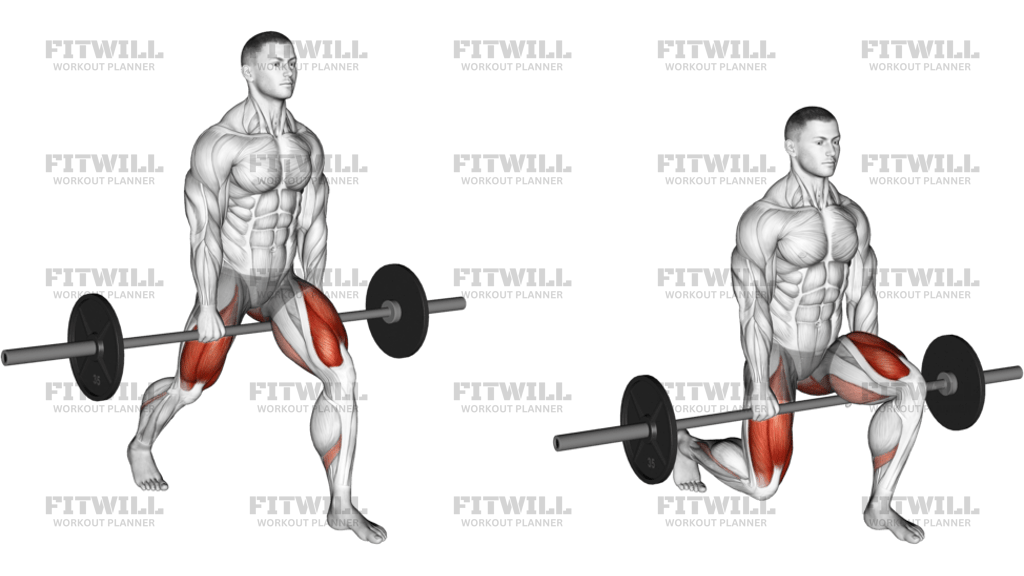
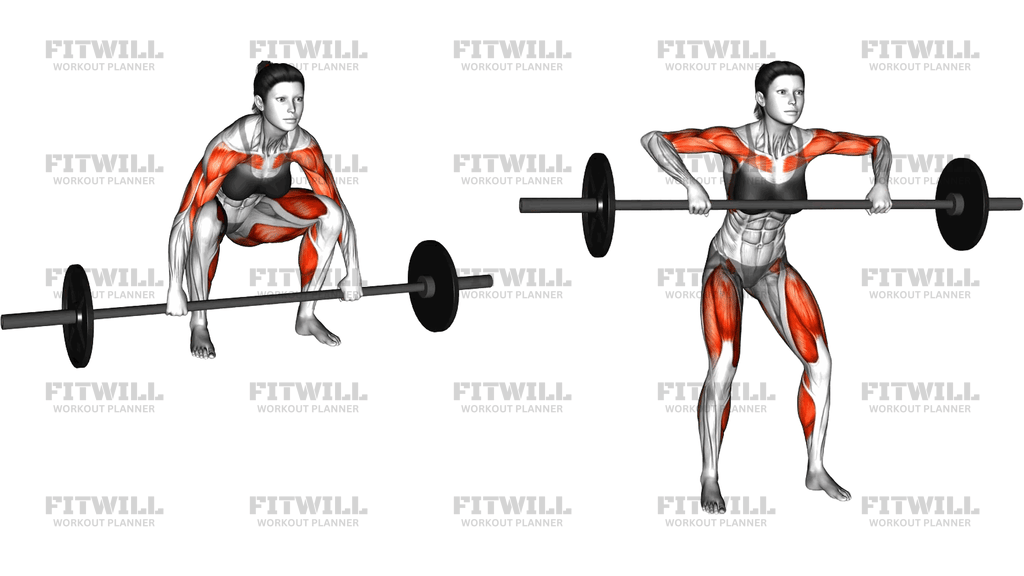
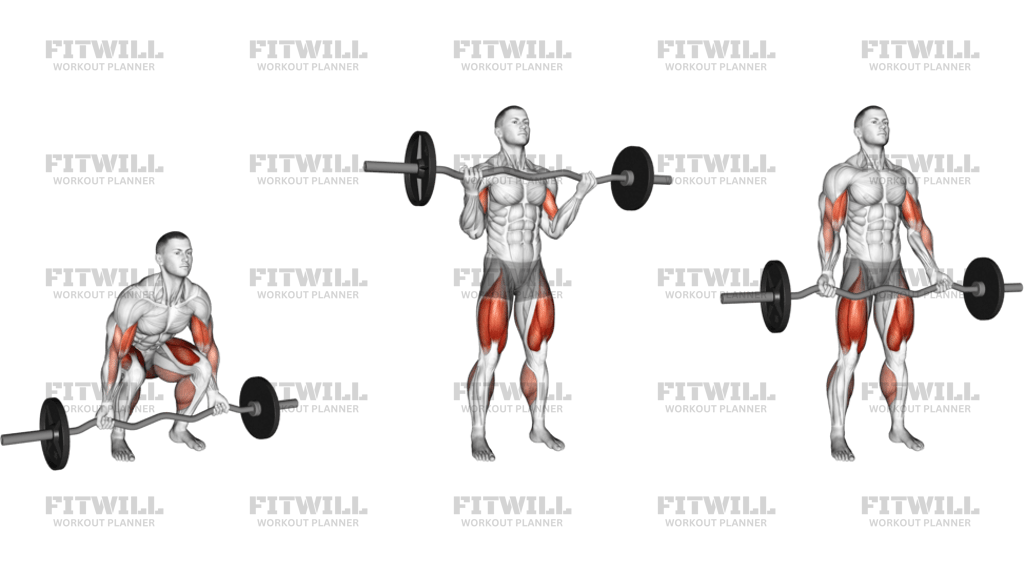
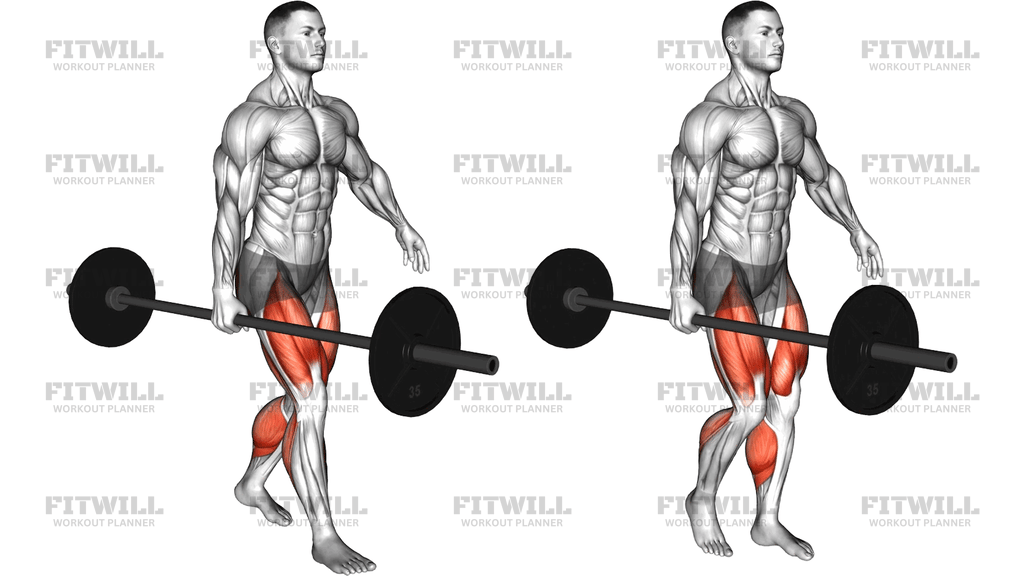
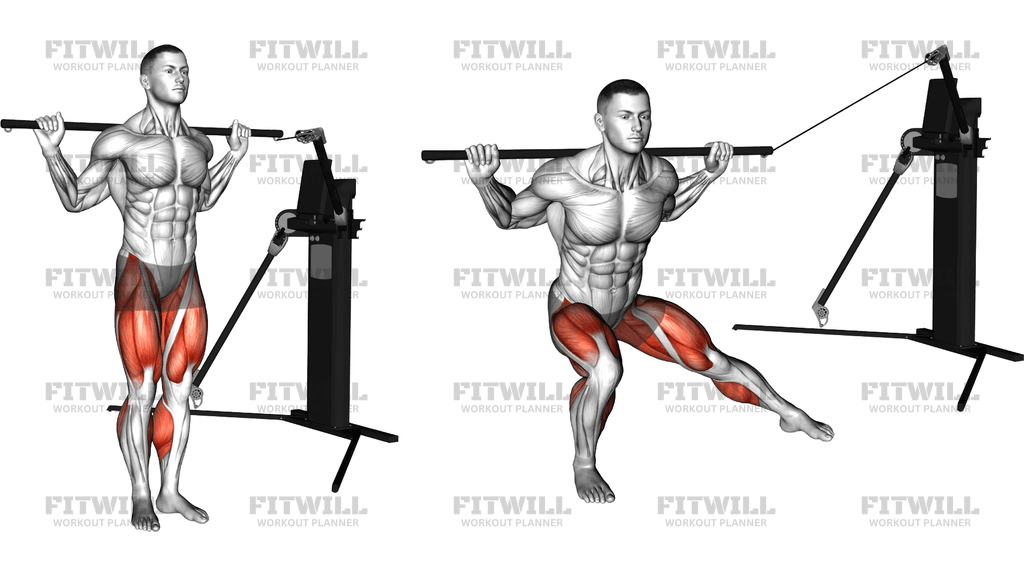
Barbell Front Rack Lunge
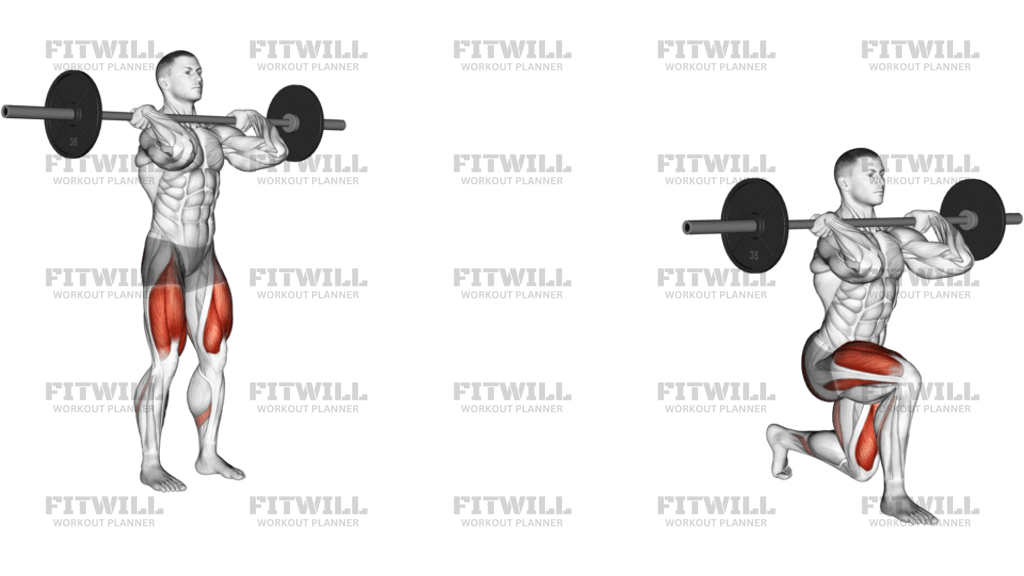
Barbell Front Rack Lunge is a unilateral lower-body strength exercise that pairs a front-racked barbell with a split-lunge pattern. Because the bar sits across the front delts instead of resting on the back, the torso has to stay upright and the core has to resist tipping as each leg works through its own range. That makes this movement a strong choice for building quad and glute strength while also challenging balance, posture, and control.
The front rack position matters as much as the lunge itself. Set the bar high on the shoulders, lift the elbows forward, and keep the hands just outside shoulder width so the bar stays supported by the front delts instead of being carried in the hands. A stable split stance gives you room to lower straight down without losing the front foot, and it helps the bar stay stacked over the middle of the body rather than drifting forward.
As you descend, bend both knees and let the back knee travel toward the floor under control. Keep the front heel planted, let the front knee track in line with the toes, and keep the chest tall so the load stays organized over the front leg. At the bottom, pause only long enough to stay balanced, then drive through the front midfoot and heel to stand back up. Breathe in on the way down and exhale as you push through the rep.
Barbell Front Rack Lunge is useful in strength blocks, hypertrophy work, and accessory lower-body sessions when you want single-leg loading without sacrificing trunk tension. It can also expose side-to-side differences that bilateral squats hide, which is why it is often used to build symmetry and control. Start light enough that every rep looks the same from the first to the last, especially if the front rack position is new to you.
Common mistakes include dropping the elbows, taking a stance that is too long or too short, letting the front knee cave inward, or bouncing off the back knee to steal momentum. If the rack position feels limited, reduce the load and shorten the set before you force deeper range. Clean front-rack position, steady knee tracking, and a controlled return matter more than grinding through sloppy reps.
Fitwill
Log Workouts, Track Progress & Build Strength.
Achieve more with Fitwill: explore over 9600 exercises with images and videos, access built-in and custom workouts, perfect for both gym and home sessions, and see real results.
Start your journey. Download today!




Instructions
- Rack the bar across your front delts, place your hands just outside shoulder width, and lift your elbows forward so the bar is supported by the shoulders.
- Stand tall with feet about hip width, then step into a split stance that leaves room to drop straight down without losing balance.
- Stack your ribs over your pelvis, brace your abs, and keep your eyes fixed ahead before each rep.
- Lower by bending both knees at the same time, letting the back knee travel toward the floor under control.
- Keep your front heel rooted and your front knee tracking in line with the toes as you descend.
- Stop just before the back knee touches the floor, or lightly touch down only if you can keep the movement controlled.
- Drive through the front midfoot and heel to stand back up while keeping the bar centered over the middle of your body.
- Reset your stance only after you are fully upright, then repeat on the same side or alternate as programmed.
- Walk the bar back into the rack and set it down carefully when the set is finished.
Tips & Tricks
- Keep the elbows high enough that the bar stays on the front delts instead of rolling into the hands.
- If the front heel comes up, shorten the stance a little; if the rear knee feels cramped, lengthen it slightly.
- A small forward shin angle is normal, but the front knee should still track over the toes instead of collapsing inward.
- Use a slow 2-3 second lowering phase so each rep starts from a controlled bottom position.
- Think about pushing the floor away with the front foot instead of pulling yourself up with the back leg.
- Keep the front foot tripod anchored through the big toe, little toe, and heel.
- If the front rack irritates your wrists, let the bar rest more on the shoulders and avoid gripping it tightly in the palms.
- Pause briefly just above the floor if you tend to bounce out of the bottom or lose balance.
- Stop the set when the bar drifts forward or your torso starts folding toward the thigh.
Frequently Asked Questions
What does Barbell Front Rack Lunge work most?
It heavily trains the quadriceps and glutes while the adductors, upper back, and core help keep the torso upright and stable.
Is Barbell Front Rack Lunge more of a quad or glute exercise?
It can emphasize both, but a more upright torso and shorter split usually bias the quads, while a slightly longer stance shifts more work toward the glutes.
How should I hold the bar in the front rack?
Rest the bar across the front delts with the elbows pointed forward and the hands only helping support the position. Do not let the load hang low in the fingers.
Should my back knee touch the floor?
Not necessarily. Lower until the back knee is just above the floor, or lightly touch down only if you can keep the torso tall and the front foot planted.
Is Barbell Front Rack Lunge good for beginners?
Yes, if the load is kept light and the front rack position feels comfortable. Beginners may want to master a bodyweight split squat first before adding the barbell.
What if my wrists or shoulders do not like the front rack?
Use a lighter barbell, a looser fingertip rack, or a different exercise such as a goblet split squat until your rack position improves.
How far should I step into the lunge?
Choose a stance that lets the front heel stay down and the back knee drop without forcing your torso forward. If the front knee jams or the rear leg feels cramped, adjust the step length.
Can I alternate legs each rep?
Yes. Just reset to the same stance width and keep the bar level so each rep starts from a controlled, balanced position.
What rep range works well for Barbell Front Rack Lunge?
Moderate rep ranges usually work best because the front rack and balance demand make sloppy high-rep sets easy to overdo. Stop when the torso or knee position starts to change.