Dumbbell Push Jerk
Dumbbell Push Jerk is a two-dumbbell overhead power movement that starts in the front rack and finishes with the weights locked out directly over the shoulders. The rep uses a short dip, an explosive leg drive, and a quick re-bend under the bells so the arms are not doing all of the work the way they would in a strict press. The image shows the key sequence clearly: rack, dip, then finish tall overhead.
This exercise trains shoulder strength, triceps lockout, upper-back stability, and lower-body power in the same rep. The legs create the force, the torso transfers it, and the shoulders stabilize the finish. That makes the setup important: the dumbbells need to sit close to the shoulders, the elbows stay slightly in front of the body, and the ribcage stays controlled so the load can travel in a straight line instead of drifting forward.
Each repetition should feel like one smooth sequence. Dip straight down a few inches with an upright torso, then drive hard through the floor. As the dumbbells rise, re-bend the knees just enough to receive them with locked elbows overhead, then stand fully tall to finish. The best reps look stacked from the side: wrists over elbows, elbows over shoulders, shoulders over hips, and the dumbbells finishing in line with the ears.
Dumbbell push jerks are useful for strength sessions, athletic power work, and overhead conditioning when you want more speed than a strict press but more control than a split jerk. Keep the load moderate enough to stay explosive and clean. If the lower back arches, the elbows drop, or the dumbbells drift away from the shoulder line, shorten the dip and lighten the bells before continuing.
Fitwill
Log Workouts, Track Progress & Build Strength.
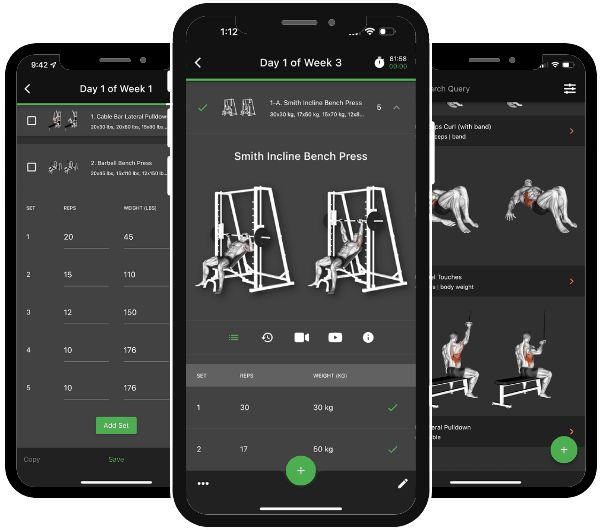
Achieve more with Fitwill: explore over 5000 exercises with images and videos, access built-in and custom workouts, perfect for both gym and home sessions, and see real results.
Start your journey. Download today!


Instructions
- Stand tall with a dumbbell in each hand at shoulder height, palms facing in or slightly forward, and the elbows just in front of the ribs.
- Plant your feet about hip-width apart and keep the dumbbells close to the front of the shoulders instead of letting them drift forward.
- Brace your trunk, squeeze your glutes, and keep your chest tall before you start the dip.
- Dip straight down a few inches by bending the knees and hips together while keeping the torso nearly vertical.
- Drive hard through the floor and extend the ankles, knees, and hips so the dumbbells accelerate upward.
- As the weights rise, quickly re-bend the knees and catch them overhead with straight elbows and the arms close to your ears.
- Finish standing fully tall with the ribs down, the core tight, and the dumbbells stacked over the shoulders and hips.
- Lower the dumbbells back to the front rack under control and reset before the next rep.
- Breathe in for the dip, then exhale as you drive and lock out overhead.
Tips & Tricks
- Keep the dip shallow and vertical; if your torso folds forward, the dumbbells will drift and the jerk turns into a press.
- Think "legs first, arms second" so the lower body creates the pop and the shoulders only finish the rep.
- Press the dumbbells slightly back as you lock out so they finish over the center of the body, not in front of the face.
- A neutral or semi-neutral grip is usually friendlier on the wrists than letting the palms turn fully forward too early.
- Do not chase a huge dip; a short, crisp dip gives better speed and keeps the front rack position stable.
- If the bells separate from each other overhead, lower the load and work on matching both arms through the catch.
- Keep the heels planted through the dip and initial drive so the force comes from the legs instead of a forward lean.
- Finish every rep with the elbows fully extended and the shoulders active, not relaxed on top of the head.
- Stop the set if you have to bend the low back to get the dumbbells overhead.
Frequently Asked Questions
What does the dumbbell push jerk train most?
It emphasizes overhead power, shoulder strength, triceps lockout, and leg drive from the dip and rebound.
How is this different from a dumbbell push press?
A push press uses leg drive to help finish the press, while a push jerk adds a quick re-bend under the dumbbells so you can receive them overhead more efficiently.
Where should the dumbbells start?
They should start in the front rack at shoulder height, close to the body, with the elbows slightly forward rather than flared wide.
How deep should I dip before driving the dumbbells up?
Use a short quarter-squat style dip. The knees and hips bend together, but the torso should stay almost upright.
Do my feet need to move during the jerk?
They can stay planted or make a small corrective hop, but the image shown here is a stable, vertical drive with a controlled catch.
Can beginners use this exercise?
Yes, but it should start light so the dip, drive, and overhead catch stay clean before you add load.
What is the most common mistake?
Turning the movement into a strict shoulder press or leaning back to force the dumbbells overhead is the most common error.
What should I do if my shoulders feel pinchy overhead?
Reduce the load, keep the dumbbells in a neutral grip, and stop the set if you cannot lock out without losing shoulder position or arching the back.