Rowing Boat Yoga Pose
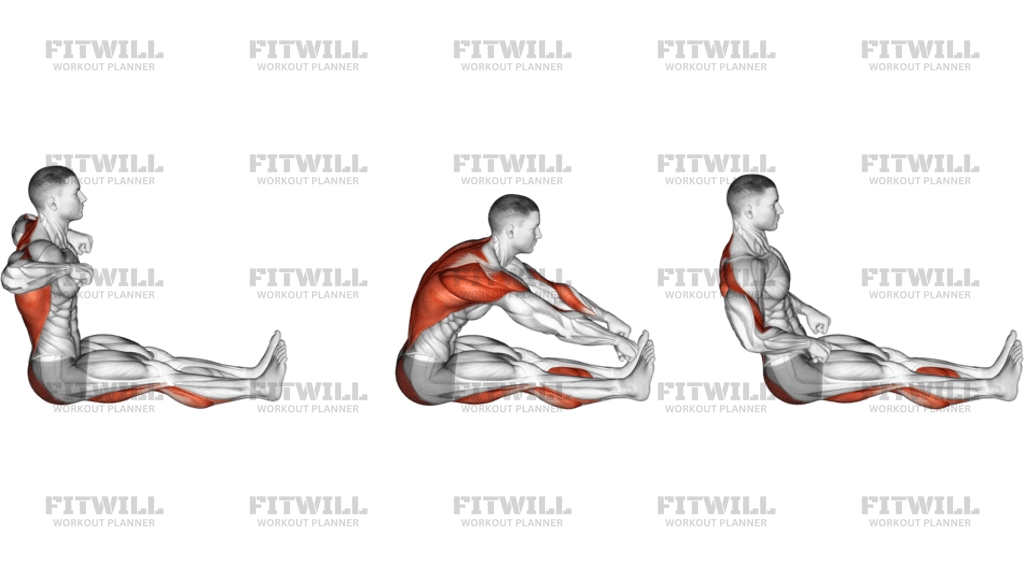
Rowing Boat Yoga Pose is a bodyweight seated balance drill built around a supported V-sit shape. It trains the core to hold the torso steady while the legs stay lifted, so the exercise is less about moving a load and more about resisting collapse through the midsection, hips, and lower back.
The pose is usually performed on a mat with the sit bones grounded, the chest lifted, and the spine long while the legs hover in front of the body. Depending on the variation, the knees may stay bent or the legs may straighten to increase the lever arm. That setup matters because the farther the feet are from the hips, the more the abs, hip flexors, and deep trunk stabilizers have to work to keep the shape from rounding.
Good reps are deliberate and quiet. You move into the hold by leaning back only as far as you can while keeping the ribs tucked and the neck relaxed, then you extend the legs or hold the knees in place without losing the torso angle. The goal is a controlled boat position, not a big swing or a sudden recline. If the lower back starts to round hard or the shoulders creep up, the hold is too aggressive and the variation should be scaled back.
This movement fits well in yoga sequences, core work, or bodyweight conditioning blocks when you want a demanding isometric challenge without equipment. It can be used as a static hold or as a rowing-style pulse between arm reach and leg position changes, but the quality standard stays the same: smooth breathing, steady trunk tension, and a clean V shape that you can actually control.
Because the exercise loads the hip flexors and abdominal wall in a long-lever position, the best version for most people is the one they can maintain without shaking into a neck or low-back compensation. Beginners should start with bent knees and a smaller lean, then progress by straightening the legs, lengthening the hold, or adding slow rowing pulses once the position stays stable.
[ Workout Log & Planner ]
Put your next workout in Fitwill
Keep your plan and training log ready when you are.


Instructions
- Sit on a mat with your knees bent, feet lightly touching the floor, and your hands beside your hips for support.
- Lengthen your spine, lift your chest, and shift your weight back until you are balanced on the sit bones.
- Brace your midsection and keep the ribs from flaring as you prepare to lift the legs.
- Lean back only as far as you can without rounding the lower back or shrugging the shoulders.
- Lift both feet off the floor and bring the shins parallel to the ground, or keep the knees bent if that is the version you can control.
- Extend the arms forward at shoulder height to counterbalance the legs and keep the torso steady.
- Hold the position with slow, even breaths while keeping the neck relaxed and the chin slightly tucked.
- If the exercise includes rowing pulses, bring the arms in and out without losing the V-sit shape.
- Lower the feet back to the mat with control and reset before the next repetition or hold.
Tips & Tricks
- Start with bent knees if your low back rounds when you try to straighten the legs.
- Keep the chest open, but do not arch the lumbar spine to fake a taller position.
- Think about balancing on the sit bones instead of leaning onto the tailbone.
- Keep the shoulders down so the neck does not take over the hold.
- A small backward lean with clean control is better than an aggressive recline you cannot hold.
- If the feet drift lower than the knees, shorten the lever before the abs start to shake apart.
- Use slow nasal or quiet mouth breathing so you do not brace so hard that the torso collapses.
- For rowing-style reps, move the arms smoothly and avoid snapping the elbows or swinging the hands.
- Stop the set when the lower back rounds or the legs drop, not when the timer says to stop.
Frequently Asked Questions
What does Rowing Boat Yoga Pose train most?
It mainly trains the abdominal wall, hip flexors, and deep trunk stabilizers that keep the torso in a V-sit.
Is this the same as yoga boat pose?
Yes. This is the boat-pose style seated balance commonly called Navasana, with a rowing-style name in the app.
Should my knees be bent or straight?
Bent knees are the easier version and are a good place to start. Straight legs make the lever longer and increase the core demand.
What is the biggest form mistake in this pose?
The most common mistake is rounding the lower back so hard that the body collapses instead of holding a controlled V shape.
Can I do rowing pulses instead of holding the position?
Yes, as long as the torso stays steady. The arm motion should be small and controlled, not a swing that throws you off balance.
What should I feel if I am doing it correctly?
You should feel the lower abs, the front of the hips, and the deep core working hard while the neck and shoulders stay mostly quiet.
Is this exercise safe for beginners?
Yes, if they start with bent knees, a small lean, and short holds. It becomes unsafe only when the back rounds aggressively or the hip flexors cramp.
How do I make the pose harder?
Straighten the legs more, hold the position longer, or add slow rowing pulses while keeping the spine tall and the ribs controlled.