Alternate Shoulder Flexion Back To Wall
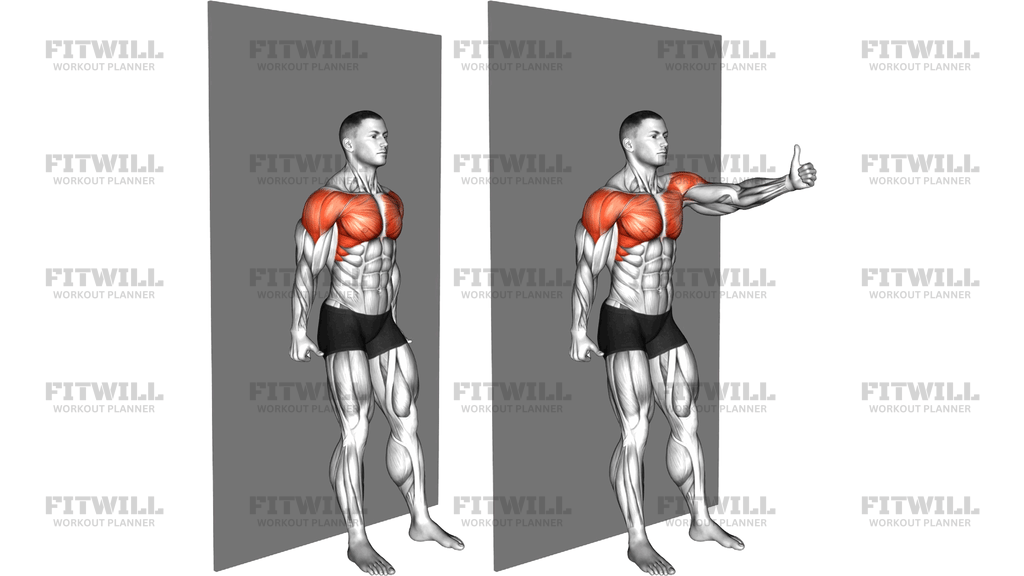
Alternate Shoulder Flexion Back To Wall is a standing shoulder mobility and control drill performed with the back close to a wall while one arm reaches overhead at a time. The wall gives you a simple reference for posture: it helps limit rib flare, keeps the torso from leaning, and makes it easier to notice when the shoulder is moving well versus when the lower back is taking over. Because it is a bodyweight drill, the training effect comes from positioning, control, and range rather than external load.
The movement is useful when you want to improve overhead reach, scapular upward rotation, and the ability to keep the trunk stacked while the arms alternate. It can warm up the shoulders before pressing, overhead work, throwing, or any session where you need cleaner arm travel. The exercise also exposes side-to-side differences, which makes it helpful for identifying stiffness, asymmetry, or compensation patterns that a bilateral raise can hide.
The setup matters. Stand tall with the feet slightly forward from the wall, knees soft, and the head, ribs, and pelvis organized as much as your mobility allows. From there, lift one arm forward and overhead without shrugging hard or arching the low back, then return it under control before switching sides. The goal is a smooth arc, not a forced finish position. If one side reaches higher with less rib movement, that is information, not a reason to chase extra range.
Use this drill as a warmup, mobility reset, or accessory piece for shoulder health and overhead mechanics. It is appropriate for beginners because the wall simplifies the position and the tempo can stay slow and easy to control. Keep the motion pain-free, stop short of pinching or numbness, and adjust the stance if the wall contact makes the reach too tight. Done well, the exercise teaches the shoulders to flex overhead while the torso stays quiet and balanced.
[ Workout Log & Planner ]
Put your next workout in Fitwill
Keep your plan and training log ready when you are.


Instructions
- Stand facing away from a wall with your feet a short step in front of it and your heels grounded.
- Set your pelvis, ribs, and upper back as close to the wall as your mobility allows without forcing the position.
- Let both arms hang by your sides with palms facing inward and your neck long.
- Brace lightly through your abdomen so your lower back does not arch as you move.
- Lift one arm forward in a smooth arc until it reaches overhead or as high as you can keep it controlled.
- Keep the reaching shoulder from shrugging up toward your ear or peeling your ribs away from the wall.
- Lower that arm back to your side with control, then repeat on the other side.
- Alternate arms for the planned number of reps, breathing steadily throughout.
- Step away and reset if you lose wall contact, feel pinching, or have to swing the torso to finish the rep.
Tips & Tricks
- A small step forward from the wall usually makes the overhead path cleaner than standing too close and forcing the ribs to flare.
- Keep the reaching hand moving in front of the ear rather than drifting out wide, which usually turns the drill into a shrug.
- If the low back arches first, shorten the range and let the arm stop earlier instead of chasing a straighter line.
- Move slowly enough to feel the shoulder blade glide upward and rotate, not just the arm swinging overhead.
- Use the wall as feedback: if your ribs or head leave it, the rep is too aggressive for your current mobility.
- Exhale as the arm rises to help keep the rib cage stacked and the torso quiet.
- The non-working arm should stay relaxed by your side; gripping or tensing it often makes the torso rotate.
- Stop at the first sign of pinching in the front of the shoulder and reduce range before you reduce control.
- This drill should feel like a smooth shoulder reach, not a strength test.
Frequently Asked Questions
What does Alternate Shoulder Flexion Back To Wall train most?
It mainly trains shoulder flexion control, overhead reach, and the ability to keep the ribs and torso stacked while one arm moves at a time.
Can beginners perform this exercise?
Yes. The wall makes it a beginner-friendly mobility drill because it gives immediate feedback on posture and range.
How close should I stand to the wall?
Close enough to feel the wall as a posture reference, but far enough that you can raise an arm without immediately arching your low back.
Why alternate one arm at a time instead of raising both together?
Alternating makes it easier to notice side-to-side differences and keeps you from compensating with momentum or a big rib flare.
What should I feel in the overhead arm?
You should feel the shoulder and upper back working through a smooth reach, with the torso staying quiet rather than the low back doing the work.
Is it normal if one side reaches higher than the other?
Yes. Small differences are common, and the wall drill is useful because it shows those asymmetries clearly.
Should my back stay completely flat on the wall?
Not necessarily. Stay as organized as you can without forcing your posture; the goal is controlled alignment, not a painful rigid hold.
What is the most common mistake with this drill?
Letting the ribs flare and the low back arch to fake more shoulder range is the most common problem.
Where does this fit in a workout?
It works well in a warmup, mobility block, or accessory circuit before pressing, overhead work, or other shoulder-dominant training.