Standing Seal Yoga Pose
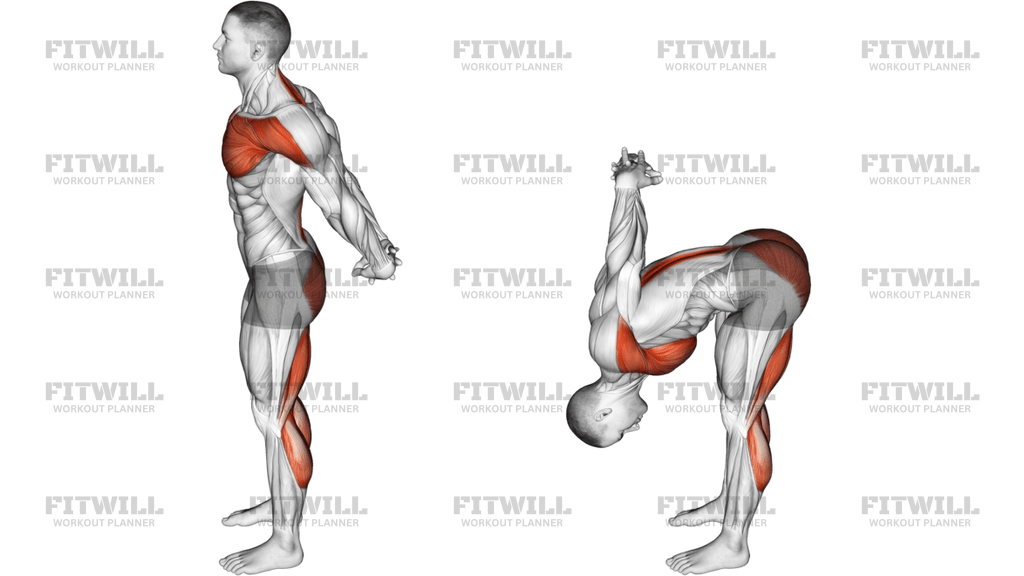
Standing Seal Yoga Pose is a standing mobility drill that combines a hip hinge with a deep shoulder and chest opening. Clasping the hands behind the body while folding forward lengthens the hamstrings and opens the chest, front delts, and lats at the same time. It works well as a warm-up before upper-body lifting, a cooldown after pressing work, or a recovery movement when the shoulders and upper back feel tight from sitting.
The setup is what makes the stretch feel specific instead of sloppy. Stand with your feet about hip-width apart, knees soft, and your chest lifted before you interlace or clasp the hands behind the glutes. Keep the shoulders gently back and down, then let the knuckles drift away from the body only as far as you can keep the neck relaxed, the elbows straight, and the low back out of the stretch.
From there, hinge at the hips instead of folding through the waist. As the torso tips forward, allow the clasped hands to travel upward behind you so the chest stays open while the back of the legs lengthen. The best version of Standing Seal Yoga Pose feels like a smooth pull through the front of the shoulders and the hamstrings, not a hard jam in the neck, wrists, or lumbar spine.
Standing Seal Yoga Pose is most useful when you want mobility with a clear, repeatable shape rather than a passive hang. It pairs well with rowing, pressing, overhead work, and postural reset sessions because it asks the body to stay organized while the arms are bound behind the body. Beginners can keep the fold shallow and the grip low; more advanced users can hold longer, but they should not chase extra range by rounding the back or forcing the shoulders past comfort.
[ Workout Log & Planner ]
Put your next workout in Fitwill
Keep your plan and training log ready when you are.


Instructions
- Stand tall with your feet about hip-width apart, your knees unlocked, and your weight centered over the midfoot.
- Clasp your hands behind your glutes or lower sacrum, straighten your elbows, and turn the knuckles away from your back.
- Draw your shoulder blades gently back and down, then lift the clasped hands a few inches away from your hips without arching your low back.
- Inhale and hinge at the hips, sending the hips back as your torso tips forward with a long spine.
- Keep your neck neutral and let the clasped hands travel up behind you as far as your shoulders allow.
- Fold until you feel a strong stretch across the chest, front shoulders, lats, and hamstrings, then hold and breathe slowly.
- Exhale to stand by driving the hips forward and stacking the torso back over the feet.
- Release the hands only after you are upright and reset before the next repetition or hold.
Tips & Tricks
- Keep a small bend in the knees if the hamstrings start tugging your pelvis under.
- If the shoulders pinch, lower the clasped hands closer to the glutes instead of forcing them higher.
- Think hips back on the way down; rounding the lower back turns the stretch into a spine fold.
- Keep the chest wide and the ribs from flaring so the opening stays in the front of the shoulders.
- Use a slow exhale to help the body settle deeper into the fold without jerking.
- Do not lock the knees hard; a micro-bend protects the hamstrings and helps balance.
- Keep the neck in line with the spine instead of looking forward, which often cranks the cervical area.
- Shorter holds are better if your grip or shoulders fatigue before the hamstrings do.
Frequently Asked Questions
What muscles does Standing Seal Yoga Pose stretch?
It mainly stretches the chest, front shoulders, lats, and hamstrings while the upper back and core stabilize the fold.
Is Standing Seal Yoga Pose good for beginners?
Yes, if you keep the fold shallow and the shoulder stretch mild. Beginners should stay higher and avoid forcing the clasped hands away from the body.
How high should my hands lift behind me in Standing Seal Yoga Pose?
Lift them only until you feel a strong opening across the chest and shoulders without shrugging or pinching. The best range is the one you can control while keeping the spine long.
Should my knees stay straight in Standing Seal Yoga Pose?
They can be soft instead of locked. A slight bend often helps the pelvis hinge better and keeps the hamstrings from yanking the lower back.
What is the biggest mistake in Standing Seal Yoga Pose?
Collapsing through the waist and rounding the lower back. Keep the hinge coming from the hips so the stretch stays where it belongs.
Can I do Standing Seal Yoga Pose without clasping my hands?
Yes, you can hold a strap or keep the arms lower if your shoulders or wrists do not tolerate the full bind. That keeps the same chest-opening effect with less strain.
Where should I feel Standing Seal Yoga Pose the most?
You should feel the front of the shoulders, chest, and hamstrings more than the neck or low back. If the low back dominates, shorten the fold and bend the knees more.
How long should I hold each rep of Standing Seal Yoga Pose?
Hold long enough to take three to five slow breaths, then come back up under control. For mobility work, several short holds are usually better than one aggressive stretch.