Swaying Palm Tree Yoga Pose
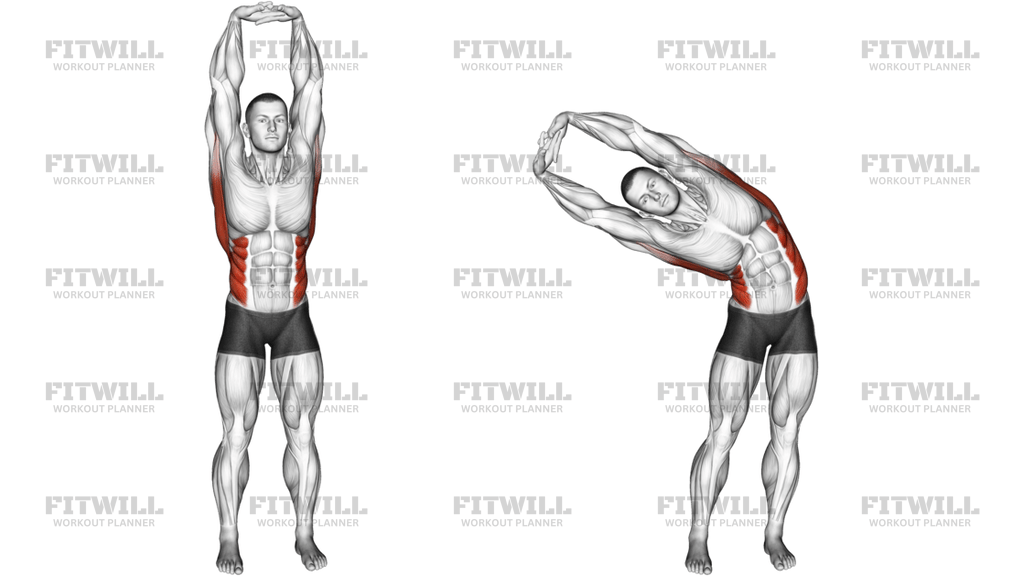
Swaying Palm Tree Yoga Pose is a standing side-bend stretch performed with the hands clasped overhead. It lengthens the muscles along the side of the torso while also asking the shoulders, trunk, and hips to stay organized as the body arcs to one side and then returns to center. The image shows a tall, grounded stance with the feet planted, arms extended above the head, and the rib cage opening on the bent side.
This pose is useful when you want to train lateral line mobility without collapsing through the lower back. The long overhead reach creates traction through the spine and shoulders, while the side bend challenges the obliques, intercostals, and lats to control the arc. Because the hands stay joined overhead, the upper body should feel long and active rather than loose or floppy.
The setup matters more than people expect. Start with both feet rooted, knees soft but not bent, pelvis level, and the arms reaching straight up before you tip to the side. Keep the chest lifted and the ribs stacked over the pelvis so the bend comes from a clean side arc instead of a forward fold or a twist. That alignment keeps the stretch where you want it and helps protect the low back.
Use a slow, deliberate range and breathe into the open side of the body. On the way down, let the ribs widen and the top shoulder stay long; on the way back up, re-stack the torso before moving into the next rep. The best version of this pose looks smooth and balanced, with no shrugging, no knee lockout, and no swinging through momentum. It fits well in a warm-up, mobility flow, recovery session, or as a controlled standing stretch between stronger exercises.
[ Workout Log & Planner ]
Put your next workout in Fitwill
Keep your plan and training log ready when you are.


Instructions
- Stand tall with both feet planted about hip-width apart and clasp your hands overhead with your elbows straight.
- Keep your pelvis level, ribs stacked over your hips, and shoulders reaching up away from your ears.
- Brace lightly through your midsection so your torso stays long before you begin the side bend.
- Shift your upper body slowly to one side, keeping your arms straight and your chest facing forward.
- Let the top rib cage open while the opposite side waist lengthens; do not hinge forward or twist.
- Hold the deepest comfortable position for a brief breath while keeping both feet grounded.
- Return to center with control, re-stacking your ribs over your hips before starting the next rep.
- Repeat to the other side if the session calls for alternating sides, then lower your arms and reset.
Tips & Tricks
- Keep the arms active overhead; if the shoulders collapse, the stretch turns into a slump instead of a clean side bend.
- Think of reaching the hands slightly longer before bending so the side body stays open instead of pinching short on the top side.
- Let the bend come from the waist and ribs, not from pushing the hips far out to one side.
- Keep both feet heavy on the floor so the pose stays grounded and you do not roll onto the outer edge of the bent-side foot.
- A small knee softness is better than locking the legs hard, especially if your hamstrings tug on the pelvis.
- Do not chase depth by rotating the chest downward; the sternum should keep facing roughly forward.
- Exhale as you settle into the side bend to help the rib cage soften and widen on the open side.
- If the neck feels compressed, lower the shoulders slightly and reduce the angle of the bend.
Frequently Asked Questions
What muscles does Swaying Palm Tree Yoga Pose work?
It mainly lengthens the side body, including the obliques, intercostals, lats, and the muscles around the shoulders and waist.
Is this pose the same as a standing side bend?
Yes. The image shows a standing side bend with the hands clasped overhead, which is the common yoga-style version of the movement.
Should my elbows stay straight overhead?
Yes. Straight arms help keep the line long through the rib cage and shoulders, which makes the stretch more effective.
Why do I need to keep my chest facing forward?
Keeping the chest forward prevents the pose from turning into a twist and keeps the stretch focused along the side of the torso.
Can beginners do this pose?
Yes. Beginners can use a smaller range and keep the knees softly unlocked while they learn how to stay tall and balanced.
How far should I bend to the side?
Only go as far as you can while keeping both hips level, the chest open, and the movement smooth on the way back to center.
What is a common mistake in this stretch?
The most common mistake is collapsing forward or shrugging the shoulders instead of keeping a long overhead line.
When should I use this movement in a workout?
It works well in warm-ups, mobility flows, recovery sessions, or as a gentle cooldown stretch after more demanding training.