Tiger Yoga Pose
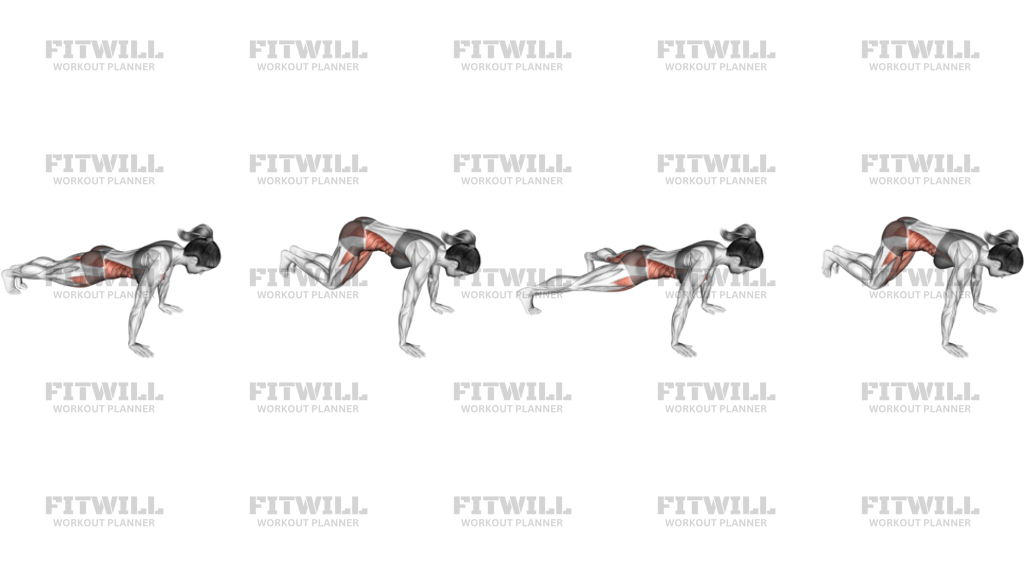
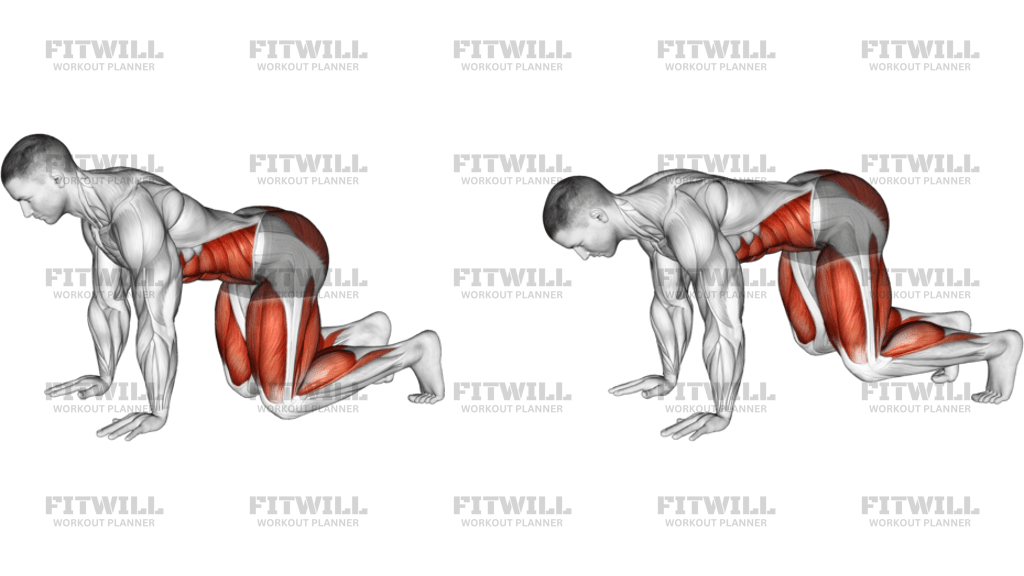
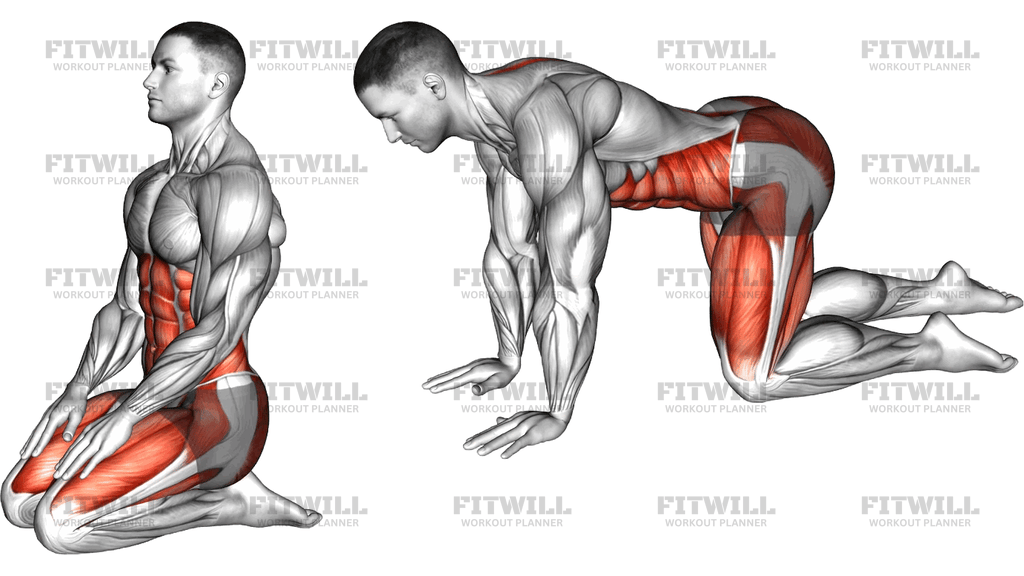
Tiger Yoga Pose is a bodyweight quadruped drill built around a slow leg reach and a compact knee drive. From hands and knees, you stabilize your shoulders and trunk, extend one leg back, then draw the knee in under the torso before returning to the long position. The movement looks small, but it asks for a lot of control from the core, hips, and shoulder girdle.
This exercise is useful when you want low-load work that still challenges coordination and trunk organization. The moving leg is doing more than simply lifting: the pelvis has to stay level, the ribs need to stay stacked, and the planted arm has to resist collapsing. That makes Tiger Yoga Pose a good fit for warm-ups, mobility-focused sessions, and core work that is meant to sharpen control rather than chase fatigue.
The setup matters because the quality of the rep starts at the floor. Place your hands under your shoulders and your knees under your hips so you can move the leg without shifting all your weight into the low back or rocking side to side. If your wrists are stacked poorly or your knees sit too far back, the movement becomes harder to control and the shoulders start doing too much of the work.
The best reps are smooth and deliberate. Extend the working leg to a long line behind you, then pull the knee forward under the torso without yanking the pelvis open or letting the spine sag. Exhale on the tuck, pause long enough to feel the abs and hip flexors working, then reach back out with the same control before switching sides or resetting.
Use Tiger Yoga Pose when you want clean movement quality rather than load. It works well as an activation drill before strength training, a recovery-focused core exercise, or a yoga flow transition when you want the body to stay organized under motion. Beginners can use it comfortably if they keep the range small and the tempo slow; the key is to move the leg only as far as the trunk can stay quiet.
[ Workout Log & Planner ]
Put your next workout in Fitwill
Keep your plan and training log ready when you are.


Instructions
- Kneel on a mat, then place your hands under your shoulders and your knees under your hips with your fingers spread for a stable base.
- Set your spine in a neutral line, keep your neck long, and press evenly through both palms before you move.
- Shift your weight slightly forward so one knee can float off the floor without rounding your upper back.
- Extend the working leg straight back until it makes one long line from your hip toward your heel.
- Keep your hips square to the floor and your ribs pulled in as the leg reaches back.
- Draw the knee forward under your torso in a slow tuck, letting your abs and hip flexors control the path.
- Pause briefly when the knee is tucked, but do not let the planted shoulder shrug or the low back collapse.
- Send the leg back out under control, lower the knee lightly to the mat, and reset before the next rep or the next side.
Tips & Tricks
- Keep the hands directly under the shoulders so the planted side stays stacked instead of drifting forward.
- If the low back arches when the leg reaches back, shorten the range and think about ribs down rather than leg height.
- Move the knee on a straight path under the torso instead of swinging it out to the side.
- Press the floor away with both palms to stop the chest from sinking between the shoulders.
- A slow tuck is more useful than a big kick; the goal is trunk control, not height.
- Exhale as the knee comes forward so the abdomen can help keep the pelvis from tipping.
- If your wrists feel overloaded, widen the hand position slightly and spread the fingers harder into the mat.
- Use the pause in the tucked position to check that your hips are still square and your neck is relaxed.
Frequently Asked Questions
What muscles does Tiger Yoga Pose work?
It mainly trains the core, glutes, hip flexors, shoulders, and upper back while the planted side keeps you stable on the mat.
Is Tiger Yoga Pose good for beginners on hands and knees?
Yes, as long as the range stays small and the shoulders, hips, and low back can stay organized. Beginners should focus on the straight-leg reach first, then add the knee tuck.
How high should the leg lift in Tiger Yoga Pose?
Only as high as you can keep both hips facing the floor. If the lift makes you twist or arch, lower the leg and keep the motion tighter.
Should my knee travel toward my elbow or straight under my torso?
Aim for a straight path under the torso rather than flaring out wide. The closer the knee stays to the center line, the more control you keep through the trunk.
What is the most common mistake in Tiger Yoga Pose?
Most people move the leg too far and let the low back take over. Keep the ribs pulled in and make the tuck smaller if the spine starts to sag.
Can I do Tiger Yoga Pose if my wrists are sensitive?
Yes, but use a mat, spread the fingers, and keep the hands directly under the shoulders. If needed, shorten the set or use wrist supports to reduce pressure.
How many reps should I do?
Use slow, controlled reps for 6-12 per side or for time in a warm-up. Stop the set once the knee path gets sloppy or the shoulders start shifting.
Where should I feel Tiger Yoga Pose most?
You should feel the abs, hip flexors, glutes, and some shoulder stabilization. If the neck or low back is doing most of the work, reduce the range and slow down.