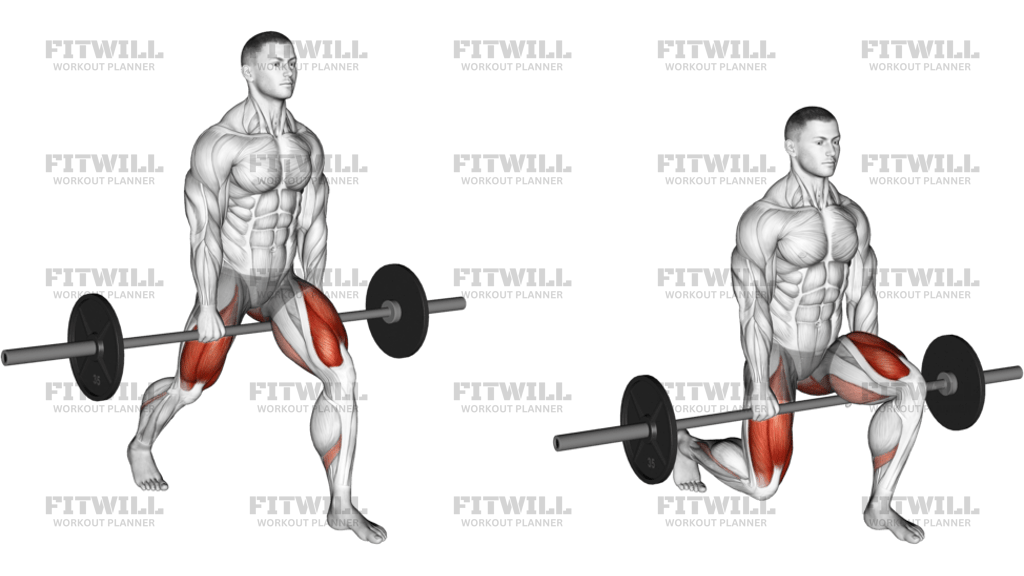
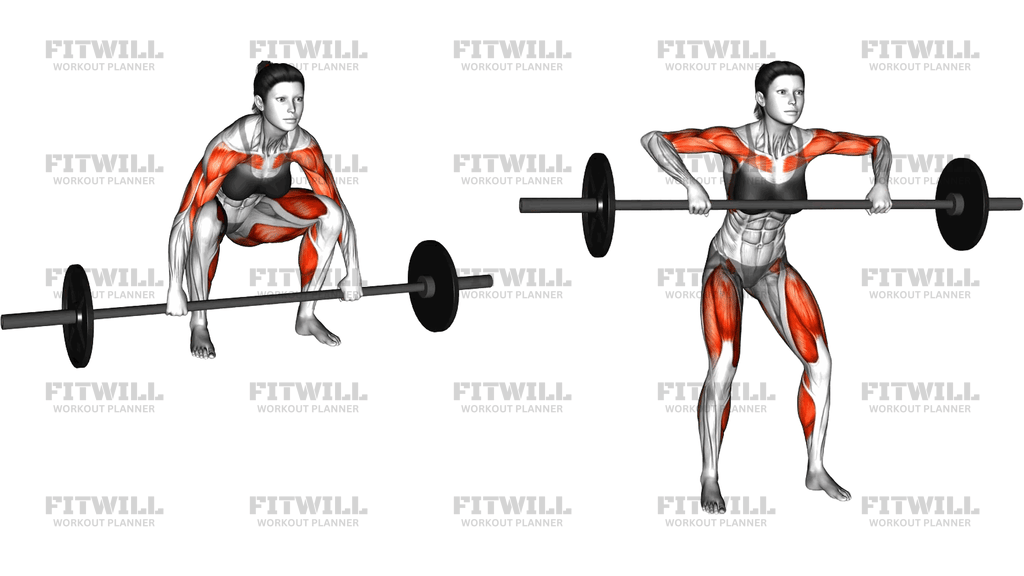
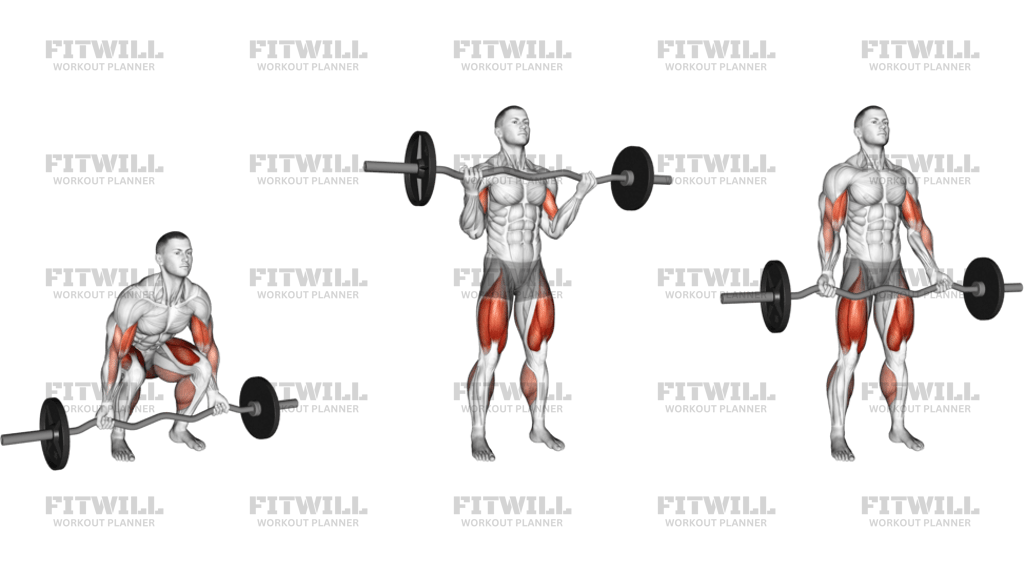
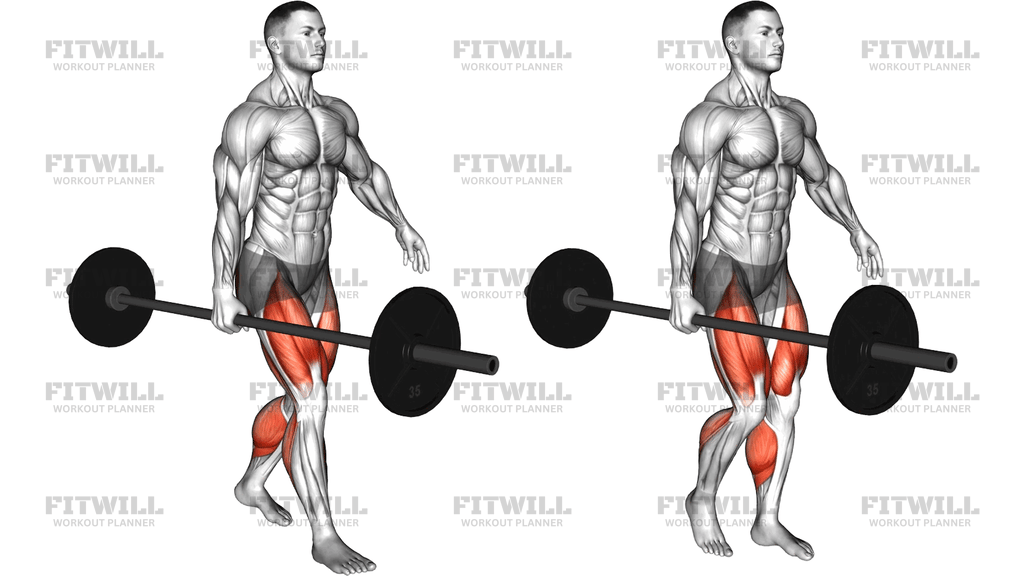
Barbell Front Rack Walking Lunge
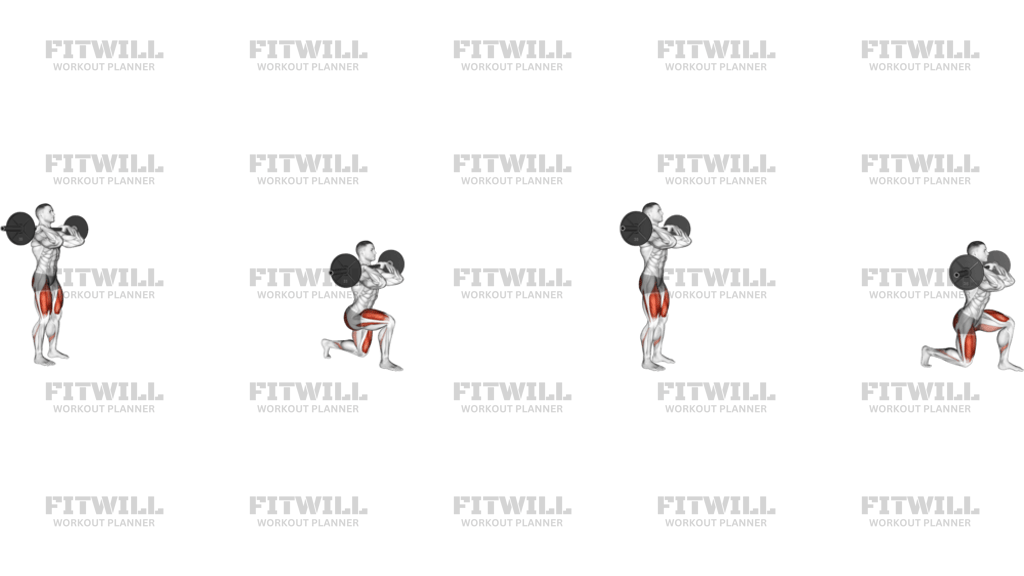
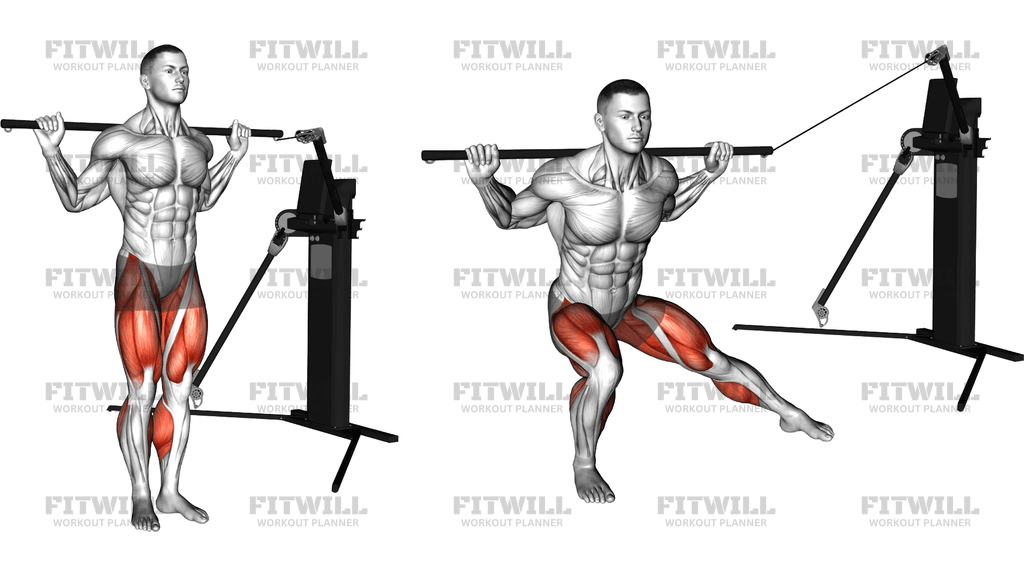
Barbell Front Rack Walking Lunge is a loaded single-leg lunge performed while holding a barbell in the front rack on the front of the shoulders. It challenges the thighs, glutes, hips, and trunk while also demanding enough upper-back tension to keep the bar stable as you step and change legs. The movement is useful when you want unilateral leg work with a strong postural demand rather than a machine-based pattern.
The front rack position matters because it changes how the body has to balance the load. The bar should sit across the front delts, elbows stay lifted, and the chest remains tall enough to keep the torso from folding forward as the stride begins. If the rack collapses, the bar will drift, the steps get sloppy, and the lunge turns into a balance drill instead of a controlled leg exercise.
Each repetition should look like a smooth step, a controlled drop, and a strong drive to the next stance. Step forward far enough that both knees can bend comfortably, lower until the back knee is close to the floor, then push through the front foot to stand and continue walking into the next lunge. The goal is a steady rhythm with the pelvis level, the front knee tracking cleanly, and the bar staying quiet on the shoulders.
This exercise is a good fit for lower-body strength work, hypertrophy sessions, and conditioning blocks when you want each rep to carry more coordination than a stationary lunge. It also exposes side-to-side differences in hip mobility, ankle control, and trunk stiffness, which makes it useful for athletes and general lifters alike. Beginners can use it with a light barbell or start with a bodyweight or goblet variation until the front rack and stepping pattern feel stable.
The main mistakes are too short a step, rushing the descent, letting the front heel pop up, and bouncing off the back knee at the bottom. Keep the movement smooth, breathe between steps, and stop the set when the rack position or walking pattern starts to break down. A clean rep is one where the lower body does the work and the upper body simply keeps the bar organized.
[ Workout Log & Planner ]
Put your next workout in Fitwill
Keep your plan and training log ready when you are.


Instructions
- Clean the bar into the front rack and rest it across the front shoulders with your elbows lifted, hands just outside shoulder width, and feet about hip-width apart.
- Stand tall with your ribs stacked over your pelvis, eyes forward, and your upper back tight enough to keep the bar from rolling down the shoulders.
- Take one controlled step forward, placing the heel first and then the forefoot so the stride is long enough for both knees to bend comfortably.
- Lower straight down until the back knee hovers just above the floor while the front shin stays controlled and the torso stays upright.
- Keep the front foot planted and drive through the whole foot to stand up without letting the bar tip forward.
- As soon as you finish standing, bring the trailing leg through and set up the next step with the same stance width.
- Alternate legs in a steady walking rhythm, keeping the bar quiet and the pelvis level from rep to rep.
- After the final lunge, steady the bar in the rack position and return it to the supports with control.
Tips & Tricks
- Keep the elbows high enough that the bar stays pinned to the front delts instead of sliding into the hands.
- Choose a stride length that lets the back knee drop straight down; if you feel folded over, your step is probably too short.
- Let the front heel stay heavy through the bottom so the drive comes from the whole foot rather than the toes.
- Walk under control instead of lunging into each step; the transition between reps should look deliberate, not bouncy.
- Brace before every step, because the load shifts as soon as one foot leaves the floor.
- Keep the torso tall and the front knee tracking over the middle toes instead of collapsing inward.
- Use lighter loading if your front rack mobility forces the wrists back or the elbows down.
- If balance breaks down before the legs do, slow the tempo and shorten the set rather than chasing more steps.
Frequently Asked Questions
What muscles does the Barbell Front Rack Walking Lunge work?
It mainly works the thighs and glutes, with a strong demand on the core and upper back to keep the front rack stable.
Why hold the bar in the front rack instead of on the back?
The front rack forces a more upright torso and makes the trunk work harder to keep the bar balanced while you walk.
How far should I step on each lunge?
Step far enough that both knees can bend comfortably and the back knee can lower close to the floor without your torso folding forward.
Should my front knee go past my toes?
A little forward travel is normal if the heel stays planted and the knee tracks in line with the toes instead of collapsing inward.
Can beginners do this exercise?
Yes, but most beginners should start with a lighter barbell or a goblet walking lunge until the rack position and step pattern feel stable.
What usually causes the bar to feel unstable?
The most common cause is letting the elbows drop or the ribcage flare so the bar rolls off the front shoulders during the step.
What is a good substitute if I cannot front rack a barbell comfortably?
Use a goblet walking lunge or a reverse lunge until front rack mobility and upper-back position improve.
How should I breathe during the set?
Take a small brace before each step, then exhale as you stand and reset before the next lunge.