Weighted Lying Side Neck Raise
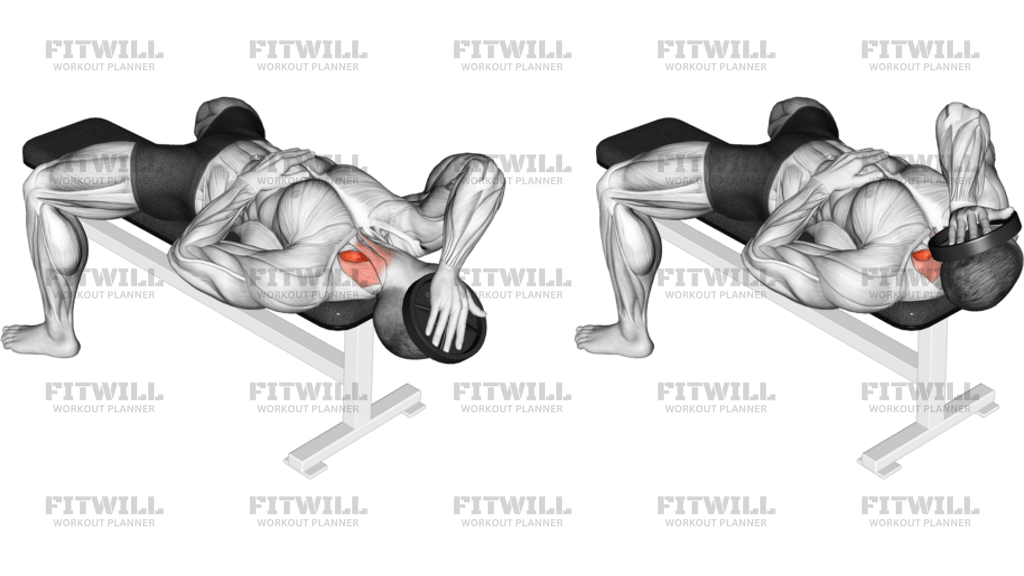
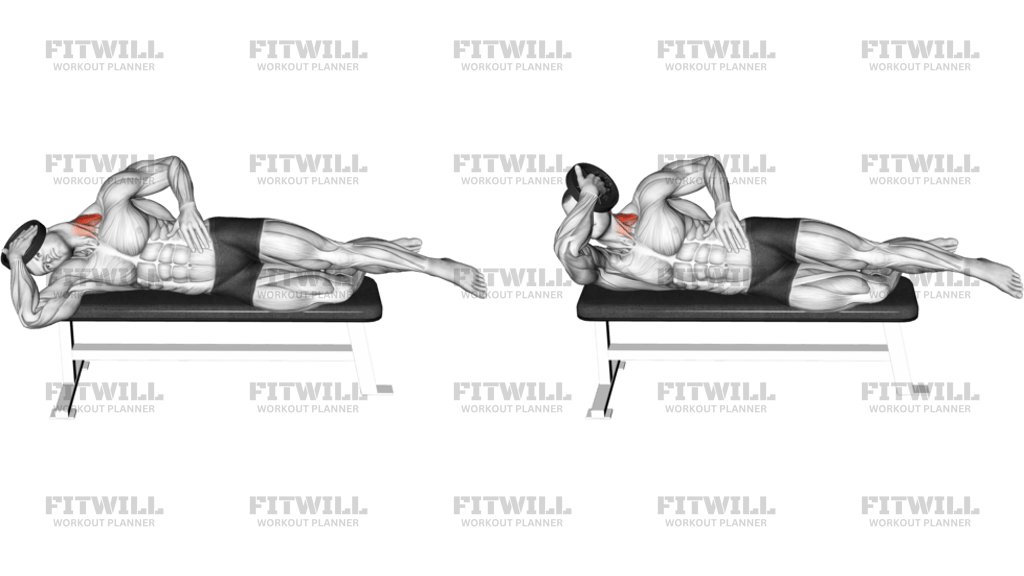
Weighted Lying Side Neck Raise is a side-lying neck isolation exercise that loads the muscles responsible for lateral flexion and cervical stability. It is usually used as a light accessory movement to build neck resilience, improve control around the head and jaw, and expose the side of the neck to steady tension without needing a large external load. Because the range is small and the margin for sloppy form is also small, the setup and the load choice matter more here than they do in most lifting exercises.
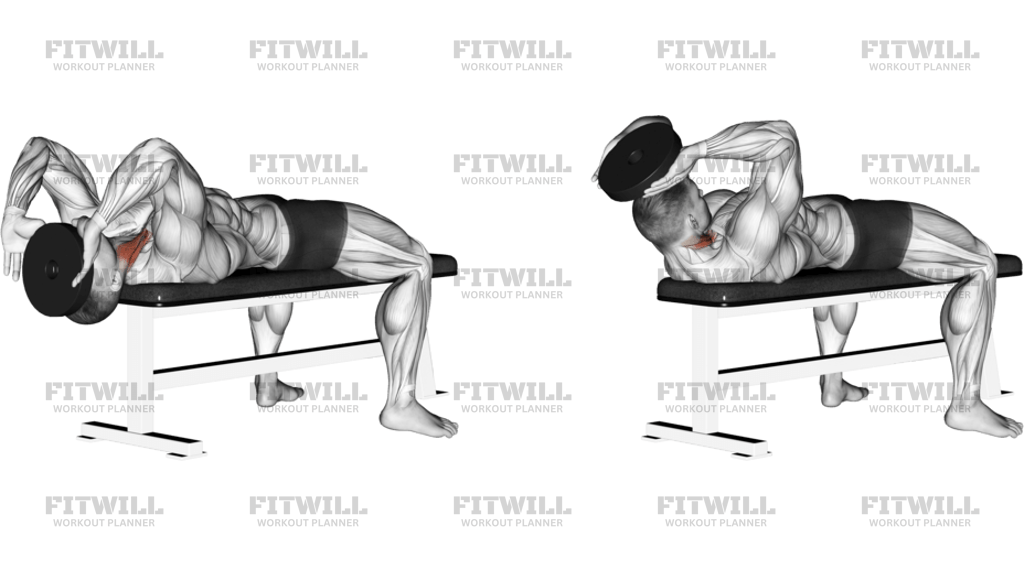
The setup matters because the bench edge, head position, and weight placement determine whether the rep stays on the side of the neck or turns into a shrug and twist. Lie sideways on a flat bench with your torso supported, hips and knees bent for balance, and your head just off the edge so the neck can move freely. Keep the plate or other weight snug against the upper side of the head instead of letting it drift away from the skull.
From the lowered position, lift the head in a short controlled arc until the neck comes back close to neutral with the torso, then lower under control. Keep the jaw relaxed, chin slightly tucked, and shoulders quiet so the motion comes from the side of the neck rather than from rotation or bouncing. Exhale as you lift and inhale as you return.
This exercise fits best as accessory work or a warm-up drill for athletes who need neck durability for contact sports, grappling, or posture-heavy training. It is not a max-effort lift. Use a light load, a smooth tempo, and a pain-free range, especially if you are new to direct neck work. Stop immediately if you feel pinching, dizziness, tingling, or a headache response, and keep the rep quality strict rather than chasing a bigger range.
Progress it by adding very small amounts of load, slowing the lowering phase, or extending the time under tension while preserving the same head path. The goal is consistent side-neck tension from the first rep to the last, with the bench, torso, and weight staying stable while the cervical spine moves without unnecessary compensation.
Fitwill
Log Workouts, Track Progress & Build Strength.
Achieve more with Fitwill: explore over 9600 exercises with images and videos, access built-in and custom workouts, perfect for both gym and home sessions, and see real results.
Start your journey. Download today!




Instructions
- Lie sideways on a flat bench with your torso supported, hips and knees bent for balance, and your head just off the edge.
- Place the plate or other light weight snug against the upper side of your head and steady it with your hand if needed.
- Set your chin slightly tucked, jaw relaxed, and eyes forward so the neck stays long before the first rep.
- Keep your shoulders, ribs, and hips stacked so your torso does not roll as you move.
- Lift the head in a short controlled arc until the neck comes back close to neutral with the torso.
- Pause briefly at the top without shrugging, twisting, or swinging the weight.
- Lower slowly until you feel a controlled stretch on the working side of the neck.
- Breathe out as you lift and breathe in as you return, then reset before the next rep.
- When the set is done, set the weight down carefully and sit up slowly before changing sides.
Tips & Tricks
- Use a very light load; neck training usually responds better to small jumps than to heavy plates.
- Keep the plate close to the head so it does not pull you into rotation or make the rep uneven.
- A towel on the bench edge can reduce pressure on the jaw, ear, or temple if the setup feels harsh.
- Do not let the top shoulder creep toward the ear during the raise; keep the shoulder line quiet.
- A short, smooth range is better than a big arc that turns into a shrug or torso twist.
- Lower the head more slowly than you lift it to keep tension on the side of the neck.
- Stop one rep before your head starts wobbling or the plate begins to drift off line.
- Hold the weight with the hand only for stability, not to help you crank through the rep.
Frequently Asked Questions
What muscles does Weighted Lying Side Neck Raise train?
It primarily trains the side-neck muscles that laterally flex and stabilize the head, with the deeper cervical stabilizers and upper traps assisting.
Is this the same as a neck curl?
No. A neck curl moves the chin toward the chest, while this exercise bends the head sideways in a side-lying position.
Where should the weight sit during the rep?
Keep the plate or other load snug against the upper side of the head so it stays stable and does not twist the neck.
How far should I lift my head?
Lift only until the neck comes back close to neutral with the torso. A bigger range usually means you are compensating with the shoulders or torso.
Can beginners do this exercise?
Yes, but they should start with a very light load or no load at all and keep the range short and controlled.
Why do I feel it in my shoulder too?
Some upper trapezius work is normal, but if the shoulder is doing most of the movement, reduce the load and keep the torso stacked.
What equipment works best for this movement?
A small plate is usually easiest to control, but the key is light resistance that stays close to the head.
When should I avoid this exercise?
Skip it if neck pain, dizziness, tingling, headaches, or nerve-like symptoms worsen with direct neck loading.