Weighted Lying Neck Head Twist
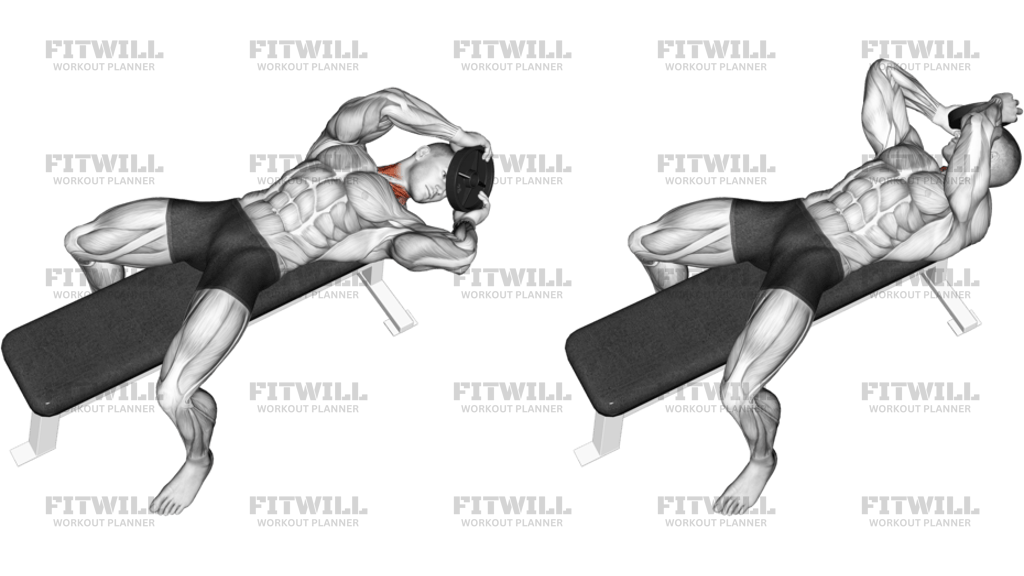
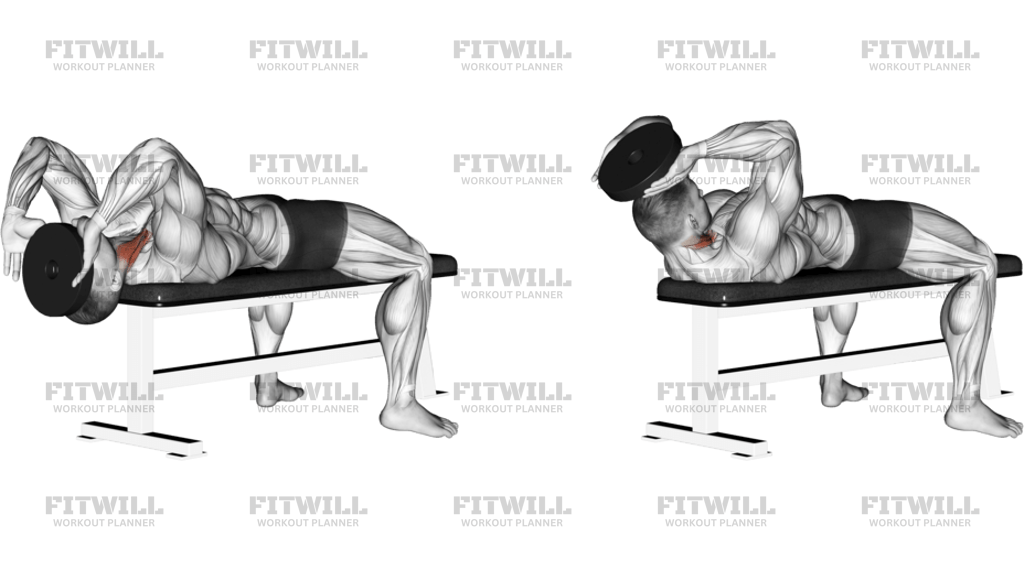
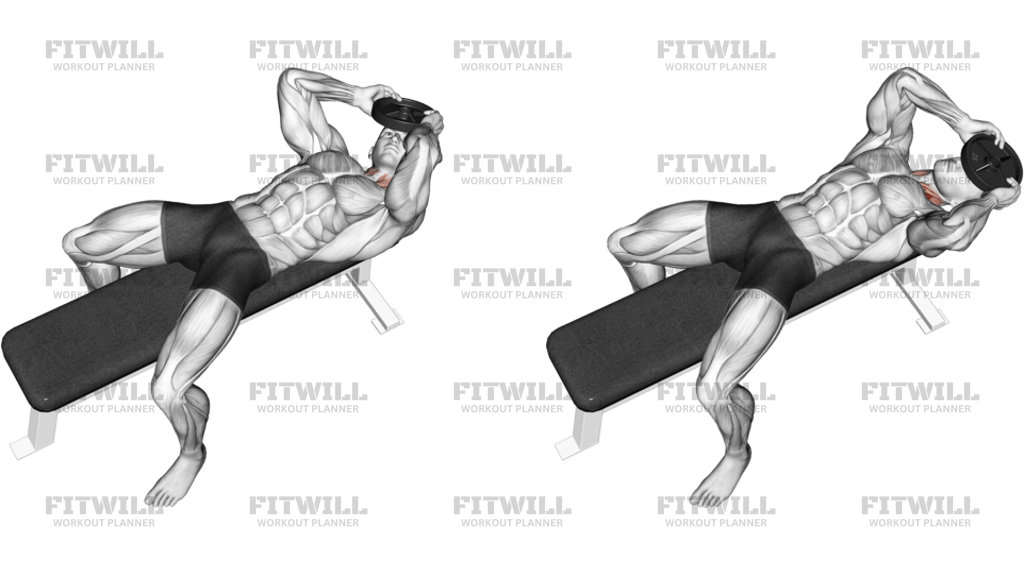
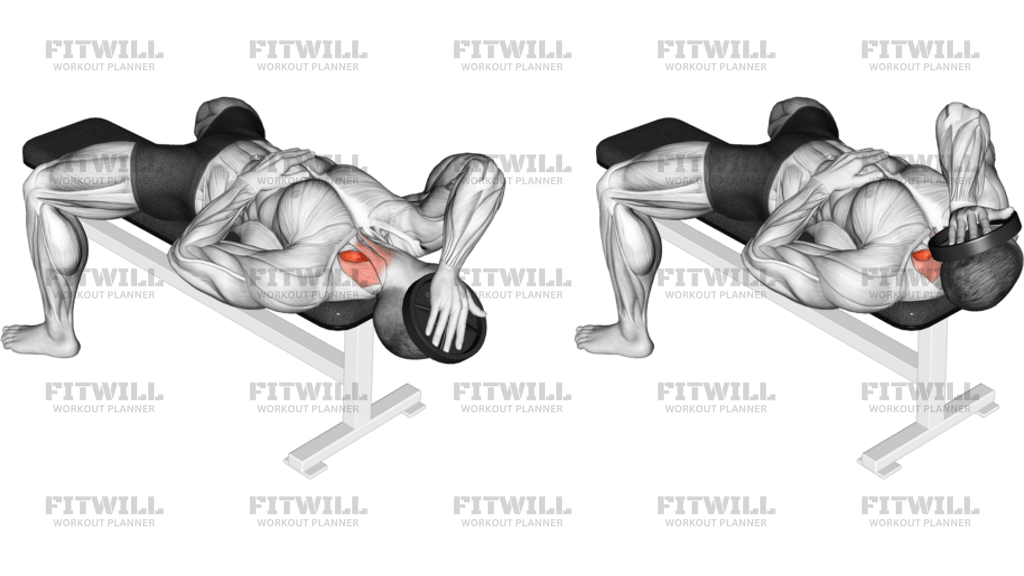
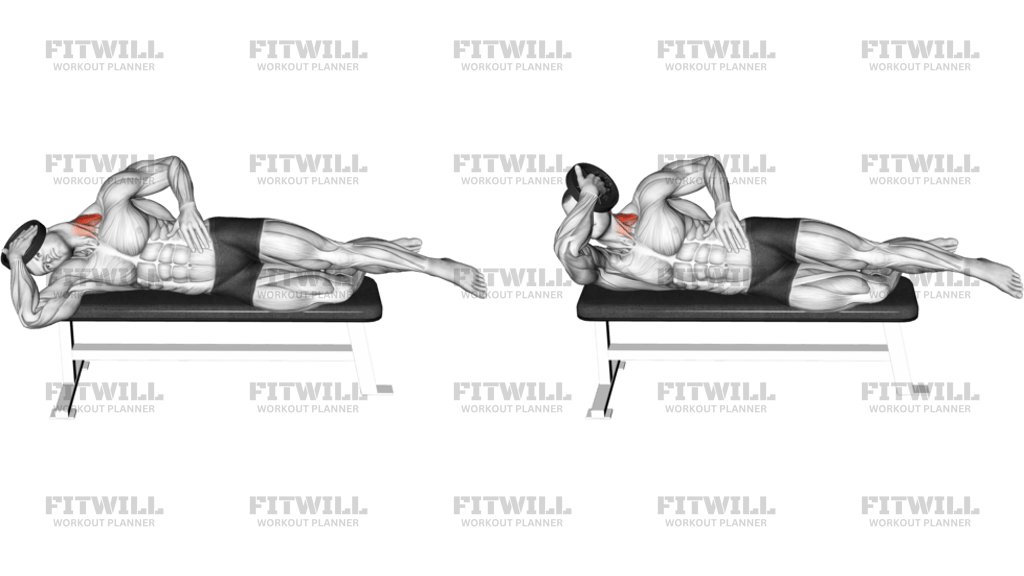
Weighted Lying Neck Head Twist is a controlled neck-strength drill performed while lying on your back with the head supported and a very light external load. The goal is to train the cervical rotators and the smaller stabilizers around the neck without letting the shoulders, ribs, or torso take over. Because the neck is a small joint system, the load should feel precise rather than heavy, and every rep should look smooth from start to finish.
The setup matters more than the load. Lie on a flat bench or mat with the back of the head supported, knees bent, and the ribcage relaxed. Keep the chin slightly tucked so the motion stays in the neck instead of becoming a big jaw-driven or upper-back twist. Whether the resistance comes from a plate, harness, or another light weighted setup, it should stay centered and predictable so both sides of the neck work evenly.
As you turn the head, move slowly and keep the shoulders quiet. Rotate only as far as you can without shrugging, arching, or letting the upper body roll with the motion. A short pause at the end of the twist can help you feel the target muscles, but the return should still be deliberate and under control. Breathe out on the twist, inhale as you come back through center, and reset before the next rep.
This exercise is usually used as accessory work for athletes, posture training, or carefully programmed neck conditioning. It pairs well with neck isometrics, upper-back work, and general trunk stability because those pieces help the head stay organized when the neck starts to fatigue. Use it only with pain-free range and a conservative load; if the motion becomes jerky, if your jaw clenches hard, or if the neck feels compressed rather than worked, the resistance is too much.
For most lifters, the best version is the simplest one: stable body position, slow head rotation, and a light load that never forces momentum. The exercise should feel like a controlled rotation drill, not a full-body grind. If you can keep the torso still and repeat the same path on every rep, the movement is doing what it is supposed to do.
Fitwill
Log Workouts, Track Progress & Build Strength.
Achieve more with Fitwill: explore over 9600 exercises with images and videos, access built-in and custom workouts, perfect for both gym and home sessions, and see real results.
Start your journey. Download today!




Instructions
- Lie on a flat bench or mat with the back of your head supported, knees bent, and your ribcage relaxed.
- Set the light resistance so it stays centered and predictable over the head or neck; avoid any setup that pulls more on one side.
- Tuck your chin slightly and keep your jaw unclenched before you start the first rep.
- Rotate your head slowly to one side, stopping before your shoulders roll or your upper back twists.
- Hold the end position for a brief pause if it feels smooth and pain-free.
- Return through center with the same control instead of letting the weight snap the head back.
- Repeat the same turn to the other side or use the exact side-to-side pattern your program calls for.
- Exhale as you twist, inhale as you come back, and reset your neck before each rep.
- End the set if the motion turns jerky, your shoulders start to lift, or the neck feels compressed instead of controlled.
Tips & Tricks
- Keep the load very light; neck rotators fatigue fast and do not need much resistance to work hard.
- A small chin tuck usually keeps the motion in the cervical spine instead of letting the jaw lead the turn.
- If your torso rolls with the rep, reduce the range until the head can move without the ribs moving.
- A slow turn with a one-count pause usually gives better neck tension than trying to force a bigger twist.
- Do not shrug into the support surface; let the back of the head rest while the neck does the work.
- Use a mirror or video if needed so both sides of the twist look the same from rep to rep.
- Stop short of any sharp pinch, dizziness, or radiating sensation; this movement should feel like muscular work, not joint irritation.
- If the jaw clenches hard, the resistance is too high or the range is too aggressive.
- This is better as accessory work than as a max-effort strength test, so leave a rep or two in reserve.
Frequently Asked Questions
What does Weighted Lying Neck Head Twist train?
It mainly trains the neck rotators and the small stabilizers that help the head stay controlled during rotation.
Can beginners do this exercise?
Yes, but only with very light resistance, a small range, and careful control. If you have a neck history, get clearance first.
Should I use a bench or the floor?
Either works. The floor feels more stable, while a bench can give you more room to move if the setup needs it.
What should move during the rep?
Only the head and neck should rotate. The shoulders, ribs, and lower back should stay quiet.
How heavy should the weight be?
Light enough that you can control every inch of the turn. If the load makes you jerk, brace hard, or lose position, it is too heavy.
Where should I feel it most?
You should feel the work along the side and back of the neck, not in the shoulders or lower back.
Is this the same as neck isometric work?
No. Isometrics keep the head still, while this exercise uses a controlled twisting motion through the neck.
What are the most common mistakes?
Using too much weight, letting the torso roll, craning the chin forward, and moving too fast are the biggest problems.
When should I use this in a workout?
It fits best as accessory work after the main lifts or as part of a neck-conditioning block.