Kettlebell Single-Arm Sit-Up
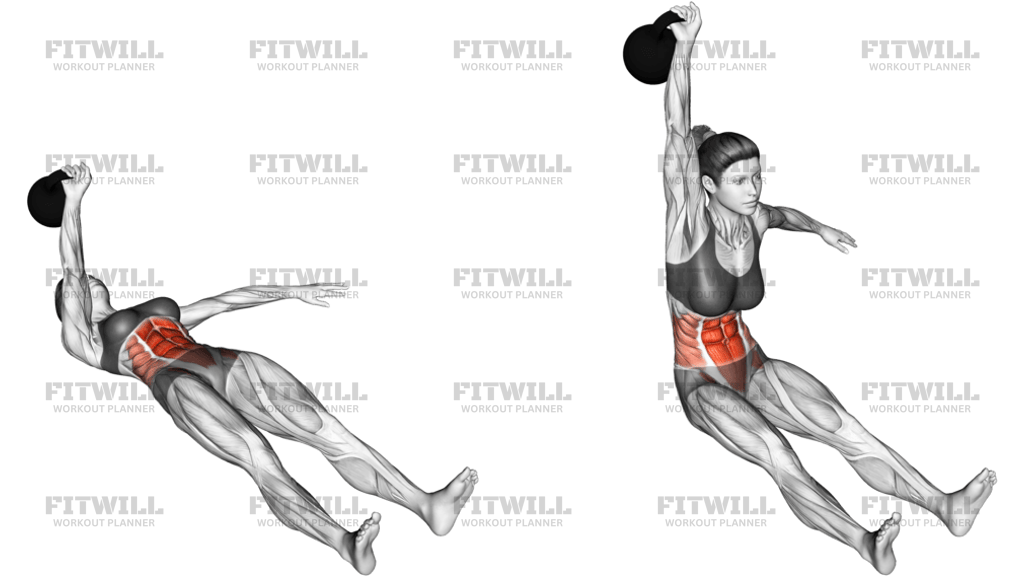
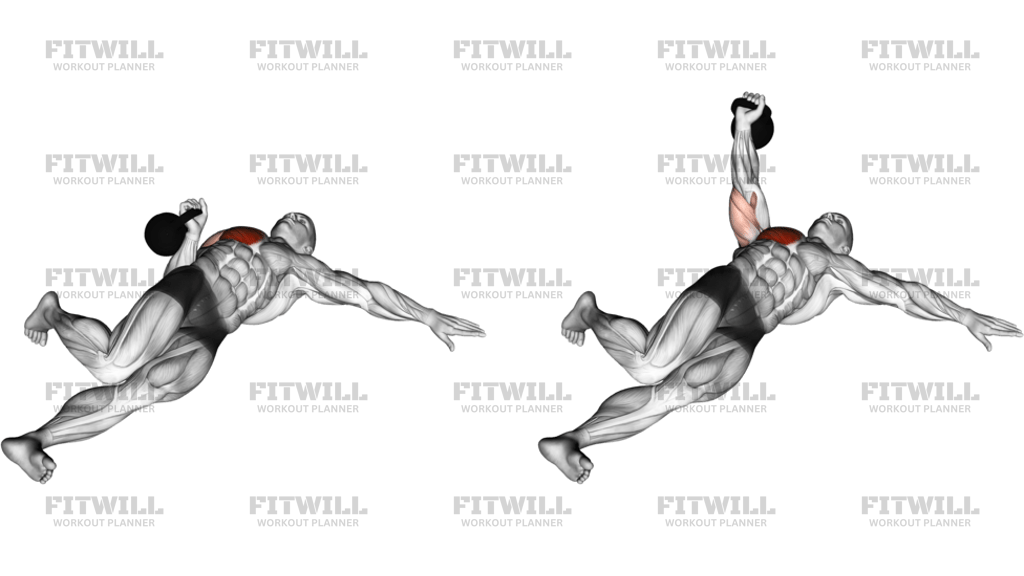
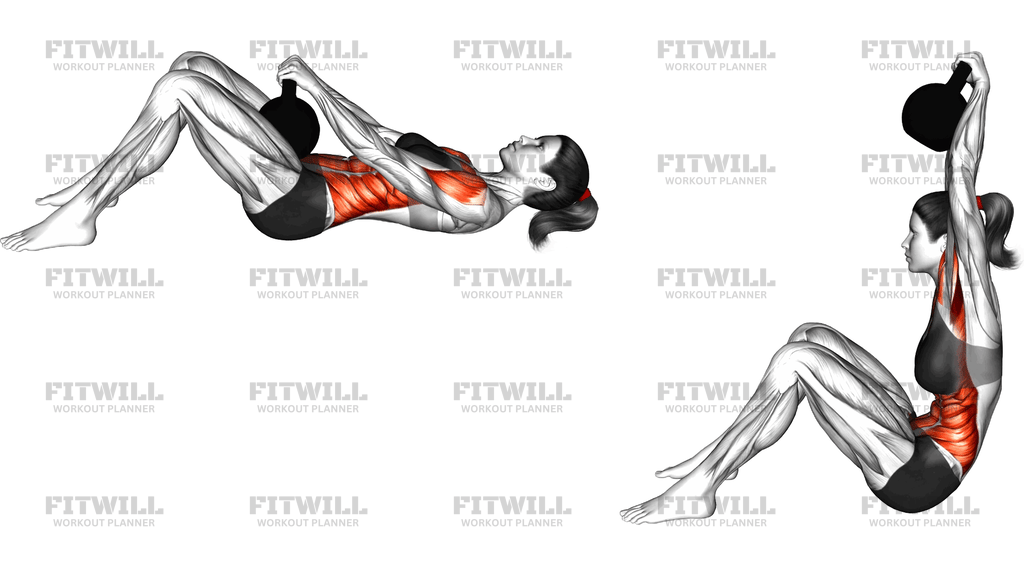
Kettlebell Single-Arm Sit-Up is a floor-based core exercise that combines trunk flexion with a strong overhead hold. In the image, the working arm stays locked out above the shoulder while the opposite arm reaches away for balance, so the real challenge is keeping the kettlebell stacked as the torso curls from the floor into a tall seated position.
This movement trains the rectus abdominis, obliques, hip flexors, and the shoulder stabilizers that keep the bell from drifting forward or wobbling off line. It is less about grinding through a huge sit-up and more about controlling the transition from a long supine position to an upright seat while the shoulder, rib cage, and pelvis stay organized.
The setup matters because the kettlebell should feel balanced before the first rep starts. Lie on your back with the working arm vertical, wrist straight, elbow locked, and the bell positioned directly over the shoulder. Keep the free arm out to the side as a counterweight and set your legs in the same position for every rep so you can tell whether the torso or the shoulder is losing control.
As you sit up, think about curling the ribs toward the pelvis instead of yanking with the arm. The bell should stay above the shoulder the entire time, and the return should be just as controlled as the ascent. If the shoulder starts to drift, the neck tightens, or the lower back arches hard off the floor, the load is too heavy or the range is too aggressive.
This exercise fits well in a core, warm-up, or accessory block when you want anti-rotation control, overhead stability, and trunk strength in the same rep. It rewards clean singles and low-rep sets more than rushed volume. Beginners can use a very light kettlebell or even bodyweight first, then add load only when they can keep the arm stacked and the torso moving smoothly from floor to seat.
[ Workout Log & Planner ]
Put your next workout in Fitwill
Keep your plan and training log ready when you are.


Instructions
- Lie on your back with one kettlebell locked out over the shoulder in the working hand, the opposite arm stretched out for balance, and your legs long and quiet on the floor.
- Set the wrist straight, stack the elbow under the bell, and keep the shoulder packed down before you start the first rep.
- Brace your abdomen, keep your chin slightly tucked, and prepare to curl the ribs toward the pelvis instead of reaching forward with the arm.
- Press the non-working side into the floor just enough to steady yourself, then begin the sit-up without letting the kettlebell drift off vertical.
- Roll head, shoulders, and upper back off the floor first, then continue curling until you reach a tall seated position.
- Pause briefly at the top with the bell still stacked over the shoulder and the torso upright.
- Lower back to the floor one segment at a time, keeping the arm fixed overhead and resisting any pull from the weight.
- Reset your ribs, shoulders, and legs before the next repetition, then repeat for the planned set.
Tips & Tricks
- Keep the kettlebell stacked directly above the shoulder; if the bell starts drifting toward your face or chest, the rep is already losing quality.
- Treat the free arm as a counterbalance, not an extra lever. Reaching harder with that arm usually twists the torso and makes the sit-up sloppy.
- Exhale as you curl up and finish the breath near the top, then inhale on the way down to keep the trunk from bracing too hard against the floor.
- Move the torso, not the kettlebell. The arm should stay almost motionless while the ribs travel toward the pelvis.
- Use a light bell. This exercise becomes much harder when the shoulder has to stabilize overhead while the abs are still learning the pattern.
- Keep the neck long and the chin slightly tucked so you do not turn the sit-up into a head-first yank.
- If your lower back arches or your heels pop around, shorten the range and slow the descent before adding load.
- Stop the set when the bell starts wobbling overhead, because that is usually the first sign that the shoulder and trunk have stopped sharing the work cleanly.
Frequently Asked Questions
What muscles does the kettlebell single-arm sit-up train?
It mainly trains the abs and obliques, with the hip flexors and shoulder stabilizers helping keep the torso and kettlebell under control.
Should the kettlebell stay over my shoulder the whole time?
Yes. The arm should stay stacked vertically so the shoulder is stabilizing the bell while the torso does the sit-up.
Do I pull with my arm to get up?
No. The sit-up should come from the trunk curling up, while the arm simply keeps the kettlebell balanced overhead.
Can I bend my knees during the set?
You can if that is how your version is coached, but the image shows the legs long, which makes the core and hip flexors work harder.
What is the biggest mistake with this exercise?
Letting the kettlebell drift forward or using momentum to pop up is the main issue. That usually means the load is too heavy.
Is this a beginner-friendly core exercise?
Yes, if you start with a very light kettlebell or even bodyweight and keep the movement slow enough to control the overhead position.
How heavy should the kettlebell be?
Choose a load that lets you keep the wrist, elbow, and shoulder stacked without shaking or twisting through the torso.
What type of workout is this best for?
It works well in a core block, warm-up, or accessory session when you want anti-rotation control and overhead stability in the same movement.