Bar Band Overhead Triceps Extension
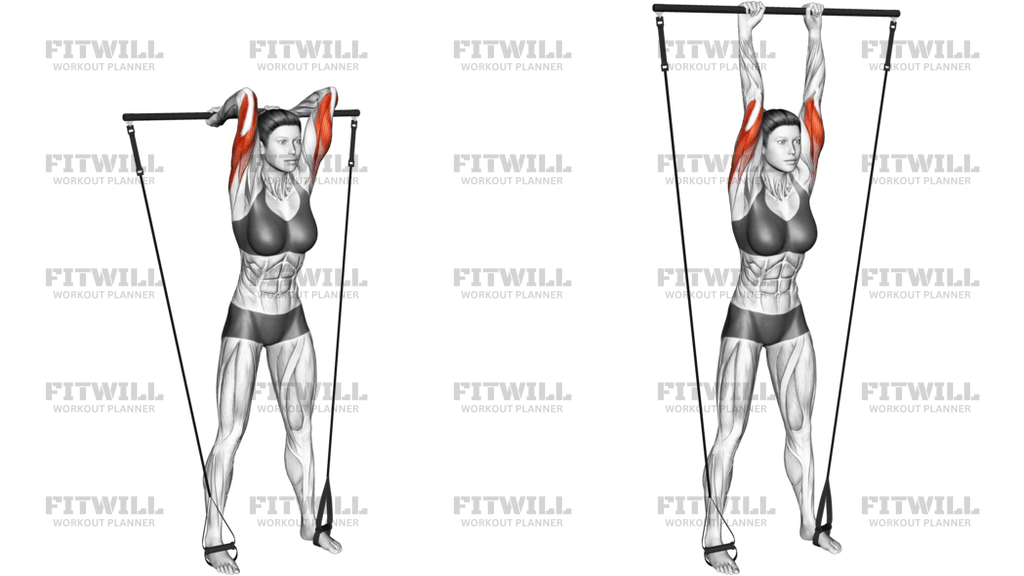
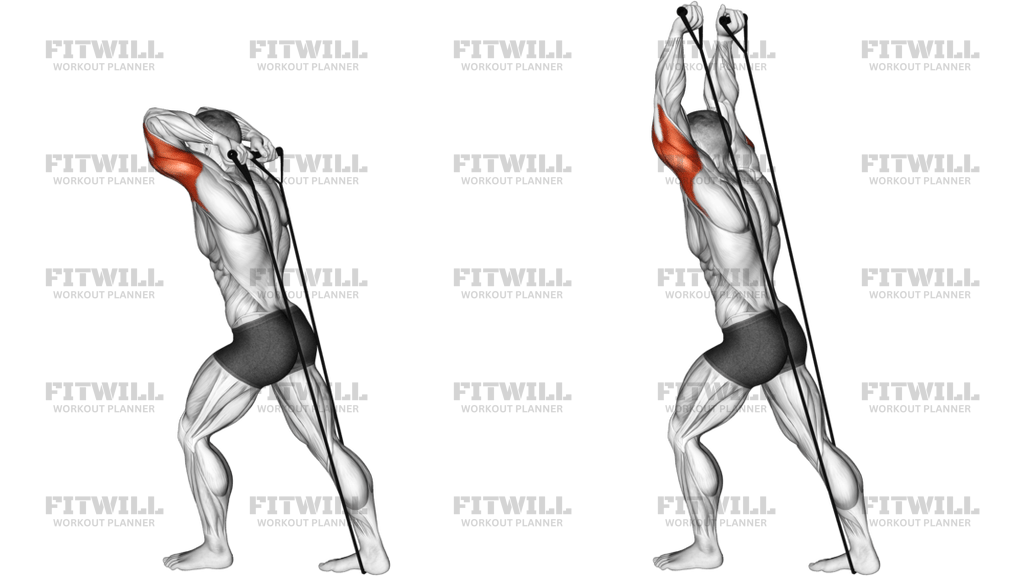
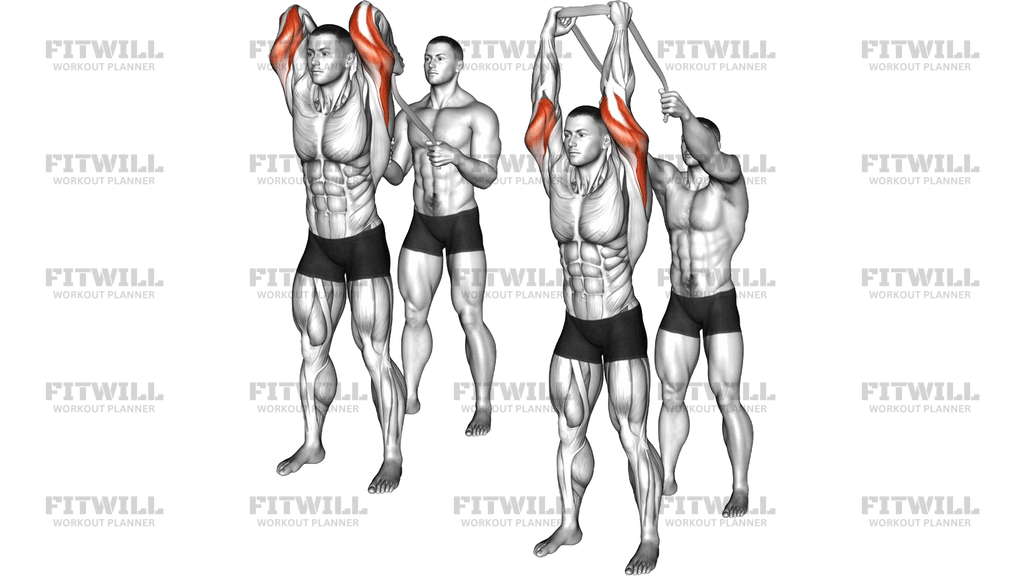
Bar Band Overhead Triceps Extension is a standing band exercise for the back of the upper arm. In the image, the band is anchored under the feet and the hands hold a straight bar overhead while the elbows bend and straighten through a vertical path. That overhead position matters because it keeps the triceps under tension through a long range, especially the long head, which is challenged more when the upper arm stays beside the head.
The exercise is primarily used to build triceps strength, size, and control without needing a cable stack or dumbbells. Because the load comes from elastic resistance, the movement gets heavier as the band stretches, so the top half of the extension usually feels hardest. That makes setup important: if the stance is unstable or the bar starts too far behind the head, the set turns into a shoulder and lower-back compensation drill instead of a triceps exercise.
A good rep starts with the ribs stacked over the pelvis, feet planted on the band, and the bar held with the elbows pointing forward or slightly inward. From there, bend and extend only at the elbows while keeping the upper arms quiet. The bar should travel on a controlled arc from behind the head to overhead, not drift forward with body sway. The goal is to keep the triceps doing the work while the shoulders, forearms, and core stabilize the position.
This movement is useful as accessory work after compound pressing, as a higher-rep triceps builder, or as a controlled option when a cable station is unavailable. It can also be a good choice for beginners if the band tension is light enough to maintain clean elbow tracking. Stop the set if the bar starts to bounce, the elbows flare hard, or the low back has to arch to finish the rep.
When the exercise is done well, it should feel like a focused elbow-extension pattern with steady tension from the first rep to the last. Keep the tempo smooth, return with control, and choose resistance that lets you finish every repetition without losing the overhead line of force.
[ Workout Log & Planner ]
Put your next workout in Fitwill
Keep your plan and training log ready when you are.


Instructions
- Step onto the band with both feet about hip-width apart and hold the straight bar overhead with a shoulder-width grip.
- Bring the bar behind your head so your elbows are bent and pointing forward, with your upper arms close to your ears.
- Stack your ribs over your pelvis, squeeze your glutes lightly, and keep your neck long before the first rep.
- Start the rep by straightening your elbows until your arms reach overhead and the bar lines up above your head.
- Keep your upper arms mostly fixed while the forearms move through the extension.
- Lower the bar back behind your head with control until you feel a deep triceps stretch.
- Exhale as you extend the elbows and inhale as you lower into the stretch.
- Finish the set by bringing the bar to the front of your body and stepping off the band carefully.
Tips & Tricks
- Keep the elbows narrow and aimed forward; if they flare wide, the shoulders usually start stealing the work.
- Let the band load build gradually through the rep instead of snapping the bar upward off the first inch of motion.
- Use a stance that feels locked in, because standing too narrow makes it hard to resist the band pulling you forward or backward.
- Do not arch the lower back to finish the lockout; the ribs should stay down while the elbows extend.
- If the bar drifts in front of your face, the line of tension changes and the triceps lose some of the direct loading.
- Choose enough band tension to feel the stretch at the bottom, but not so much that you have to grind through the first few inches.
- Keep the wrists stacked over the elbows so the bar stays stable and the forearms do not collapse under tension.
- Stop each set when the bar starts bouncing behind your head or the upper arms start moving with the torso.
Frequently Asked Questions
What muscle does Bar Band Overhead Triceps Extension target most?
The triceps are the main target, with extra emphasis on the long head because the arms stay overhead.
Why are my elbows starting to flare out during the rep?
That usually means the band is too heavy or the bar is too far behind the head. Reduce tension and keep the upper arms closer to the ears.
Should the bar stay behind my head or move in front of it?
It should move from behind the head to directly overhead, with the elbows doing the work and the torso staying mostly still.
Is this more of a strength or a muscle-building exercise?
It can serve both purposes, but it is especially useful for moderate-to-high-rep triceps work with strict control.
Can I do this if I do not have a cable machine?
Yes. The band and bar setup shown here is a practical substitute for a cable overhead triceps extension.
Why do I feel this in my shoulders and core too?
Those muscles help stabilize the overhead position, but the movement should still feel centered in the triceps.
What is the biggest form mistake with this exercise?
The biggest mistake is turning it into a standing backbend by leaning and arching to finish the rep.
How do I make the movement harder without changing the exercise?
Use a thicker band, stand on the band with a shorter length, or slow the lowering phase while keeping the elbows fixed.