Bar Band Single Leg Reverse Hyperextension
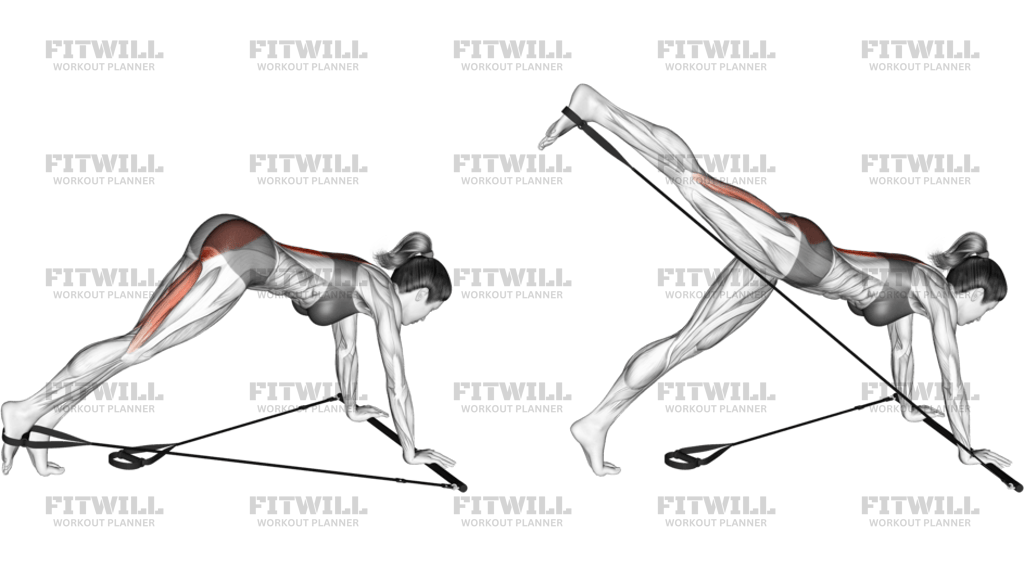
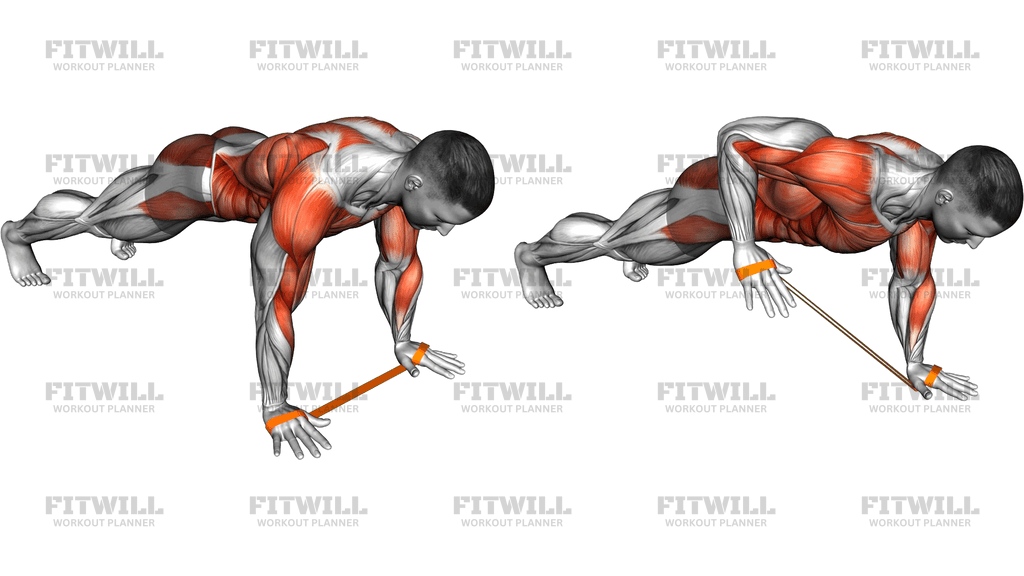
Bar Band Single Leg Reverse Hyperextension is a band-resisted single-leg hip extension done from a hands-supported position. The image shows one foot grounded, both hands braced on the floor, and the working leg driving back and up against the band, which makes this a useful drill for glute strength, hamstring involvement, and pelvic control. The goal is not to fling the leg higher than your trunk, but to keep the pelvis square and let the hip extend cleanly under tension.
That setup matters because this movement is easy to turn into a low-back arch if the band is too heavy or the trunk is not stacked. A solid rep starts with a long neck, ribs pulled down, hands under the shoulders, and the support leg stable enough that the pelvis does not twist. The band should already create noticeable tension at the bottom so the first inch of the lift is intentional, not sloppy.
When you perform the rep, think about pressing the heel back and slightly up while keeping both hips pointed toward the floor. The lift should come from the hip of the working side, not from swinging the torso or cranking through the lumbar spine. A brief squeeze at the top helps you feel the glute finish the extension, and a slow return keeps the band from snapping the leg back to the start.
This exercise works well as an accessory for glute and hamstring training, as a warm-up for sprinting or lower-body lifting, or as a control drill when one side needs more stability than the other. It is also useful when you want unilateral posterior-chain work without loading the spine heavily. Light to moderate band tension is usually enough to expose compensation patterns and make the movement productive.
Use it with full control and a pain-free range of motion. If the support shoulder collapses, the pelvis opens, or the lower back takes over, shorten the range and reduce band tension. Clean repetition quality matters more here than chasing height, speed, or fatigue.
[ Workout Log & Planner ]
Put your next workout in Fitwill
Keep your plan and training log ready when you are.


Instructions
- Loop the band around the working foot or ankle and anchor it low in front of you so there is tension at the start of the rep.
- Place both hands flat on the floor under your shoulders and square your chest to the ground.
- Set the support leg under your hips, keep it straight but not locked, and lift the working leg just behind you.
- Pull your ribs down, brace your midsection, and keep your neck long before you move.
- Drive the working heel back and slightly up as if you are lengthening the hip, not arching the lower back.
- Keep both hips facing the floor and stop the lift when the pelvis starts to open or the low back wants to take over.
- Squeeze the glute briefly at the top, then lower the leg slowly until you are back under band tension.
- Reset your brace on each rep and breathe out as the leg lifts, then inhale on the controlled return.
Tips & Tricks
- Start with a light band that lets you keep the pelvis square at the top instead of forcing extra height.
- Keep pressure through both hands so the shoulders stay stacked and the trunk does not drift side to side.
- Think about moving the thigh from the hip joint, not kicking from the knee or swinging the torso.
- A shorter range with clean hip extension is better than a high leg raise with a twisted pelvis.
- If the lower back feels it more than the glute, reduce band tension and shorten the top position.
- Pause for a split second at the top to remove momentum and make the working side do the work.
- Lower the leg slowly so the band does not pull you back to the start between reps.
- Keep the support foot planted and the hip slightly turned down so the working side does not roll open.
Frequently Asked Questions
What does Bar Band Single Leg Reverse Hyperextension train most?
It mainly trains the glutes and hamstrings of the lifting side while the hands and trunk work to keep the pelvis steady.
Why is the band anchored low in front of me?
A low front anchor keeps tension on the working leg through the whole range and makes the hip extension work harder from the bottom.
Should my hips stay level during the rep?
Yes. If the pelvis rotates open, the movement turns into a compensation pattern and the glute loses tension.
How high should I lift the working leg?
Lift only until the hip is fully extended and the pelvis stays square. Higher is not better if the lower back starts arching.
Can I do this with a strong band?
Only if you can keep the support shoulder, trunk, and pelvis controlled. If the band yanks you out of position, it is too heavy.
What should I feel in the support side?
You should feel the hands, shoulder girdle, and support leg stabilizing the body, but the main burn should come from the working glute and hamstring.
Is this a good exercise for beginners?
Yes, as long as they start with light band tension and a short, controlled range of motion.
What is the most common mistake with this exercise?
The most common mistake is swinging the leg up by extending the lower back instead of finishing the lift with the hip.