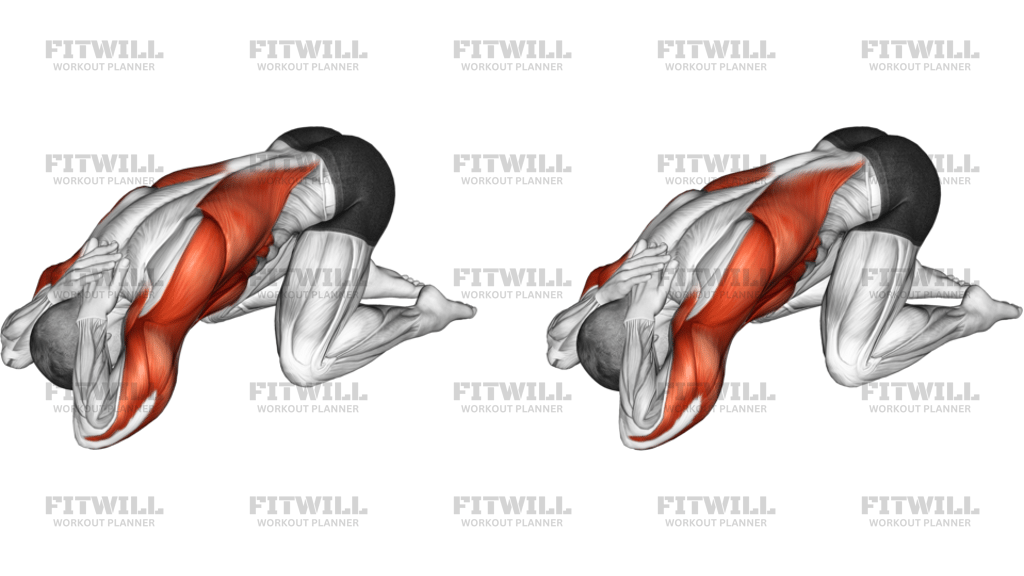
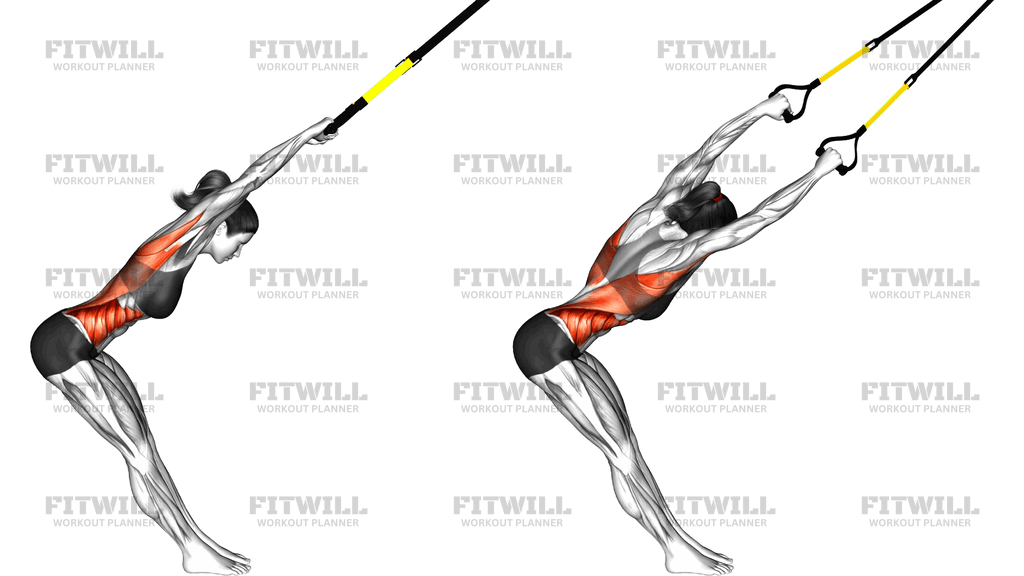
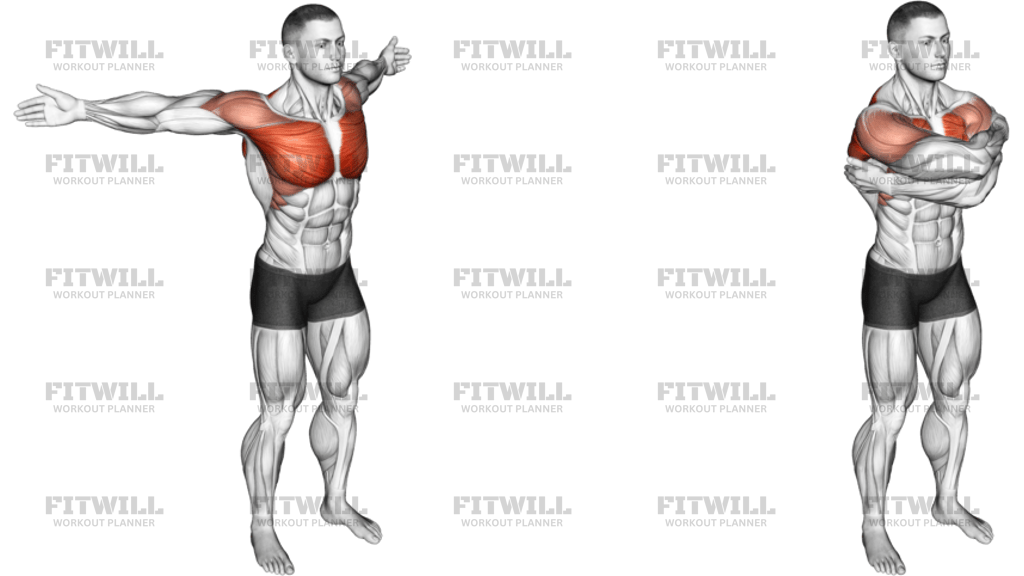
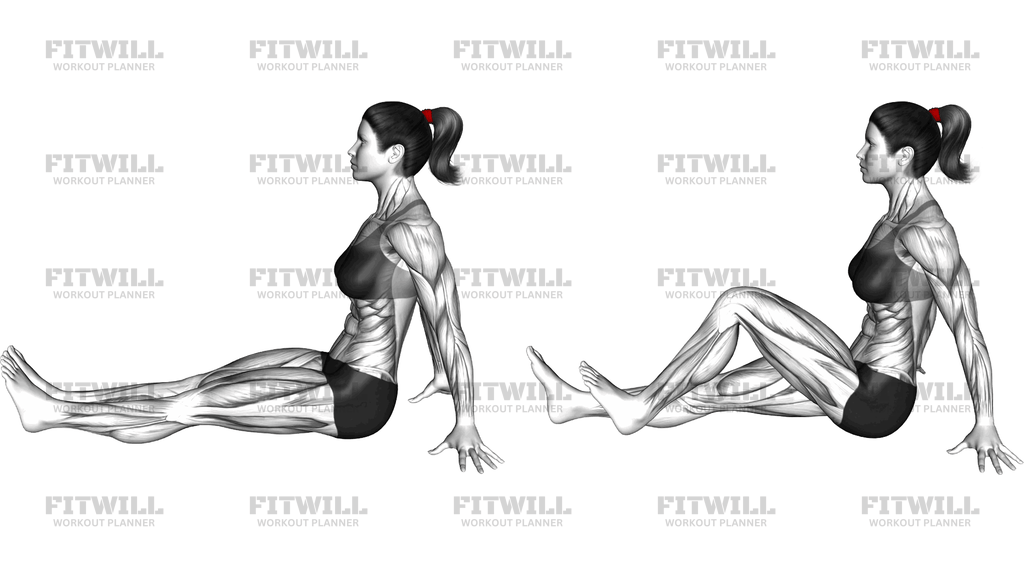
Side Lying Floor Stretch
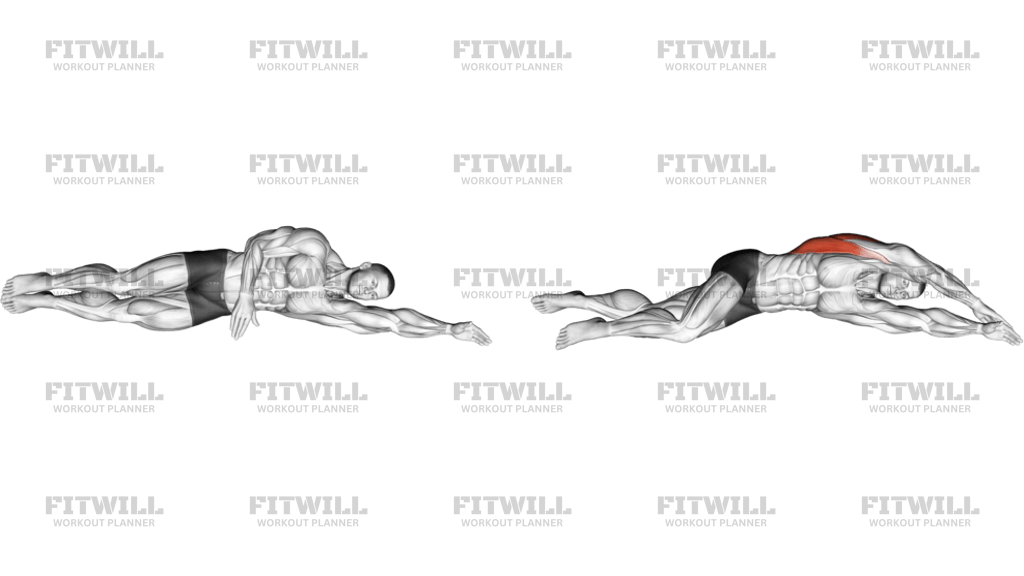
Side Lying Floor Stretch is a side-body and lat mobility drill done on an exercise mat with body weight. The image shows a person lying on one side and reaching the top arm long overhead, which lengthens the lat, ribcage, and outer shoulder line on that side. This is not a strength movement; the value comes from positioning, breathing, and staying relaxed enough to let the stretch open without twisting out of alignment.
The primary target is the latissimus dorsi, with the upper back, biceps, forearms, and shoulder stabilizers helping you hold the shape. In broader training terms, it also asks the torso to stay organized while one side of the body lengthens. That makes the exercise useful before overhead pressing, pulling work, rows, hanging work, or any session where tight lats can limit overhead reach or clean shoulder motion.
The setup matters because small changes in trunk angle and reach change where the stretch lands. Lying square on your side, keep the ribs stacked, extend the top arm overhead, and let the shoulder blade glide rather than shrugging hard toward the ear. If the pelvis rolls or the chest opens too much, the stretch shifts away from the lat and into a looser, less useful position. The goal is a long line from hip to fingertips on the working side.
Move slowly into the stretch and use the exhale to soften the side body. A good rep feels like a controlled opening through the armpit, outer ribs, and upper back, not a sharp pull in the shoulder joint. Hold the end position only as long as you can keep breathing calmly and keep the neck relaxed. If the stretch becomes pinchy, shorten the reach, adjust the rib cage, or reduce how far the arm travels overhead.
Use this drill as a warm-up mobility piece, recovery work between heavier sets, or a downregulation stretch at the end of training. It is especially helpful for people who spend a lot of time pressing, climbing, swimming, or doing pull-ups and pulldowns. Beginners can use it easily because it requires no load, but the stretch still needs attention and control. Clean side-lying position, steady breathing, and a comfortable range matter more than forcing a bigger shape.
Fitwill
Log Workouts, Track Progress & Build Strength.
Achieve more with Fitwill: explore over 9600 exercises with images and videos, access built-in and custom workouts, perfect for both gym and home sessions, and see real results.
Start your journey. Download today!




Instructions
- Lie on your side on the mat with your body in a long line and the lower hip stacked over the lower shoulder.
- Reach the top arm forward and then overhead so the arm stays long and the palm faces the floor or slightly up.
- Keep the bottom arm relaxed in front of your torso or tucked comfortably under your head if that matches the setup.
- Set your ribs down and keep your pelvis from rolling open as you begin the stretch.
- Exhale slowly and let the top ribs soften toward the floor while the reaching arm lengthens away from the hip.
- Slide or arc the top arm a little farther overhead until you feel a strong but tolerable stretch through the lat and outer ribcage.
- Hold the end position without shrugging or twisting, breathing steadily into the side body.
- Ease out of the stretch slowly, reset your side-lying position, and repeat on the other side before finishing.
Tips & Tricks
- If the stretch shifts into the front of the shoulder, shorten the overhead reach and keep the arm slightly in front of the ear.
- Keep the top ribs from flaring upward; the best version of this drill keeps tension along the side body, not a big arch through the low back.
- A long exhale usually helps the lat relax more than forcing the arm farther overhead.
- If your neck tightens, support the head with the bottom arm or a small towel so you can stay relaxed.
- Do not let the top shoulder roll aggressively forward; let it glide, but keep the joint feeling smooth and open.
- Small changes in trunk angle make a big difference, so adjust the chest and pelvis before chasing more range.
- Hold the stretch only as long as your breathing stays easy and the sensation remains dull, not sharp.
- This movement is about positional quality, so a shorter, cleaner hold is better than a deep shape you cannot control.
Frequently Asked Questions
What does Side Lying Floor Stretch target most?
It mainly targets the latissimus dorsi on the reaching side, along with the outer ribs and upper shoulder line.
Why do I need to stay stacked on my side?
Keeping the ribs and pelvis stacked helps the stretch stay in the lat and side body instead of turning into a twist or low-back arch.
Where should I feel the stretch?
You should feel it along the side of the torso, under the armpit, and possibly into the outer shoulder, not as a sharp pinch in the joint.
Is the top arm supposed to go straight overhead?
Yes, but only as far as you can keep the shoulder relaxed and the ribs from flaring; a slightly forward angle is fine if it feels better.
Can I do this before pull-ups or pulldowns?
Yes, it is a useful warm-up for overhead or pulling sessions when tight lats limit reach and shoulder motion.
What is the most common mistake with this stretch?
People often twist open, arch the low back, or force the arm farther overhead than their shoulder can comfortably handle.
Should I hold my breath at the end position?
No. Slow exhalations usually help the side body relax and make the stretch more useful.
What should I change if I feel pinching in the front of the shoulder?
Shorten the reach, move the arm slightly forward, and reduce how far the torso rolls so the shoulder stays in a safer angle.