Resistance Band Single Stiff Leg Deadlift With Single-Arm Row
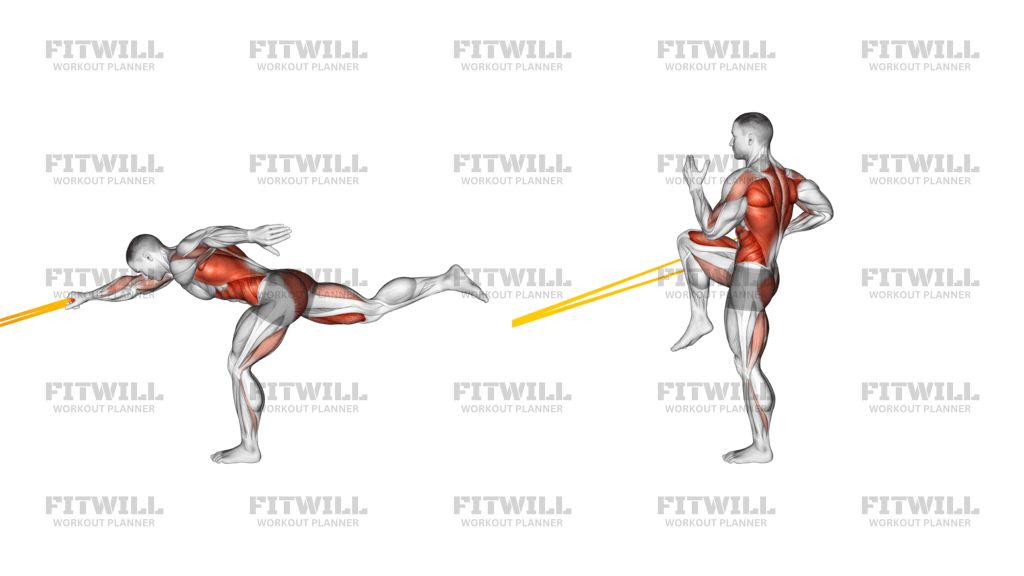
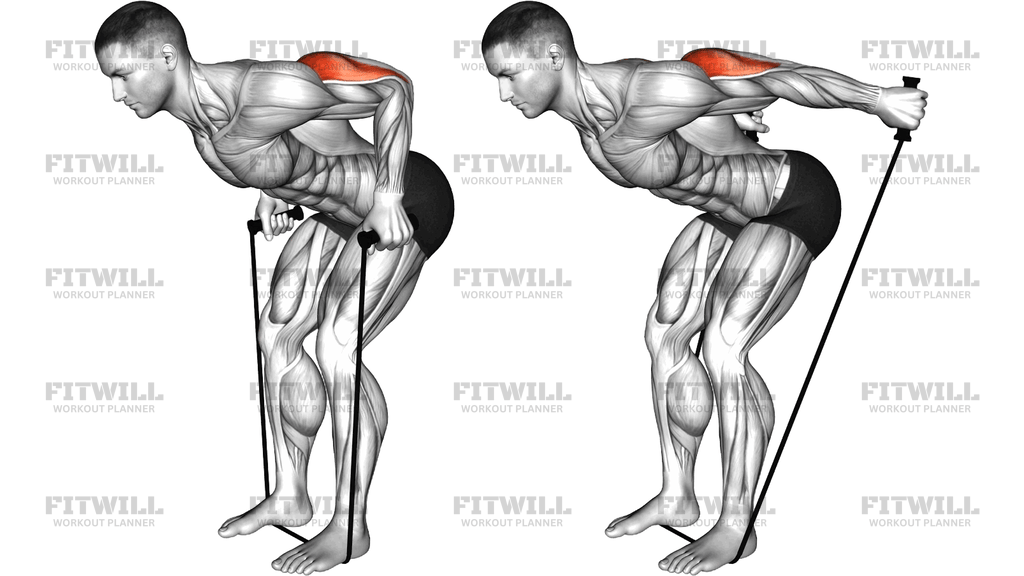
Resistance Band Single Stiff Leg Deadlift With Single-Arm Row combines a single-leg hip hinge with a band row, so it challenges the glutes, hamstrings, upper back, and the core muscles that keep the body from twisting. The movement is built around one planted foot and one working arm, which makes balance and control just as important as strength. When it is done well, you feel the back side of the hip load during the hinge and the shoulder blade work during the row, with the trunk staying square instead of drifting open.
The setup matters because the band changes tension quickly as you move away from the anchor. Start with the band secured low and slightly in front of you so the handle can travel in a clean line. Stand tall on the planted foot, keep a soft bend in that knee, and reach the free leg long behind you before you begin the hinge. The torso should tip from the hips, not from the lower back, and the pelvis should stay level so the movement stays on the glute and hamstring chain instead of turning into a sloppy balance drill.
As you lower, keep the band arm long and the shoulder packed. At the bottom, row by driving the elbow back toward your ribs while keeping the chest quiet and the neck relaxed. Reverse the motion by pressing through the planted foot, extending the hip, and standing up with control. If your version finishes with a knee drive, bring the free knee forward only after the hip is fully extended, then reset into the next rep without bouncing or swinging the band.
This exercise is useful in accessory strength work, athletic warmups, and unilateral lower-body sessions because it trains hip stability, anti-rotation control, and a strong pulling pattern in one rep. Use it when you want coordination and posterior-chain tension without heavy loading. Keep the range pain-free, slow the lowering phase, and stop the set if the standing foot starts collapsing inward, the low back starts rounding, or the torso begins rotating to help the row.
Fitwill
Log Workouts, Track Progress & Build Strength.
Achieve more with Fitwill: explore over 9600 exercises with images and videos, access built-in and custom workouts, perfect for both gym and home sessions, and see real results.
Start your journey. Download today!




Instructions
- Anchor the band low and slightly in front of the side you are holding, then stand on the opposite foot with that foot planted flat.
- Hold the handle in one hand and let the other arm reach back or out for balance.
- Soften the standing knee, brace your trunk, and send the free leg straight back as you hinge at the hips.
- Lower until your torso is nearly parallel to the floor or until your hamstrings stop the descent without rounding the low back.
- From the bottom, row the handle toward the side of your ribs by pulling the elbow behind you.
- Keep the hips square and the shoulder from shrugging as you reverse the hinge and press the floor away.
- As you stand tall, finish with the hips fully extended; if the variation uses a knee drive, bring the free knee forward under control.
- Lower the handle and free leg smoothly back into the hinge position for the next rep, then switch sides after the set.
Tips & Tricks
- Place the anchor low enough that the band stays taut at the start; slack makes the row feel jerky.
- Keep the planted foot tripoded: big toe, little toe, heel.
- Let the hinge happen through the hip fold, not by reaching the chest down.
- Row with the elbow, not the hand, so the shoulder blade can move without twisting the torso.
- If the band pulls your shoulder forward at the bottom, shorten the range or step closer to the anchor.
- Keep the free leg in line with the torso; opening the hip usually means you are rotating to cheat the row.
- Use a lighter band than you would for a two-leg row because balance is the limiting factor.
- Exhale during the row and stand-up phase, then reset your breath before the next rep.
Frequently Asked Questions
What muscles does this exercise work?
It primarily trains the glutes and hamstrings on the standing side, with lats, upper back, and core muscles helping control the row and balance.
Where should I anchor the resistance band?
Anchor it low and slightly in front of the working arm so the handle can travel toward your ribs without yanking the shoulder forward.
Should my free leg stay straight?
Keep it long and active behind you as a counterbalance; a soft bend is fine if it helps keep the pelvis level.
Do I row while I am hinging down or standing up?
Row from the bottom or near the bottom of the hinge, then stand by driving through the planted foot and extending the hip.
Why do I feel this in my lower back?
Usually the hinge is coming from the spine instead of the hips, or the band is too heavy and pulling you out of position.
Can beginners do this exercise?
Yes, but start with a very light band and use a shallow hinge so you can own the balance before adding depth.
How do I keep from wobbling?
Keep the standing foot rooted, slow the lowering phase, and avoid rotating the rib cage when you row.
What is a good regression?
Tap the free toe lightly behind you on every rep or practice the hinge and row separately before combining them.