Bodyweight Standing Sissy Squat
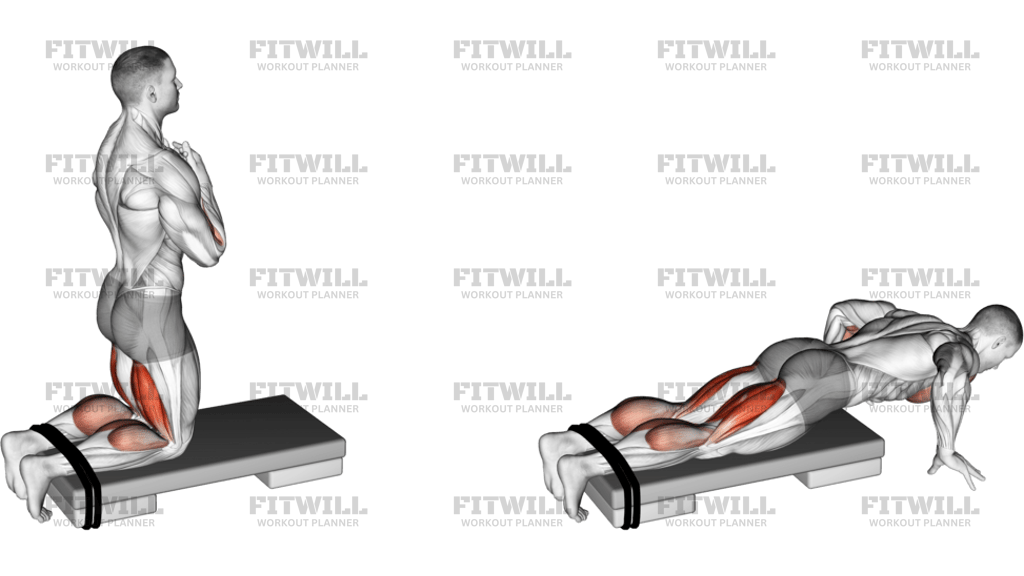
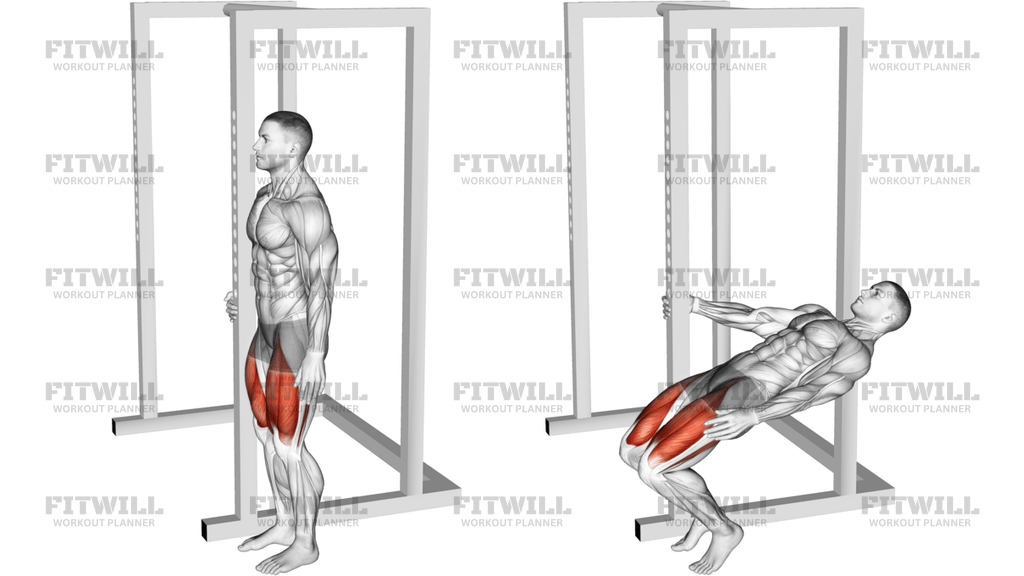
Bodyweight Standing Sissy Squat is a quad-dominant bodyweight exercise built around a very specific pattern: the knees travel forward while the torso leans back and the hips stay extended. In the image, the lifter uses the uprights for light support so the movement stays honest and controlled. That support matters because the exercise is less about balance and more about isolating the front of the thighs through a long, deliberate knee-bending path.
The main training effect comes from the quads, especially in the deep knee-flexion position where the lower thighs have to keep the body from collapsing. The movement also asks a lot from the calves, ankles, and trunk to keep the line from knees to shoulders organized. If the hips fold back into a hinge, the exercise stops looking like a sissy squat and turns into a different squat pattern, so the setup is part of the exercise, not just a way to get started.
Set your feet close together, rise onto the balls of your feet if that is how you can keep the line, and hold the rack or frame lightly for balance. From there, keep the torso tall through the chest, let the knees glide forward, and lean back as the knees bend. The goal is not to drop straight down; it is to create a long arc where the thighs do the work while the body stays braced and aligned. In the bottom position, the quads should be loaded hard without the low back taking over.
This exercise is useful when you want direct thigh work without loading the spine with a barbell. It can fit as an accessory after heavier squat work, as a high-tension finisher, or as a controlled knee-dominant drill when you want more quad volume. Because the position is demanding on the knees and ankles, range of motion should be earned gradually. If the bottom position feels sharp instead of muscular, shorten the range and build control before chasing depth.
Quality reps are slow, clean, and repeatable. The descent should be controlled, the change of direction should be intentional, and the return should come from the quads instead of a hip thrust or a hand pull. Done well, Bodyweight Standing Sissy Squat gives the front of the thighs a strong stimulus with very little equipment, but it only works when the support, foot position, and backward lean stay consistent from rep to rep.
[ Workout Log & Planner ]
Put your next workout in Fitwill
Keep your plan and training log ready when you are.


Instructions
- Stand facing the support frame and hold the uprights lightly at about waist height.
- Bring your feet close together, shift onto the balls of your feet, and keep your knees and toes pointing forward.
- Set your torso tall and slightly leaned back so your hips stay extended instead of folding into a hip hinge.
- Take a breath in and brace your trunk before the first rep.
- Let your knees travel forward as you lower your body in a smooth arc while your shoulders stay back.
- Keep the heels lifted if needed and keep the pressure centered through the forefoot and big toe.
- Lower until your quads are fully loaded but the knees and ankles still feel controlled and pain-free.
- Drive through the front of your thighs to stand back up while keeping the hands as light as possible on the frame.
- Exhale near the top, reset your balance, and repeat for the planned reps.
Tips & Tricks
- Treat the frame as balance assistance, not as something to pull yourself through the rep.
- If your hips drift back and your torso folds forward, shorten the range until you can keep the backward lean.
- Keep the knees tracking in line with the second and third toes instead of letting them cave inward.
- Stay on the forefoot and big toe; dropping the heels usually turns the rep into a different squat pattern.
- Lower slowly so the quads stay under tension the whole way down instead of bouncing into the bottom.
- If ankle mobility is limited, reduce depth before you widen the stance or force the knees farther forward.
- Use a small range at first and earn deeper reps only when the knees feel smooth and stable.
- The return should feel like a quad press, not a hip snap or a yank from the arms.
- Stop the set when you lose the backward lean or start shifting weight side to side.
Frequently Asked Questions
What does Bodyweight Standing Sissy Squat train most?
It primarily trains the quadriceps, with a strong bias toward the front of the thighs through deep knee flexion.
Why do I hold the uprights or frame?
The support keeps you balanced so you can focus on the backward lean and forward knee travel instead of fighting a fall.
Should my heels stay down the whole time?
Not necessarily. In this variation the heels often rise as the knees travel forward, which helps keep the quad bias and the sissy squat shape.
How deep should I go in the bottom position?
Go as deep as you can while keeping the knees tracking cleanly and the body under control. If the knees or ankles feel sharp, cut the range short.
What is the most common form mistake on this exercise?
The biggest mistake is turning it into a hip hinge by sending the hips back and folding the torso forward instead of keeping the torso leaned back.
Can I do this if I am new to knee-dominant work?
Yes, but start with a small range and light hand support. Build depth only after you can keep the knees, ankles, and torso organized.
Where should I feel the tension during the rep?
You should feel a strong stretch and contraction in the quads, especially near the bottom and through the drive back up.
What should I change if my knees feel irritated?
Shorten the range, slow the descent, and use more hand support. If pain persists, stop and choose a less aggressive quad exercise.