Inverted Wide Row
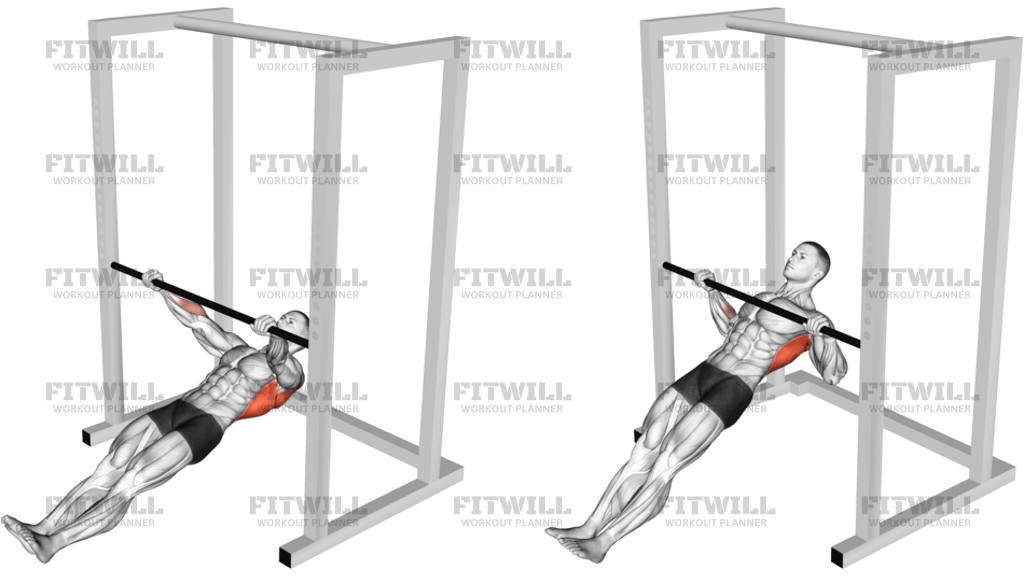
Inverted Wide Row is a bodyweight horizontal pulling exercise performed under a fixed bar, usually set in a rack or between sturdy uprights. The wide hand position and suspended body angle make it a useful way to train upper-back and lat strength without loading the spine the way a heavy free-weight row can.
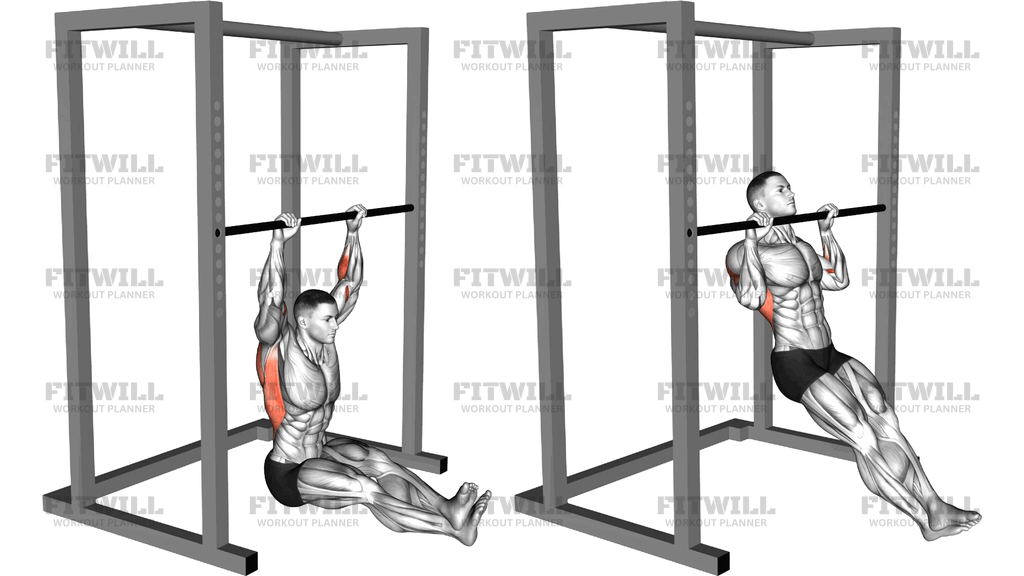
The image shows a straight-body setup with the heels on the floor, the torso braced, and the chest traveling toward the bar. That body line matters: if the hips sag or the chest flares wildly, the pull turns into a sloppy shrug instead of a clean row. A wider grip generally shifts the emphasis a little more toward the lats, rear delts, rhomboids, and upper back while the biceps and forearms still contribute strongly.
Set the bar at a height that lets you start with the shoulders under control and the arms fully extended. The lower your body is relative to the bar, the harder each rep becomes. That makes the setup part of the exercise, not just the beginning of it. Use your feet as an anchor, keep the legs long and tight, and think about creating a rigid plank from heels to head before you pull.
On each rep, lead with the chest and pull the elbows out and back until the upper chest or lower sternum approaches the bar. Briefly squeeze the shoulder blades together without overextending the lower back, then lower under control until the arms are straight again. Exhale as you row, inhale on the way down, and keep the neck neutral so the head does not chase the bar.
Inverted Wide Row fits well in back-focused strength work, accessory supersets, and beginner pulling progressions because it teaches body control, scapular movement, and honest pulling strength. It also scales easily: move the feet farther forward, elevate the feet, or raise the bar to change the difficulty. If your shoulders are cranky, shorten the range slightly and keep the elbows from flaring too high behind the body.
Fitwill
Log Workouts, Track Progress & Build Strength.
Achieve more with Fitwill: explore over 9600 exercises with images and videos, access built-in and custom workouts, perfect for both gym and home sessions, and see real results.
Start your journey. Download today!




Instructions
- Set a fixed bar in a rack or between sturdy uprights at about waist to chest height, then lie underneath it with your heels on the floor and your body lined up straight from shoulders to ankles.
- Take a wide overhand grip on the bar, a little wider than shoulder width, and let your arms fully extend while keeping your shoulders packed and your chest lifted slightly.
- Brace your abs and glutes so your torso stays rigid, and keep your feet planted as the base of support for the row.
- Start the pull by driving your elbows out and back, bringing your chest toward the bar rather than simply yanking with your hands.
- Keep your body in one long line as you row; do not let your hips drop or your ribs pop up to fake a bigger range.
- Squeeze at the top when the upper chest or lower sternum reaches the bar, then pause briefly without shrugging your shoulders toward your ears.
- Lower yourself in a controlled line until your arms are straight again and your shoulder blades open back up under tension.
- Breathe out as you pull and breathe in as you lower, then reset your whole body before the next repetition.
Tips & Tricks
- A wider grip usually shortens the range a little, so judge difficulty by body angle as much as by hand width.
- If the bar keeps hitting your chest early, raise the bar or walk your feet closer to make the set more manageable.
- Think about pulling the elbows to the sides of your ribcage, not straight down to your hips.
- Keep the neck long and the chin slightly tucked so you do not crank your head forward at the top.
- Do not turn the top of the rep into a shrug; the shoulders should stay down while the back finishes the pull.
- Use a slow lowering phase to build control through the scapulae and to keep the lats loaded longer.
- If your grip fails before your back does, the bar may be too slippery or the set may be too long for the current variation.
- Stop the set when the body line breaks, even if you still have repetitions left on paper.
Frequently Asked Questions
What muscle does Inverted Wide Row target most?
The lats are the primary target, with strong help from the upper back, rear shoulders, biceps, and forearms.
Can beginners perform this exercise?
Yes. Beginners can usually start with a higher bar and a more upright body angle, then lower the bar as control improves.
Where should I hold the bar for the wide grip?
Hold the bar a little wider than shoulder width. That keeps the elbows flared enough to match the wide-row pattern without forcing the shoulders into an extreme position.
Should my body stay straight during the row?
Yes. Keep the body rigid from heels to shoulders so the row comes from the back and arms instead of from hip swing.
How high should I pull on each rep?
Aim for the upper chest or lower sternum to meet the bar. If you need to crank your shoulders forward or arch hard to get there, the setup is too difficult.
What if the movement feels more like a shrug than a row?
Lower the bar, shorten the range slightly, and focus on driving the elbows back while keeping the shoulders down.
Is the wide version harder than a standard inverted row?
Usually yes, because the wider grip reduces leverage and shifts more of the work to the upper back and lats.
How do I make Inverted Wide Row more challenging?
Move your feet farther forward, elevate your feet, or lower the bar so your torso is more horizontal.