Side Bench Squat
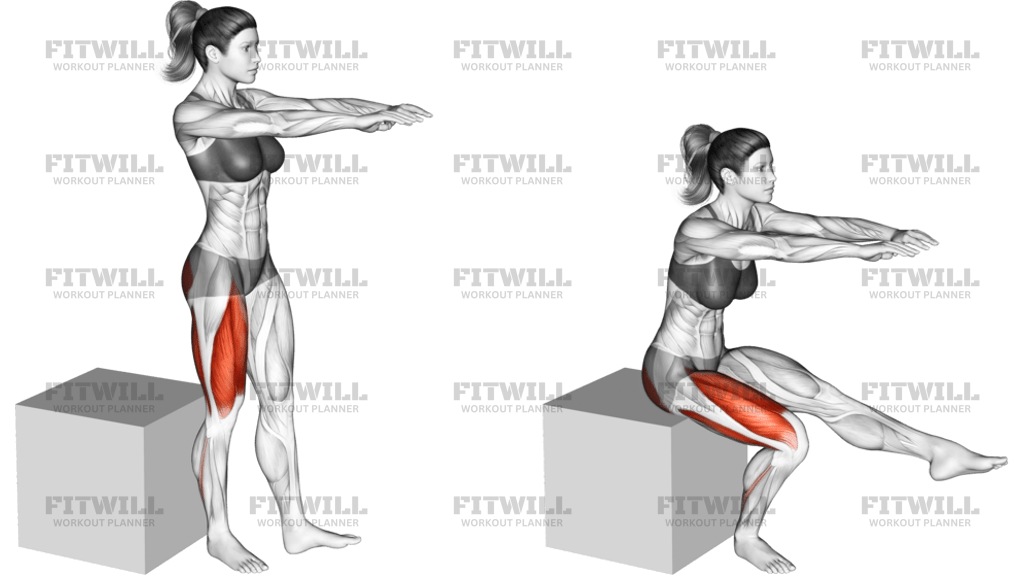
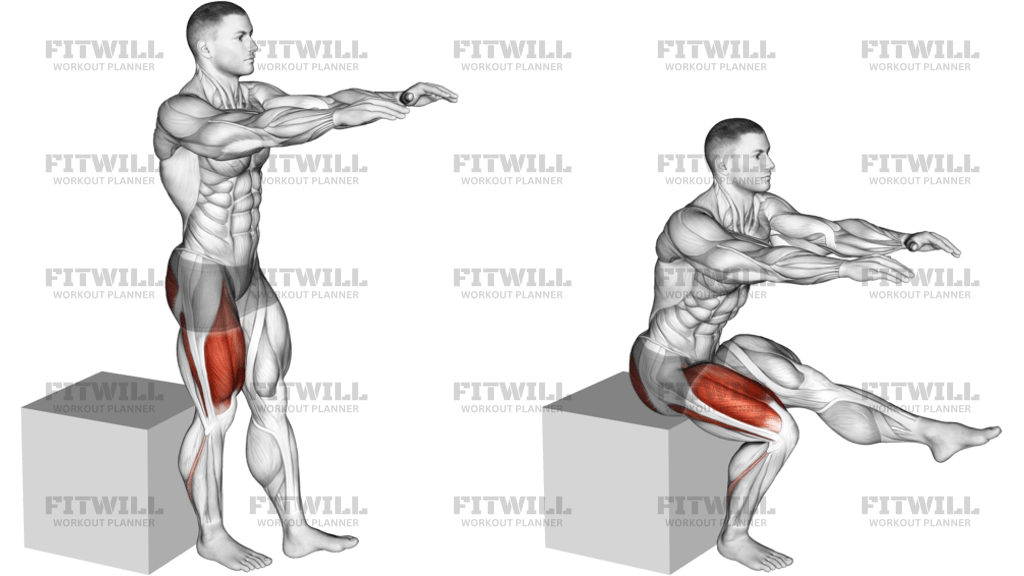
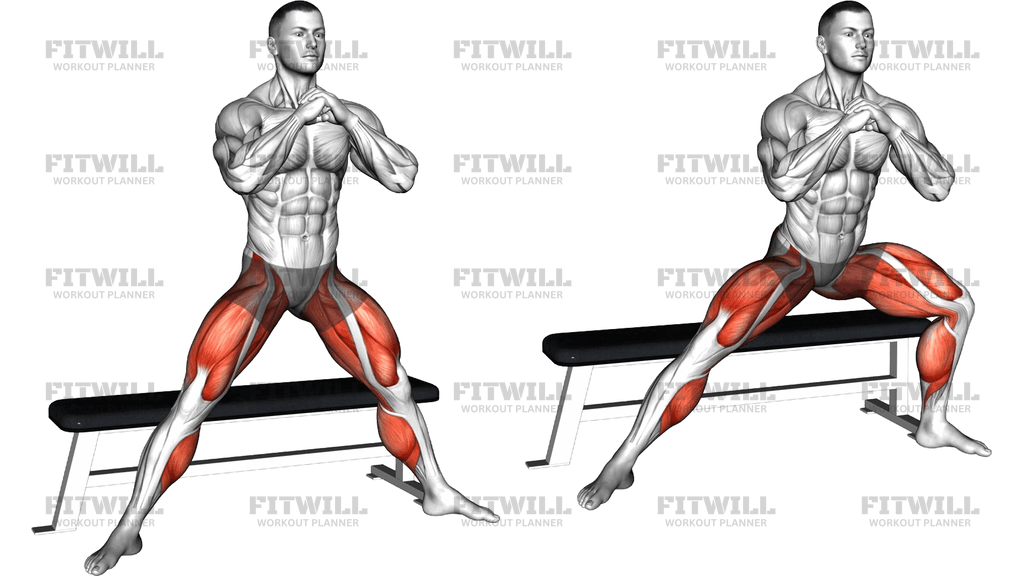
Side Bench Squat is a bodyweight lower-body exercise that uses a bench as a clear depth target and balance reference. It is useful when you want a squat pattern that feels more controlled than a free-air squat while still demanding honest work from the thighs, glutes, and inner-thigh stabilizers. The bench gives you an obvious endpoint, which helps keep the descent consistent and prevents the rep from turning into a rushed half-squat.
The movement is especially helpful for learning how to sit back and down with the torso upright while the hips stay organized. Side Bench Squat also trains the smaller stabilizing muscles around the hips and pelvis, because you have to manage pressure through the working foot while the body shifts sideways and lowers in a controlled path. That makes it a practical accessory for people who want better single-leg or lateral control without adding load too soon.
Set up with a flat bench beside or just behind your working side, then take a stance wide enough that you can lower smoothly without losing balance. Keep your chest lifted, your gaze forward, and your feet planted before you start the first rep. The goal is to lower until the glutes lightly meet the bench, not to collapse onto it or bounce off it.
On each descent, guide the knee in line with the toes and keep the whole foot rooted so the heel does not peel away. On the way up, drive through the midfoot and heel, stand tall through the hip, and finish each rep without leaning hard to one side. If the torso twists, the knee caves inward, or the pelvis drops sharply to one side, shorten the range and clean up the path before adding more repetitions.
Side Bench Squat works well in a warm-up, a lower-body accessory block, or as part of a controlled bodyweight circuit. It is a good choice when you want a squat variation that rewards patience, balance, and clean depth rather than speed. Beginners can use it as a safe entry point to squatting mechanics, while more experienced lifters can slow the lowering phase, pause on the bench, or increase range control to make each rep more demanding.
[ Workout Log & Planner ]
Put your next workout in Fitwill
Keep your plan and training log ready when you are.


Instructions
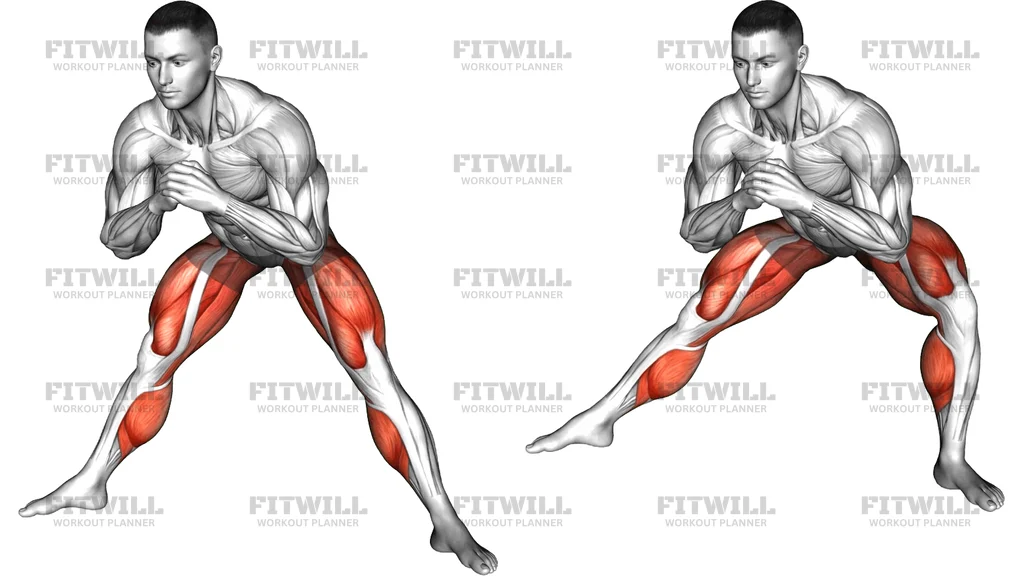
- Stand side-on to a flat bench with your feet wider than shoulder width and place the bench just behind the outside hip of your working side.
- Plant both feet before the first rep, keep your chest tall, and bring your hands together in front of your sternum for balance.
- Shift your weight into the working leg and set your knees so they point in the same direction as your toes.
- Sit your hips back and down toward the bench, letting the non-working leg extend out to the side if you need room to balance.
- Lower under control until your glutes lightly touch the bench without relaxing onto it.
- Drive through the midfoot and heel of the working leg to stand back up to full hip and knee extension.
- Keep your ribcage stacked over your pelvis as you rise, and avoid twisting your torso toward the bench.
- Inhale on the way down, exhale as you stand, and reset your stance before the next repetition.
- Step away from the bench carefully after the final rep and recheck your foot placement before another set.
Tips & Tricks
- Use the bench as a tap target, not a seat; sinking fully onto it usually steals tension from the working leg.
- If your knee drifts inward, widen your stance a little and think about driving the knee toward the second toe on the way up.
- Keep the whole foot flat, especially the heel, so the rep does not turn into a forward lunge onto the toes.
- A slower lowering phase makes the side-to-side shift easier to control and keeps the thighs working longer.
- If the torso leans hard toward the bench, shorten the range until you can keep your chest stacked over the hips.
- The bench height matters: a higher bench is easier, while a lower bench forces more depth and hip control.
- Do not let the free leg hang dead; place it only as much as needed for balance so the working leg still does the job.
- Stop the set when you start pushing off the bench or twisting the pelvis to finish the rep.
- For extra challenge, pause for a full second with the glutes touching the bench before driving back up.
Frequently Asked Questions
What muscles does Side Bench Squat work?
It mainly trains the thighs, especially the quads and inner thighs, with the glutes and core helping to control the sideways descent and the stand-up.
Is Side Bench Squat good for beginners?
Yes. The bench gives beginners a clear depth target, which makes the movement easier to learn than a free squat done without feedback.
How low should I go on Side Bench Squat?
Lower until your glutes lightly touch the bench, then drive back up. If you have to collapse onto the bench or twist to reach it, the range is too deep for your current setup.
Why does my knee cave inward on Side Bench Squat?
That usually means your stance is too narrow or your arch is collapsing. Replant the whole foot, open the stance slightly, and track the knee in line with the toes.
Should I sit all the way down on the bench?
No. Light contact is enough. If you fully relax onto the bench, the working leg loses tension and the rep stops training the squat pattern.
What is the main mistake people make with Side Bench Squat?
Most people rush the descent and let the torso twist toward the bench. Keep the ribcage centered over the pelvis and lower with control.
Can I use Side Bench Squat instead of a regular squat?
It can work as an accessory or learning drill, but it does not replace a full bilateral squat if your goal is overall strength and load progression.
How do I make Side Bench Squat harder?
Use a lower bench, pause on the bench for a second, or slow the lowering phase. Those changes increase control demands without needing extra equipment.