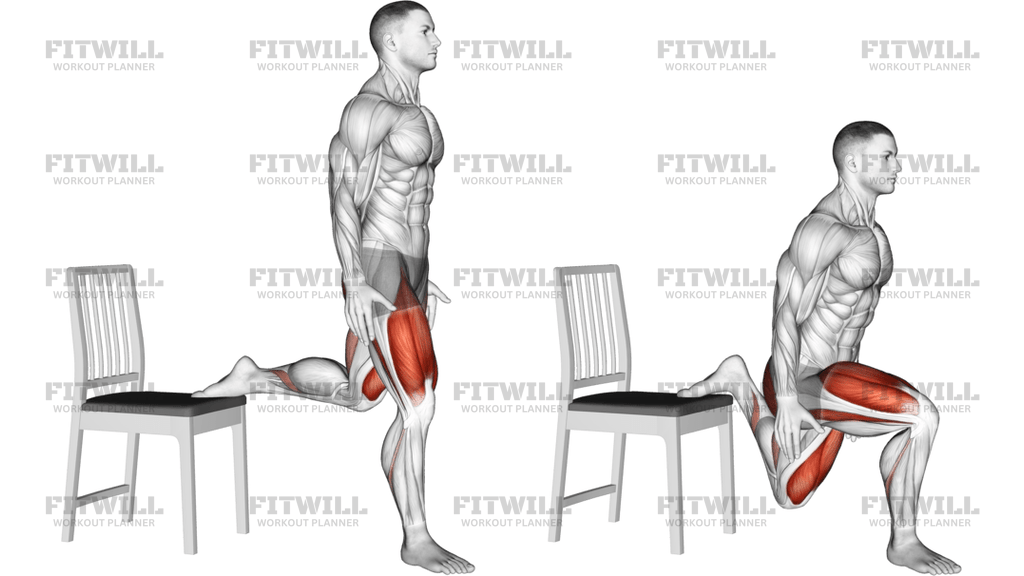
Single Leg Bench Squat
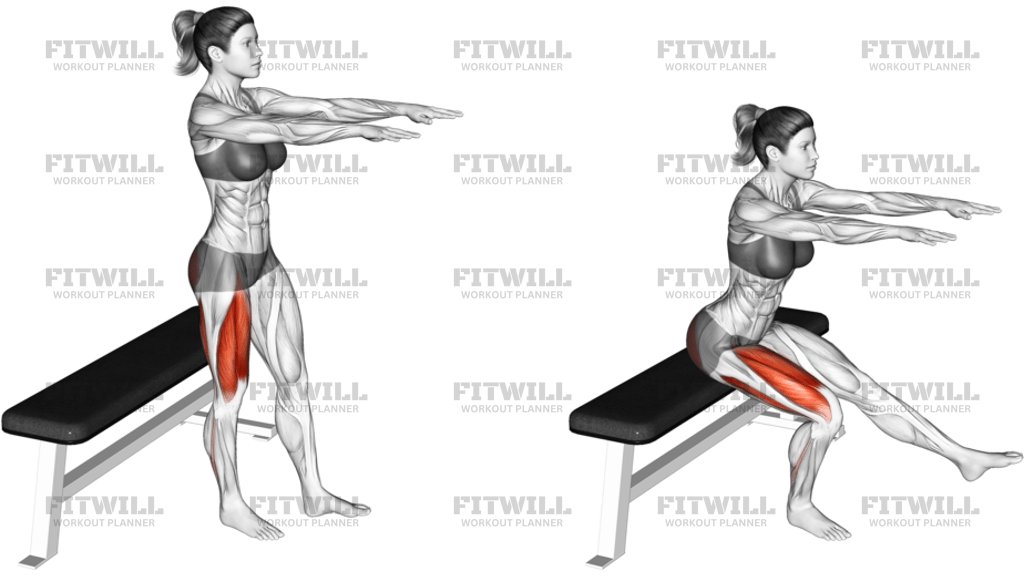
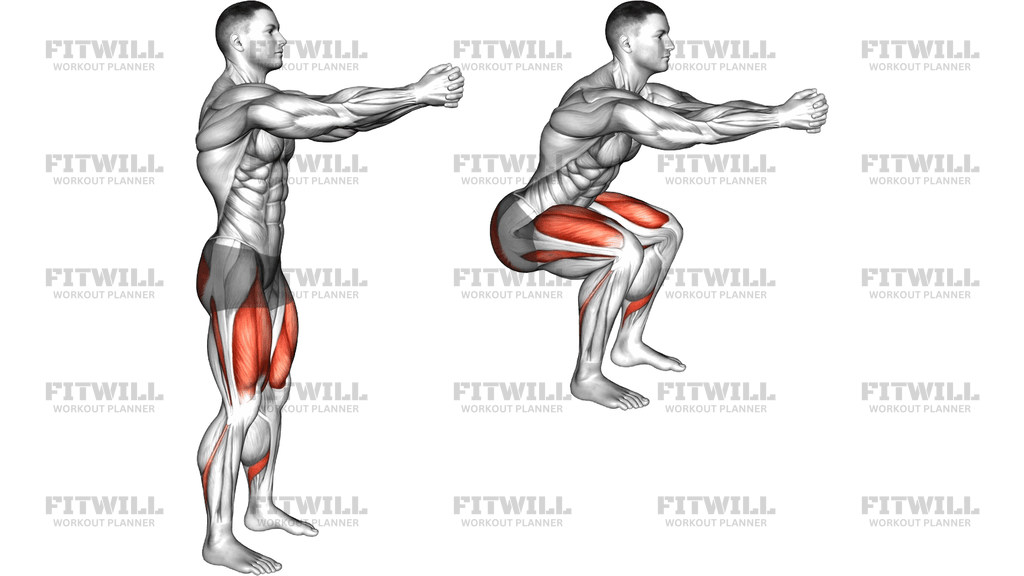
Single Leg Bench Squat is a unilateral squat variation where you lower to a bench on one leg, tap the seat lightly, and stand back up without letting the working side collapse. The bench gives you a clear depth target, which makes this a useful bodyweight drill for building single-leg control, glute strength, and coordinated knee and hip tracking.
This exercise places the main demand on the glutes, with the hamstrings helping control the descent and the core and lower back working to keep the torso stable. In anatomy terms, the main work centers on the Gluteus maximus, supported by Biceps femoris, Rectus abdominis, and Erector spinae. The free leg is held forward, so balance and pelvic control matter as much as leg strength.
Bench height and foot placement change the feel of the movement a lot. If the standing foot is too close, you will be forced into a deep knee bend and may lose balance; if it is too far away, you will reach for the bench and shift pressure off the heel. The best setup lets you sit back to the bench with the shin and torso staying organized, then stand by driving through the whole foot instead of bouncing off the seat.
During the rep, keep the arms straight in front of you as a counterbalance, lower under control, and let the glute touch the bench lightly before driving back up. The free leg should stay off the floor and travel forward rather than dropping down to help you cheat the bottom position. The goal is a clean sit-to-stand pattern on one leg, not a fast drop onto the bench.
Use Single Leg Bench Squat when you want a straightforward way to train unilateral strength, balance, and lower-body coordination with minimal equipment. It works well as a warm-up, accessory exercise, or regression for deeper single-leg squats. Beginners can use it if the bench is high enough to control, while more advanced lifters can lower the seat height or add load once the movement stays smooth and pain-free.
Fitwill
Log Workouts, Track Progress & Build Strength.
Achieve more with Fitwill: explore over 9600 exercises with images and videos, access built-in and custom workouts, perfect for both gym and home sessions, and see real results.
Start your journey. Download today!




Instructions
- Place a bench behind you and stand on one working leg with the other leg extended slightly in front of you for balance.
- Set the standing foot far enough from the bench that you can sit back to it without losing your heel or reaching for it.
- Lift your arms straight out in front of your shoulders and brace your torso before you start the descent.
- Push your hips back and bend the working knee as you lower toward the bench under control.
- Keep the free leg off the floor and held forward so it does not help you cheat the bottom position.
- Touch the bench lightly with your glute or hamstring; do not drop hard onto the seat.
- Drive through the full foot of the working leg to stand back up while keeping the knee in line with the toes.
- Exhale as you stand, then reset your balance before the next repetition.
Tips & Tricks
- Choose a bench height that lets you touch down without tucking the pelvis or collapsing into the seat.
- Keep your arms level and still; swinging them usually means you are using momentum instead of the standing leg.
- Let the knee travel in line with the second and third toes so the femur does not cave inward.
- Press through the heel and midfoot together rather than shifting onto the toes at the bottom.
- Keep the free foot lifted and slightly forward so it does not tap the floor and steal tension from the working leg.
- Use a slow descent if you feel unstable; a controlled eccentric makes the balance challenge more useful.
- Treat the bench as a light target, not a place to sit and rest between reps.
- Stop the set when the pelvis starts to twist or the standing hip drops toward the free side.
Frequently Asked Questions
What muscles does Single Leg Bench Squat work most?
The main demand is on the glutes, with the quads, hamstrings, core, and lower back helping stabilize the rep.
Is the bench supposed to be a hard stop?
No. Use a light touch on the bench, then stand back up without fully relaxing on the seat.
How far should my standing foot be from the bench?
Place it far enough away that you can sit back under control and still keep the heel down at the bottom.
What should the free leg do during the rep?
Keep the free leg lifted in front of you so it acts as a counterbalance instead of dropping down to help with the squat.
Can beginners use this exercise?
Yes, if the bench is high enough to keep the range manageable and the movement stays smooth and controlled.
What is the most common form mistake?
Dropping onto the bench and bouncing back up usually means the working leg is not controlling the descent.
Can I hold weight with this movement?
Yes, once bodyweight reps are stable, you can add a dumbbell or goblet load without changing the sit-back pattern.
How do I make the exercise easier or harder?
Make it easier with a higher bench or light fingertip support; make it harder by lowering the bench or adding load.