Bodyweight Standing Back Stretch
Bodyweight Standing Back Stretch is a standing mobility drill that opens the front of the shoulders and chest while encouraging the upper back to stay long and organized. The image shows a simple bodyweight setup with the arms held behind the torso, so the exercise is best treated as a controlled posture-and-breathing drill rather than a forceful bend or a loaded stretch. An exercise mat can make the stance more comfortable, but the movement itself depends on your own position, not equipment.
This movement is useful when your shoulders feel stiff from pressing, desk work, carrying, or repeated overhead work. The main training effect is better scapular positioning, thoracic extension awareness, and a cleaner ability to keep the ribs stacked while the chest opens. It also helps you notice the difference between moving from the sternum and simply dumping into the lower back.
The setup matters because the stretch is easy to overdo if the shoulders are pulled too far behind the body. Stand tall, keep your feet grounded, and set the pelvis and ribs before you try to open the chest. When the shoulders drift upward or the lower back arches hard, the stretch stops being specific and turns into compensation. A smaller range with clean alignment will usually give a better result than forcing the hands farther back.
Bodyweight Standing Back Stretch should feel like a broad opening across the chest, front shoulders, and upper arms, with the upper back staying tall and controlled. The best reps are slow enough that you can breathe into the ribs, settle the shoulder blades, and keep the neck relaxed. If you feel pinching in the front of the shoulder or compression in the lower back, shorten the range and reset the posture before repeating.
Use Bodyweight Standing Back Stretch as a warm-up between upper-body sets, after long periods of sitting, or at the end of a session when you want to restore shoulder position without adding fatigue. It is also a good option for beginners because the movement is easy to scale by changing hand position, elbow angle, and how far the hands travel behind the hips. The goal is not maximum stretch intensity; the goal is a repeatable, upright opening that you can hold and breathe through without losing control.
[ Workout Log & Planner ]
Put your next workout in Fitwill
Keep your plan and training log ready when you are.


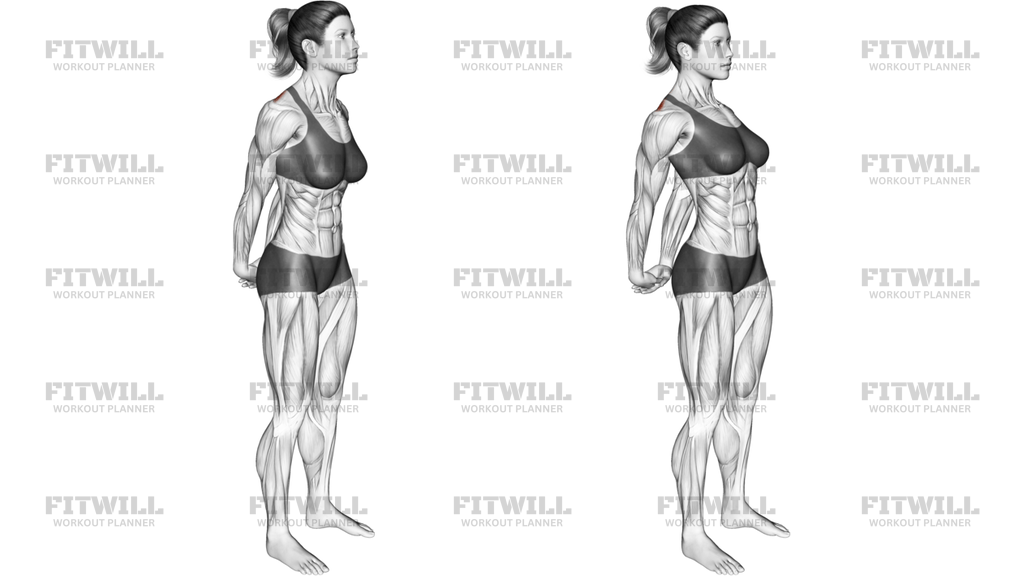
Instructions
- Stand tall with your feet about hip-width apart, knees soft, and ribs stacked over your pelvis.
- Reach both arms behind your body and clasp your hands or hold your wrists just above the glutes.
- Keep your elbows straight but not locked, and let your shoulders settle away from your ears.
- Lift your sternum slightly while keeping your chin neutral and your lower back from over-arching.
- On an exhale, draw the shoulder blades gently back and down to open the chest.
- Let the hands drift a small amount away from the body until you feel a stretch across the chest and front shoulders.
- Breathe slowly through the ribs and hold the open position without shrugging or craning the neck.
- Return the hands closer to the hips, relax the grip, and reset before repeating.
Tips & Tricks
- A tiny chest lift is enough; if your ribs flare hard, the stretch turns into lower-back extension.
- If the fronts of your shoulders pinch, keep the hands closer to your glutes and shorten the reach behind you.
- Soft elbows are often better than a hard lockout when your shoulders are tight.
- Keep your weight spread through both feet so you do not lean forward as the chest opens.
- Think about widening the collarbones instead of yanking the shoulders backward.
- Exhale as the hands travel back to help the ribs settle and the upper back stay long.
- A towel or wrist hold can be easier than forcing a tight finger clasp if your shoulders are stiff.
- Stop the rep when the stretch is strong in the chest and front delts, not when it becomes a low-back arch.
Frequently Asked Questions
What does Bodyweight Standing Back Stretch work?
It mainly opens the chest, front shoulders, and upper arms while asking the upper back to stay tall and organized.
Why are my hands held behind my body in Bodyweight Standing Back Stretch?
That position lets you create a gentle shoulder-extension stretch without needing a bench or machine. The farther the hands drift from the hips, the stronger the opening becomes.
Should Bodyweight Standing Back Stretch feel like a lower-back stretch?
No. The movement should come from the sternum lifting and the shoulders opening, not from cranking the lumbar spine into an arch.
How do I keep the stretch out of my neck?
Keep the chin neutral, let the shoulder blades slide down, and avoid shrugging as the hands move behind you.
Can beginners do Bodyweight Standing Back Stretch?
Yes. Beginners should keep the hands closer to the body, use a soft elbow bend if needed, and work in a smaller range.
What should I do if the front of my shoulder pinches?
Reduce the hand position behind the body and lower the chest lift. A pinch usually means the shoulders are being pulled too far back for your current mobility.
When is the best time to use Bodyweight Standing Back Stretch?
It works well after pressing, after long sitting, or between upper-body sets when you want to open the shoulders without adding fatigue.
Do I need an exercise mat for Bodyweight Standing Back Stretch?
A mat is optional and mainly adds comfort under your feet. The exercise is driven by posture, breathing, and arm position rather than floor contact.