Side Lying Scissors
Side Lying Scissors is a floor-based control drill where you lie on your side and alternate the legs in a scissor pattern without letting the pelvis twist. The movement looks simple, but it asks for a lot of coordination from the hips, inner thighs, glutes, and core. It is especially useful when you want lower-body work that also teaches trunk stability and clean leg separation.
The setup matters because the exercise becomes very different as soon as the torso starts rolling. Stack the shoulders, ribs, and hips, then use the forearm and free hand for support so you can keep the chest open and the waist long. Both legs stay straight, and the goal is not to kick high but to keep length through the legs while the midsection resists movement.
Each repetition should feel smooth and deliberate. Raise one leg until the pelvis wants to shift, then lower it as the other leg travels the opposite way, keeping the motion narrow enough that the lower back stays quiet. Exhale as the legs switch and keep the head, neck, and shoulders relaxed instead of pushing through with momentum.
Side Lying Scissors is a good accessory choice for warm-ups, core blocks, Pilates-style sessions, and low-impact conditioning. It can wake up the hip stabilizers before squats, lunges, running, or field work, and it also fits well when you want extra volume without loading the spine. The exercise is most effective when the legs stay long and the trunk stays organized from rep to rep.
If the top hip keeps opening, the lower back arches, or the legs start swinging, the range is too big or the tempo is too fast. Shorten the path, slow the lowering phase, and keep the scissor pattern controlled until the pelvis stays steady. Done well, Side Lying Scissors builds better awareness around the hips and teaches the body to move the legs while the core stays calm.
[ Workout Log & Planner ]
Put your next workout in Fitwill
Keep your plan and training log ready when you are.


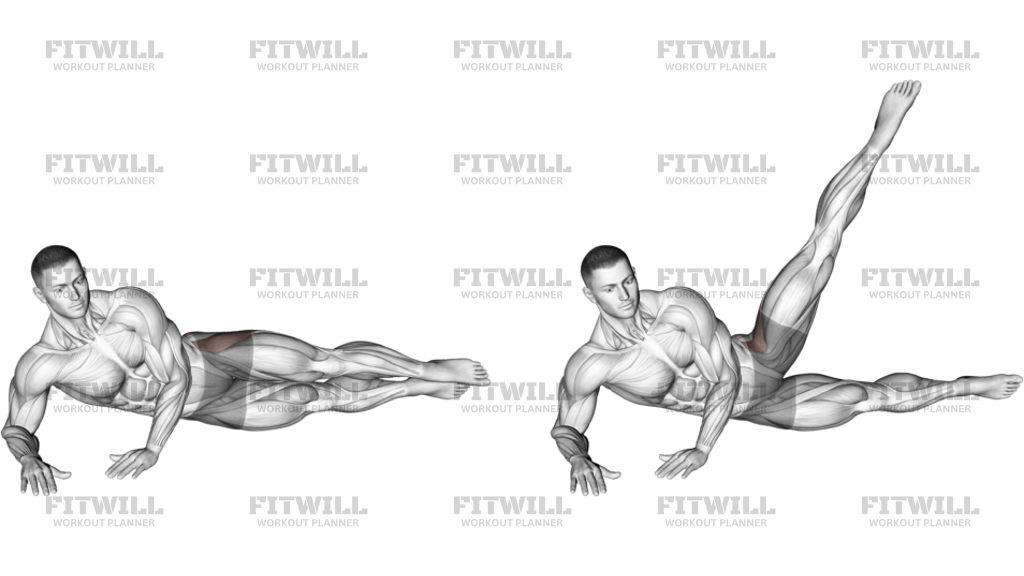
Instructions
- Lie on your side on a mat and prop yourself on the lower forearm with the elbow under the shoulder; keep the free hand lightly on the floor for balance.
- Stack the shoulders and hips, straighten both legs, and extend them away from your torso with the knees long and the toes relaxed.
- Lift the lower leg a few inches off the mat so it stays hovering instead of resting on the floor.
- Brace through the waist and keep the ribs from opening as you prepare to start the scissors pattern.
- Raise the top leg toward the ceiling until the pelvis starts to want to roll, then stop before the torso shifts.
- Lower the top leg under control as the bottom leg stays long and hovering, keeping both knees straight.
- Switch the legs in a smooth scissor motion, letting one leg rise as the other lowers without jerking or kicking.
- Exhale as the legs pass each other and inhale on the return while keeping the neck and shoulders relaxed.
- Finish the set by bringing both legs together with control, lowering them to the mat, and then switch sides.
Tips & Tricks
- Keep the top hip stacked over the bottom hip; if it rolls open, lower the top leg and shorten the range.
- Think about reaching both heels away from each other instead of swinging the legs up and down.
- Hold the lower leg just off the floor so the core has to keep working through the whole set.
- Slow the lowering phase of the top leg if you want more control through the inner thigh and lower abs.
- If your lower back arches, bring the legs a little closer together and reduce the height of the top leg.
- A slight bend in the knees can help if your hamstrings cramp before the scissor pattern feels smooth.
- Keep the chest open and the head relaxed; twisting the torso makes the exercise much easier than it should be.
- Use a mat or folded towel under the forearm if the support arm starts to get irritated.
Frequently Asked Questions
What muscles does Side Lying Scissors work most?
It mainly challenges the hip stabilizers, inner thighs, lower abs, and obliques. The glutes help keep the pelvis steady while the legs move.
Is Side Lying Scissors good for beginners?
Yes, as long as you keep the range small and the tempo slow. Beginners should focus on keeping the torso still before trying to lift the top leg higher.
How high should the top leg go in Side Lying Scissors?
Only as high as you can keep the hips stacked and the lower back quiet. For most people, that means stopping before the pelvis starts to roll backward.
Why does my lower back feel it during Side Lying Scissors?
That usually means the legs are moving farther than the core can control. Shorten the range, lower the top leg less, and keep the ribs from flaring.
Should both knees stay straight in Side Lying Scissors?
Yes, straight legs are the standard version because they create more demand on the hips and core. A soft knee bend is fine if your hamstrings cramp.
Can I do Side Lying Scissors without any equipment?
Yes. A mat is helpful, but the movement itself is bodyweight only and just needs enough floor space to lie on your side and extend both legs.
What is the most common mistake in Side Lying Scissors?
The biggest mistake is swinging the legs while the torso rolls open. Keep the motion narrow and controlled so the hips do the work instead of momentum.
What is a good variation if the full range feels too hard?
Keep both legs lower, make the scissor pattern smaller, and slow the tempo. That keeps the exercise useful without turning it into a back or hip-flexor strain.