Elevated Single Leg Squat
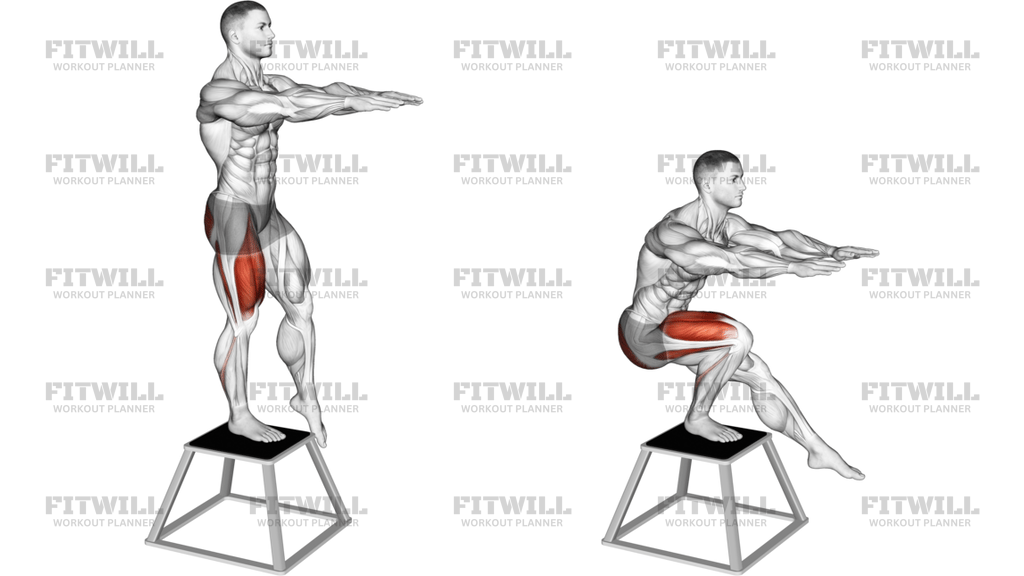
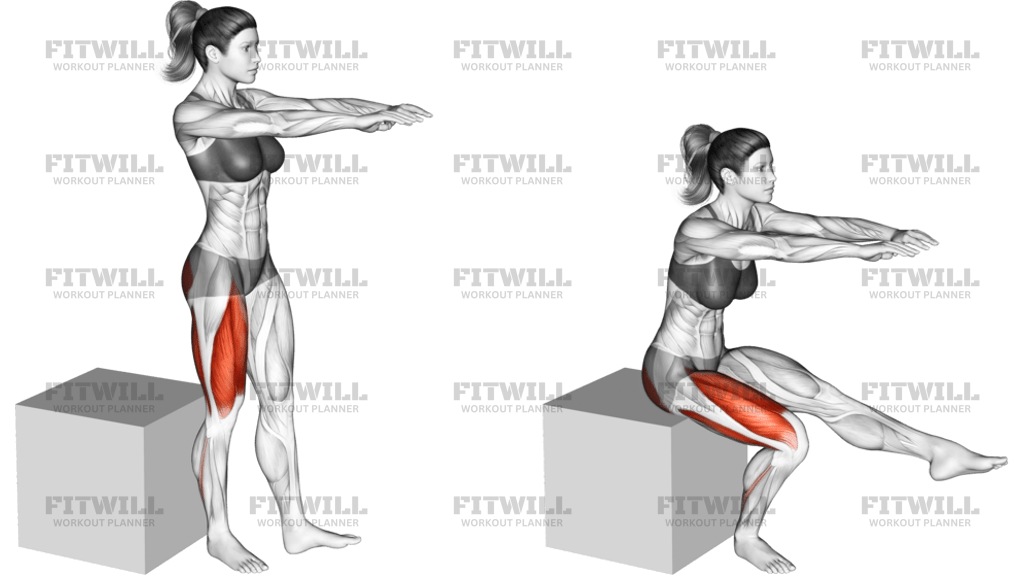
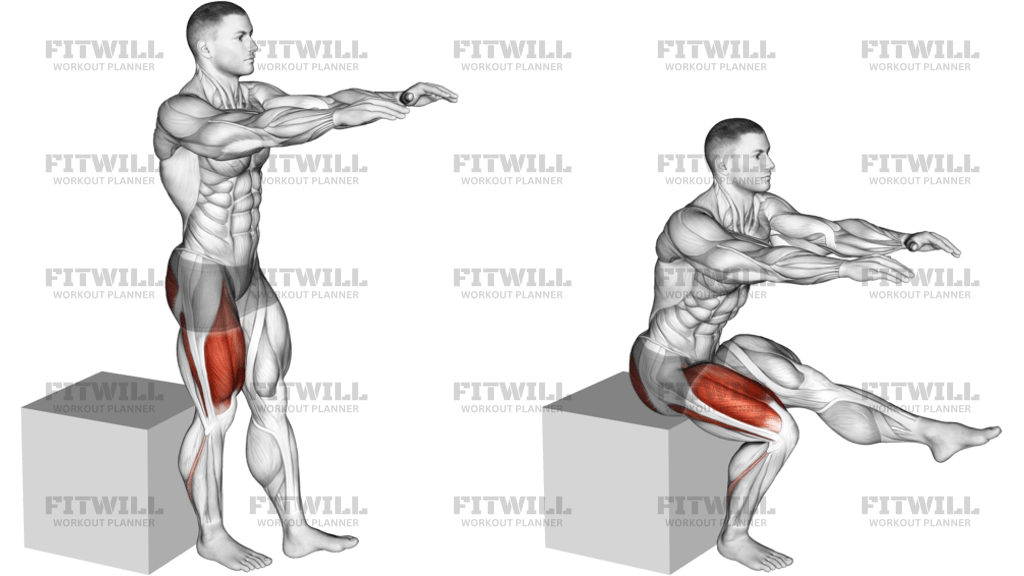
The Elevated Single Leg Squat is a body-weight unilateral squat performed from a raised platform or box. One foot stays planted on the step while the other leg hangs free in front, which makes the standing leg do most of the work and forces the hips, knee, ankle, and trunk to stay organized through a long, controlled range of motion.
This movement places its biggest demand on the thigh of the standing leg, especially the quadriceps, with the gluteals and calf helping to control descent and drive you back to standing. Because the body is supported by only one leg, the exercise also challenges the hip stabilizers and core to keep the pelvis level and the knee tracking cleanly instead of collapsing inward or twisting open.
The setup matters more here than on a regular squat. The standing foot should be fully planted on the platform, with pressure spread across the heel, base of the big toe, and base of the little toe. The torso can stay fairly upright, but a small forward lean is normal as long as the chest stays proud, the arms reach forward for balance, and the pelvis does not tip or rotate as you descend.
On each repetition, sit the hips back and down toward the box under control, then lower until the working thigh is close to parallel or the box receives a light touch. The free leg should reach forward only as much as needed for balance; it should not kick, push, or turn the repetition into a hop. Stand back up by driving through the whole foot and extending the hip and knee together without bouncing off the box or snapping the knee into lockout.
The Elevated Single Leg Squat is useful when you want a knee-dominant single-leg pattern with better depth control than a free pistol squat. It fits well in lower-body strength blocks, accessory work, athletic preparation, or warm-ups where clean mechanics matter more than load. Start with a lower platform and a slow tempo if balance or knee control is limited, and stop the set if the standing arch collapses, the pelvis twists, or the knee starts caving inward.
[ Workout Log & Planner ]
Put your next workout in Fitwill
Keep your plan and training log ready when you are.


Instructions
- Place one foot fully on a stable box or step, near the center of the platform, with the toes pointing mostly forward and the other leg hanging free off the front.
- Stand tall on the working leg, reach both arms forward for balance, and keep the ribs stacked over the pelvis before you start the rep.
- Shift pressure into the heel and midfoot of the standing leg, then unlock the knee and hip together to begin the descent.
- Sit the hips back and down toward the box while the free leg reaches forward and downward without touching the floor.
- Keep the standing knee tracking over the second or third toe as you lower, and allow only a small forward torso lean if needed for balance.
- Descend until the working thigh is near parallel or you make a light, controlled touch on the box with the glutes.
- Drive up by pressing through the whole standing foot and extending the knee and hip together until you return to a tall stance.
- Reset your balance at the top before the next rep, then repeat with the same tempo and breathing pattern.
Tips & Tricks
- Choose a box height that lets the standing heel stay down and the pelvis stay level; if the platform is too high, the squat usually turns into a side-to-side shift.
- Think about reaching the free leg forward for counterbalance, not for momentum; a big kick usually means you are using the non-working leg to help the ascent.
- Keep the standing foot active with pressure across the heel, big toe, and little toe so the arch does not collapse as you sink into the bottom.
- A light touch on the box is enough. Sitting hard onto it can relax the working leg and turn the next rep into a rebound.
- If the knee drifts inward, lower the box or shorten the range before adding reps, because that collapse usually shows up first at deeper depth.
- A slight torso lean is normal and often helpful; forcing the chest perfectly upright can make the heel lift and limit depth.
- Use a slow lowering phase of about 2 to 4 seconds to expose balance errors and make the standing leg do the work.
- Hold a rack, post, or wall with one hand if balance limits the squat, but keep the standing leg mechanics strict and avoid pushing off the support.
Frequently Asked Questions
What muscles does the Elevated Single Leg Squat work?
It mainly trains the quads of the standing leg, with the glutes, adductors, calves, and core helping control the descent and keep the pelvis steady.
How high should the box be for the Elevated Single Leg Squat?
Use a height that lets you descend under control without losing heel contact or letting the knee cave in. A lower box is usually better if your ankle mobility or balance is still limited.
Where should my free leg go during the Elevated Single Leg Squat?
Let the free leg reach forward and slightly down for balance, but do not let it push off the floor or swing hard to create momentum.
How low should I go on each rep?
Lower until the working thigh is close to parallel or you lightly touch the box. Go only as deep as you can while keeping the standing knee aligned over the toes.
Why is my standing knee caving inward on this exercise?
That usually means the foot is collapsing, the box is too high, or the hip is losing control. Shorten the range, slow the descent, and keep pressure spread across the whole standing foot.
Can beginners do the Elevated Single Leg Squat?
Yes, but beginners usually need a lower platform, a slower tempo, or a light hand support to keep the pattern clean before they try full depth.
Is the Elevated Single Leg Squat the same as a pistol squat?
It is a similar single-leg squat pattern, but the elevated setup makes depth and balance easier to control than a free pistol squat.
How can I make the Elevated Single Leg Squat harder?
Use a lower box, slow the lowering phase, pause lightly on the box, or add a counterweight while keeping the standing leg and knee position strict.