Ring Reverse Fly
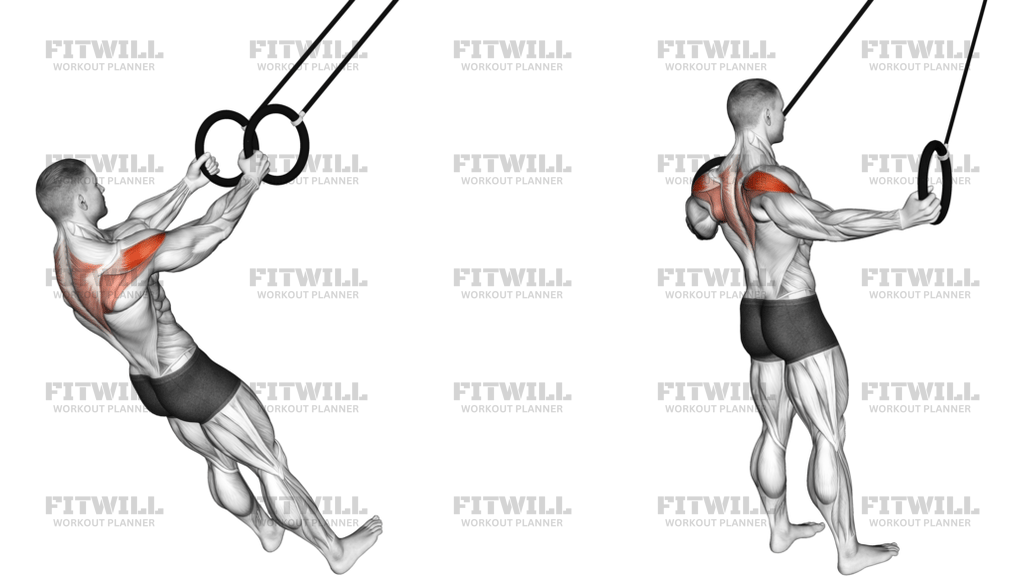
Ring Reverse Fly is a bodyweight pulling drill that uses gymnastic rings to train the rear shoulders, upper back, and the small stabilizers that keep the shoulder blades moving cleanly. With the rings set at about chest height, you lean back on a rigid body line, open the arms in a wide arc, and bring the hands out from in front of the chest to a position beside the torso. The exercise is useful when you want rear-delt work that also teaches scapular control, posture, and tension through the shoulders and upper back rather than relying on momentum or swinging.
The ring setup matters because the straps and body angle decide how hard the movement feels and how much the shoulders have to stabilize. A more upright torso makes the fly easier, while a longer lean increases the lever and makes the rear delts and upper back work harder. Keep the feet planted, the ribs controlled, and the body in one straight line from shoulders to heels so the movement comes from the shoulder girdle instead of the lower back.
At the top of each repetition, the shoulder blades should move back and slightly together without shrugging toward the ears. The elbows stay softly bent, the wrists stay neutral on the rings, and the chest stays open without overextending the spine. If the elbows bend too much, the exercise turns into a row; if the torso arches hard, the lower back steals the work. The clean version is a controlled fly with a stable trunk and deliberate shoulder motion.
Ring Reverse Fly is a good accessory choice for pulling days, shoulder-prep work, or any session where you want to build rear-delt endurance and upper-back awareness. It also fits as a lighter technique exercise before heavier horizontal pulling or pressing. Use a range of motion you can control from the first rep to the last, and stop the set when the rings start to wobble, the ribs flare, or the shoulders lose their line.
For beginners, the safest way to learn it is to stand more upright and shorten the body angle first. As control improves, step the feet farther forward and slow the lowering phase so the shoulders have to stabilize the load for longer. That progression keeps the exercise honest: it stays a ring reverse fly, not a loose body-swing or a partial row. When done well, it gives a strong rear-shoulder burn with a lot of scapular control and very little joint stress.
Fitwill
Log Workouts, Track Progress & Build Strength.
Achieve more with Fitwill: explore over 9600 exercises with images and videos, access built-in and custom workouts, perfect for both gym and home sessions, and see real results.
Start your journey. Download today!




Instructions
- Set the rings at about chest height and stand facing the anchor with a slight lean so your body forms one straight line from shoulders to heels.
- Hold a ring in each hand with neutral wrists, soft elbows, and your hands starting in front of the chest.
- Plant your feet, brace your midsection, and keep your ribs from flaring as you prepare to move.
- Open the arms in a wide arc until the rings travel out to the sides and slightly back beside your torso.
- Keep the shoulders down as the shoulder blades glide back without shrugging toward your ears.
- Pause briefly when the chest is open and the rear shoulders are fully engaged.
- Lower the rings back to the start under control, keeping tension through the upper back the whole time.
- Breathe out as you open the arms and inhale as you return to the start.
Tips & Tricks
- A more upright body angle makes the fly easier; walk your feet forward only as far as you can keep the trunk rigid.
- Keep the elbows softly bent the entire set so the movement stays a reverse fly instead of a row.
- Think about pulling the rings apart and slightly back, not yanking them down toward your hips.
- Keep the neck long and the chin slightly tucked so the upper traps do not take over.
- If the ribs pop up or the lower back arches, shorten the range and reset your brace.
- Move slowly on the way back in; the lowering phase is where the rear delts and upper back stay under the most useful tension.
- Stop the set when the rings start shaking or one shoulder starts rotating forward sooner than the other.
- Use this as a controlled accessory movement, not a max-effort strength test.
Frequently Asked Questions
What does Ring Reverse Fly train most?
It primarily hits the rear delts and upper back, especially the muscles that retract and control the shoulder blades.
How do I make the ring reverse fly easier for a beginner?
Stand more upright and keep the rings closer to chest height. That shortens the lever and reduces the load on the shoulders.
Where should the rings move during the rep?
They should travel out in a wide arc from in front of the chest to beside the torso, not straight down like a row.
Why do my shoulders feel this in my neck?
Usually the shoulders are shrugging up. Keep the neck long, the ribs stacked, and the shoulder blades moving back without lifting.
Is this a row or a fly?
It should feel like a fly. Keep the elbows only slightly bent and avoid turning the pull into an elbow-driven rowing motion.
How far back should I lean on the rings?
Lean only as far as you can keep a straight line from shoulders to heels. If the lower back arches, you are too far out.
Can I use this on shoulder day and pull day?
Yes. It works well as accessory work on either day, especially when you want extra rear-delt and scapular control work.
How do I progress Ring Reverse Fly?
Increase the body angle, slow the lowering phase, or pause longer at the open position before adding more difficulty.