Lunge Thighs WRONG-RIGHT
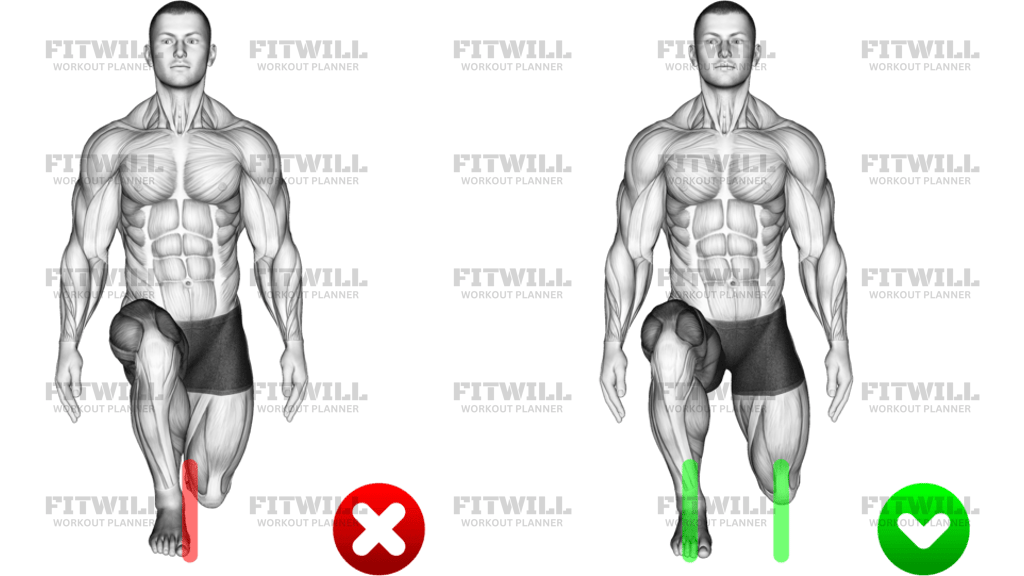
Lunge is a bodyweight single-leg lower-body exercise that trains each leg separately and teaches you to control the hips, knees, and ankles through a split stance. It looks simple, but the setup decides whether the work stays in the thighs or turns into a wobble. When the front foot is planted well and the torso stays tall, the lunge becomes a clean way to build leg strength, balance, and coordination without any equipment.
The main demand is on the front thigh, especially the quadriceps, with the glutes and hamstrings helping you stabilize and stand back up. Your core also has to keep the trunk stacked so the pelvis does not dump forward or twist. That makes the exercise useful for beginners learning single-leg control as well as experienced lifters who want a reliable accessory move for legs or conditioning.
Start from a narrow, upright stance, then step one foot forward far enough that both feet stay flat and the front knee can bend without the heel peeling up. Lower straight down between your legs by bending both knees, keeping the front knee in line with the middle toes. The rear knee should travel toward the floor in a controlled way rather than slamming down.
At the bottom, pause briefly to check that the front shin is roughly vertical or only slightly forward and that your weight is centered through the whole front foot. Drive the floor away through the front heel and midfoot, then return to standing without pushing off the back leg. Breathing should stay calm and deliberate, with a steady exhale as you rise and an inhale as you descend.
Lunge is a good choice when you want unilateral leg work, warm-up repetitions, or accessory volume that does not require a machine or load. It also helps expose side-to-side differences in balance and knee tracking. The best reps look quiet, smooth, and repeatable; once the knee caves, the torso folds, or the stride shortens into a squat, the set has stopped being useful.
Fitwill
Log Workouts, Track Progress & Build Strength.
Achieve more with Fitwill: explore over 9600 exercises with images and videos, access built-in and custom workouts, perfect for both gym and home sessions, and see real results.
Start your journey. Download today!




Instructions
- Stand tall with your feet about hip-width apart and your hands relaxed at your sides or resting on your hips.
- Step one foot forward into a split stance, keeping both toes mostly pointed ahead and the front heel flat.
- Stack your ribs over your pelvis and brace your torso before you bend either knee.
- Lower straight down by bending both knees, letting the back knee travel toward the floor while the front knee tracks over the middle toes.
- Keep your front foot planted from heel to big toe and avoid rocking onto the inside edge of the foot.
- Pause briefly near the bottom with the back knee close to the floor and the front thigh doing most of the work.
- Exhale and drive through the front heel and midfoot to stand back up without pushing hard from the back leg.
- Bring your feet back under you before the next rep or switch sides only after you have reset your balance.
Tips & Tricks
- A slightly longer step usually makes it easier to keep the front heel down and the front knee stacked over the toes.
- Think heel, big toe, and little toe on the front foot so the knee does not collapse inward.
- If your torso folds forward, shorten the range slightly and keep your chest stacked over your hips.
- The back knee should travel down, not slam forward into the front foot.
- Use a slower lowering phase if the exercise feels too easy with body weight alone.
- Keep the front shin close to vertical if you want more of the thigh work to stay on the working leg.
- A light touch of the back knee is enough; do not bounce out of the bottom.
- If balance is the limiter, do the lunge next to a wall or rack and use a fingertip for support.
Frequently Asked Questions
What muscles does Lunge work most?
The front thigh, especially the quadriceps, does most of the work, with the glutes and hamstrings helping you rise and stabilize.
Is Lunge good for beginners?
Yes. Bodyweight reps are a good place to start, especially if you keep the step short, the tempo controlled, and the range comfortable.
How far forward should my front knee travel in Lunge?
A little forward travel is fine if the heel stays down and the knee tracks over the middle toes instead of collapsing inward.
How low should I go in Lunge?
Lower until the back knee is close to the floor and the front leg stays controlled. Stop sooner if the pelvis tips or the front foot starts wobbling.
Should I do Lunge forward or backward?
Forward lunges are fine for this bodyweight version, but reverse lunges are often easier if you want a simpler option with less braking demand.
Why does my front foot wobble during Lunge?
The step is often too narrow or the weight has shifted onto the toes. Plant the whole front foot and widen the stance a little if needed.
Can I do Lunge without any equipment?
Yes. This is a bodyweight movement, so you can use it as a warm-up, a leg-accessory drill, or higher-rep conditioning work.
What is the most common mistake in Lunge?
The usual error is pushing off the back leg and letting the front knee cave inward. The front leg should control the rep and the knee should stay aligned with the toes.