Jump Shrug
Jump Shrug is an explosive barbell power drill that starts from a standing hang position and finishes with a fast triple extension through the ankles, knees, and hips. The goal is not to row the bar or curl it upward, but to create a sharp jump-and-shrug action while keeping the bar close to the thighs and torso. It is commonly used to train power production, rate of force development, and coordinated lower-body drive.
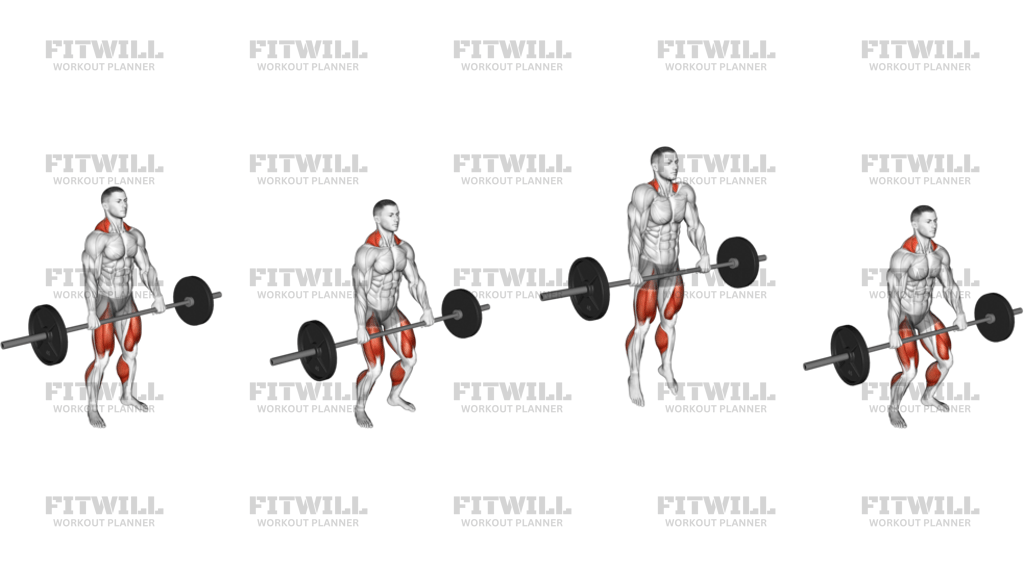
The image shows a barbell held in front of the thighs with an athletic stance and a tall finish, which makes setup and timing the most important parts of the exercise. A good repetition begins with the feet set about hip-width apart, the chest lifted, the spine neutral, and the arms relaxed so the hands act like straps rather than pulling the bar. From there, the movement should flow from a small athletic dip into an explosive extension that makes the body rise quickly and the shoulders shrug at the top.
Because this is a speed exercise, the bar path should stay compact and vertical enough to feel crisp rather than wide or swinging. The bar should skim the thighs on the way up, then stay near the body as the athlete extends forcefully and briefly leaves the ground if the version being performed includes a jump. The elbows stay straight, the wrists stay neutral, and the hands should never try to flip or catch the bar like a clean. The upper traps, glutes, quads, and calves all contribute to the finish.
Jump Shrug is useful in warmups, athletic power blocks, and lower-body sessions where you want explosive output without a full Olympic lift. It is especially valuable when the athlete wants to practice forceful extension, improve coordination, or build power in a simpler pattern than a clean pull. That said, the exercise should stay light enough that each rep looks fast and balanced. If the bar slows down, the shrug turns into an arm pull, or the landing gets noisy and unstable, the load is too heavy or the timing has drifted.
This drill also rewards clean reset positions. Between reps, the bar should come back to the thighs or hang under control, the ribs should stay stacked over the pelvis, and the feet should replant in the same position before the next explosion. When performed well, Jump Shrug gives you a strong power stimulus with relatively low complexity, but it still demands attention to posture, bar control, and safe landing mechanics.
[ Workout Log & Planner ]
Put your next workout in Fitwill
Keep your plan and training log ready when you are.


Instructions
- Stand with a barbell in front of your thighs, feet about hip-width apart, arms straight, chest tall, and shoulders set over the bar.
- Hold the bar with a secure overhand grip and let it rest against the upper thighs or hang just above the knees, depending on the starting height.
- Brace your trunk, soften the knees slightly, and keep your weight balanced through the midfoot before you begin.
- Dip a few inches by bending the knees and hips together without collapsing the chest or drifting the bar away from your legs.
- Drive hard through the floor, extending the ankles, knees, and hips as fast as you can while keeping the arms long.
- Shrug the shoulders forcefully at the top as the body finishes tall and the bar stays close to the torso.
- If the version includes a jump, let the feet leave the floor only slightly and land softly in the same stance.
- Lower the bar back to the thighs or hang position under control, reset your posture, and breathe before the next rep.
- Repeat for crisp reps and stop the set when the jump height, shrug speed, or bar path starts to degrade.
Tips & Tricks
- Treat this as a power drill. If the bar speed drops, the set is too long or the load is too heavy.
- Keep the bar close to the thighs so the finish feels vertical instead of like a forward swing.
- Let the arms stay straight. Bending the elbows early turns the rep into an upright row and usually kills bar speed.
- Use a small dip, not a squat. A deep knee bend makes the movement slower and changes it into a different lift.
- Finish with the chest proud and ribs stacked, but do not overarch the lower back at the top.
- Land softly if you leave the floor. Loud or unstable landings usually mean the load is too aggressive.
- Choose shoes and a surface that feel stable. A soft mat or unstable floor makes the jump less crisp and less safe.
- Start light enough that every rep looks identical. This exercise is about force and timing, not grinding.
Frequently Asked Questions
What does the Jump Shrug train?
It trains explosive triple extension through the hips, knees, and ankles, along with a strong shrug and full-body coordination.
Is this the same as an upright row?
No. The Jump Shrug keeps the arms straight and finishes with a shrug and jump, not a high pull of the elbows.
Where should the bar be at the start?
The bar should sit against the upper thighs or hang just above the knees with the torso tall and the shoulders set over the bar.
Should I jump off the floor?
Only if the version you are performing calls for it. If you do jump, it should be small and controlled, with a soft landing.
Can beginners do Jump Shrugs?
Yes, if they start very light and focus on the dip, vertical drive, and clean landing before adding load.
What is the most common mistake?
Most errors come from bending the arms too early, swinging the bar away from the body, or turning the rep into a slow squat.
How heavy should the bar be?
Light enough that every rep is fast and technically identical. If the bar slows down, reduce the load.
What muscles do I feel most?
You should feel the glutes, quadriceps, calves, upper traps, and core working together to finish the rep.