Weighted Seated Leg Raise On Floor
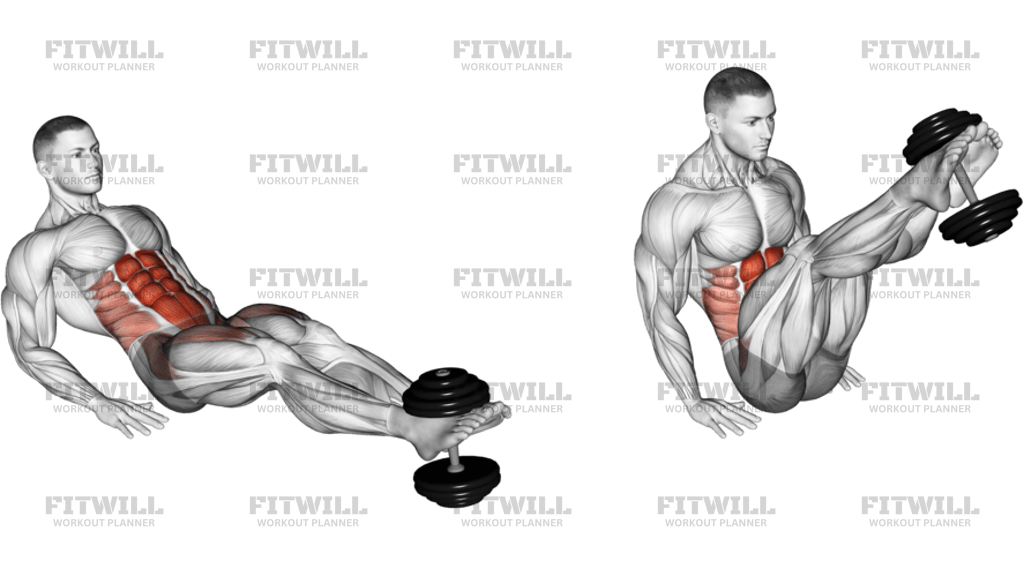
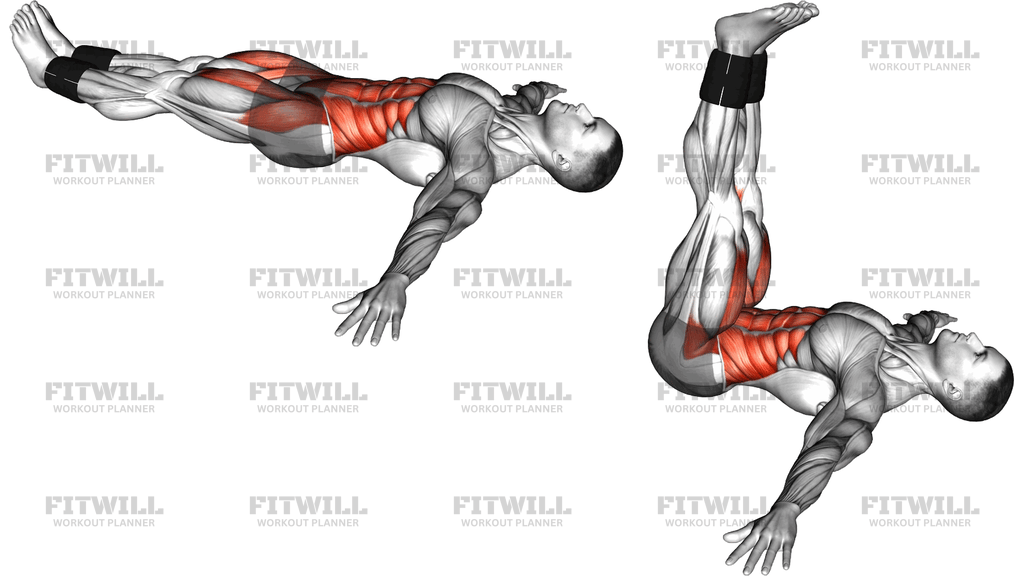
Weighted Seated Leg Raise On Floor is a floor-based core exercise where you sit back on your hands, clamp a dumbbell between your feet, and draw the knees in before extending the legs out under control. The movement trains the abs to stabilize the pelvis while the hip flexors help lift and tuck the legs, so the load stays on the torso instead of being tossed by momentum.
Because the weight is trapped between the feet, the setup matters more than it does in many other ab exercises. A small change in torso angle, hand position, or how hard you squeeze the dumbbell can decide whether the set feels smooth or turns into a lower-back fight. The goal is to keep the chest open, the ribs down, and the lower body moving as one controlled unit.
The main work centers on the rectus abdominis, with the obliques and transversus abdominis helping keep the trunk from rocking while the iliopsoas and other hip flexors guide the leg path. When done well, the abs control the return as the legs lengthen away from the body and resist the pull that tries to arch the low back.
Use this exercise as accessory core work, a controlled finisher, or part of a trunk-focused session. It is most useful when you want a more demanding seated leg raise than bodyweight alone, but it should still look deliberate from rep to rep. If the dumbbell slips, the shoulders shrug, or the spine starts to swing backward and forward, the load is too heavy or the range is too large. Reduce both before chasing more reps.
Fitwill
Log Workouts, Track Progress & Build Strength.
Achieve more with Fitwill: explore over 9600 exercises with images and videos, access built-in and custom workouts, perfect for both gym and home sessions, and see real results.
Start your journey. Download today!




Instructions
- Sit on the floor and place a dumbbell between your feet, clamping it with the arches or soles so it cannot shift.
- Put your hands on the floor slightly behind your hips and lean back just enough to support your torso without collapsing into your shoulders.
- Keep your chest lifted, ribs down, and abs braced before the first rep begins.
- Start with the legs extended low in front of you and the dumbbell held steady between the feet.
- Draw your knees toward your chest in one smooth motion while keeping the load pinned between the feet.
- Pause briefly at the tucked position if you can hold the torso steady and avoid swinging.
- Extend the legs back out slowly until they are nearly straight and hovering above the floor.
- Repeat the tuck and extension for the planned reps, exhaling as the legs move in and inhaling as they lengthen out.
- Set the dumbbell down safely if you lose control of the grip or feel the lower back taking over.
Tips & Tricks
- Clamp the dumbbell with the mid-foot and arches, not just the toes, so it stays fixed through the tuck.
- Keep your hands close enough behind you to support the torso without turning the set into a triceps hold.
- If the low back starts arching when the legs extend, shorten the range before adding more load.
- Move the legs, not the torso; the chest should stay quiet instead of rocking backward and forward.
- A smaller dumbbell with clean control is better than a heavy one that forces momentum or foot slipping.
- Lower the legs slowly on the way out, because that return phase is where the abs do a lot of the work.
- Keep the shoulders away from the ears so you do not shrug through your support position.
- If the hip flexors cramp, reduce the tuck height and slow the tempo instead of forcing higher knees.
- Stop the set when you can no longer keep the feet pinched evenly around the weight.
Frequently Asked Questions
What muscles does Weighted Seated Leg Raise On Floor work?
The abs do most of the stabilizing, while the hip flexors help bring the knees in and the obliques keep the torso from rocking.
Where should the dumbbell sit during this exercise?
It should be clamped between the feet, ideally through the arches and mid-foot, so it does not slide as the legs move.
How far back should I lean on the floor?
Lean back only enough to support your torso on your hands while keeping the ribs down and the lower back from collapsing.
Should I keep my legs straight the whole time?
No. The image shows a tuck-and-extend pattern, so the knees come in and then the legs lengthen back out under control.
What is the biggest form mistake here?
Using momentum from the torso instead of controlling the legs. If your chest is swinging, the load is too heavy or the range is too large.
Can beginners use this exercise?
Yes, but beginners should start light or bodyweight first and keep the range short until they can hold the dumbbell steady.
What should I do if the dumbbell slips?
Stop the set, reset the foot squeeze, and use less weight or a smaller range. A slipping load means the set is no longer being trained cleanly.
How should I breathe during the reps?
Exhale as you draw the knees in and inhale as you extend the legs out, keeping the trunk braced the whole time.