Prone Cervical Extension Isometric Hold
Prone Cervical Extension Isometric Hold is a body-weight neck exercise done face down with the head supported just off the edge of a bench. The goal is not to crank through a big motion. Instead, you set the neck in a slightly extended position, hold that line without letting the chin drift, and build endurance in the muscles that keep the head and cervical spine organized.
The bench position matters because it removes a lot of unwanted cheating. With the chest, ribs, pelvis, and thighs supported, the neck has to do the work on its own. That makes the exercise useful for neck-strengthening circuits, posture work, and rehab-style conditioning when you need controlled tension rather than speed or load. The image shows a prone setup with the torso long and the head hanging free, which is exactly the sort of position that lets you isolate the neck extensors.
A good rep starts by placing the upper body squarely on the bench and relaxing the shoulders down away from the ears. From there, you create a small lift or hold with the back of the neck while keeping the face pointed toward the floor or just slightly forward depending on the version you are using. The effort should feel precise and steady, not aggressive. If the lower back starts arching, the shoulders shrug, or the jaw clenches, the hold has become too hard.
Use this exercise when you want to improve neck control and tolerance for sustained extension without adding equipment or momentum. It is especially helpful for people who need better awareness of head position under fatigue, but it still needs a conservative setup and short, clean holds. Keep the range small, breathe smoothly, and stop the set before the neck starts shaking or the position breaks down. That is where the useful work ends and compensation begins.
[ Workout Log & Planner ]
Put your next workout in Fitwill
Keep your plan and training log ready when you are.


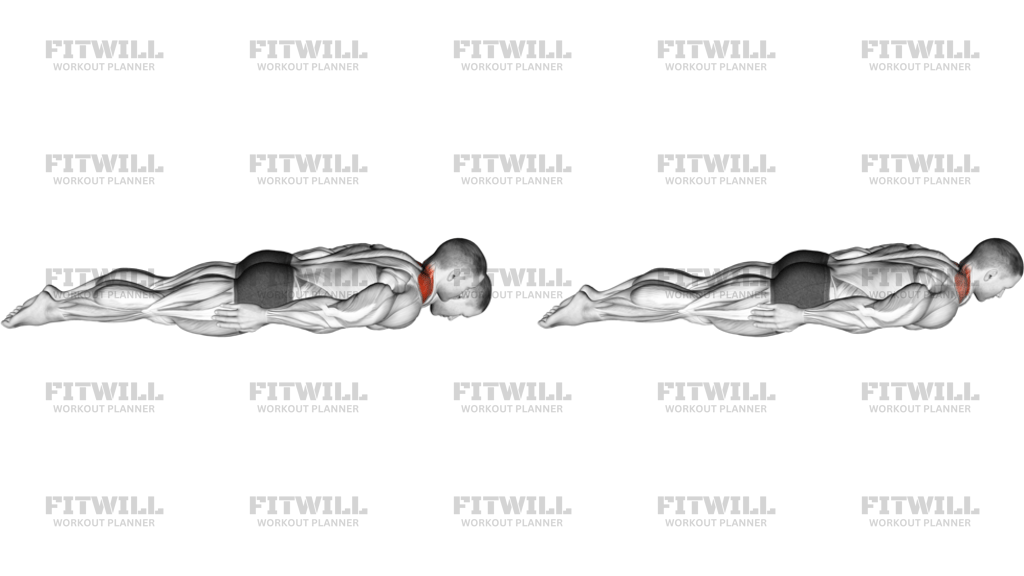
Instructions
- Lie face down on a flat bench with your chest, hips, and thighs supported and the head free just past the edge.
- Keep your arms long by your sides and let the shoulders settle down instead of shrugging toward the ears.
- Set the neck in a neutral-to-slightly-extended position before you begin the hold.
- Tighten your midsection lightly so your ribs and lower back stay quiet on the bench.
- Lift the head only a small amount if needed, or hold the position already shown without letting the chin drop.
- Keep the back of the neck working while the face stays relaxed and the jaw stays unclenched.
- Hold the top position for the planned time while breathing in short, steady breaths.
- Lower the head under control, reset on the bench, and repeat for the prescribed number of holds.
Tips & Tricks
- Keep the movement small; the win here is a steady isometric line, not a bigger neck lift.
- If the bench edge feels too aggressive on the forehead or hairline, shift your position so the head hangs cleanly without pressure points.
- Do not let the chin jut forward as you hold the top; that turns the exercise into neck compression instead of extension control.
- Keep your ribs heavy on the bench so you do not borrow tension from a low-back arch.
- A shorter hold with perfect form is better than a long hold where the neck starts shaking and the shoulders creep up.
- Breathe through the hold instead of holding your breath for the entire set.
- If you feel the effort mostly in the upper traps, reduce the lift and think about lengthening the back of the neck.
- Stop the set when the head no longer stays in the same line as the rest of the spine.
Frequently Asked Questions
What does Prone Cervical Extension Isometric Hold train?
It trains the neck extensors and the small stabilizers that keep the head steady in a prone position.
How should I set up on the bench?
Lie face down with your chest, hips, and thighs supported and let the head move freely just off the edge.
Should I lift my head a lot during the hold?
No. The hold should be small and controlled, with only enough extension to challenge the neck without cranking the spine.
Why are my shoulders taking over during the hold?
That usually means you are shrugging or lifting too high. Lower the effort and keep the shoulders relaxed against the bench.
Is this exercise good for beginners?
Yes, as long as the hold is short and the neck position stays controlled. Beginners should start with very small holds.
What should I avoid feeling in my lower back?
If the low back arches hard, you are losing the prone support position. Reset and keep the ribs and pelvis heavy on the bench.
How long should each isometric hold last?
Use a hold long enough to challenge the neck, but short enough that the head position stays unchanged from start to finish.
What is the main mistake with the head position?
Letting the chin poke forward or letting the head sag is the biggest issue. Keep the neck long and the hold quiet.