Cable Shoulder 90 Degrees External Rotation
Cable Shoulder 90 Degrees External Rotation is a shoulder isolation exercise built around a very specific arm position: the upper arm stays lifted to shoulder height while the elbow remains bent at 90 degrees and the forearm rotates upward against cable resistance. That makes it a useful drill for training the rotator cuff, especially the external rotators that help keep the shoulder centered and controlled during pressing, pulling, and overhead work.
The setup matters more than on many other cable exercises because small changes in elbow height, cable angle, or torso rotation can completely change where the tension goes. With the cable set beside you and the handle in the working hand, you want the shoulder and elbow lined up before the rep starts so the movement comes from the shoulder joint rather than from the wrist, trunk, or upper arm swinging around.
Cable Shoulder 90 Degrees External Rotation is usually used as accessory work, warm-up work, or rehab-style strength training when the goal is cleaner shoulder mechanics rather than heavy loading. It can be a smart choice for lifters who bench, press, throw, or do overhead sports, because strong external rotation control helps balance the front of the shoulder and gives the joint more stable movement under load.
The best reps are small, smooth, and deliberate. Rotate the forearm open without letting the elbow drop, the ribs flare, or the torso twist away from the cable. At the top, the hand should finish more open while the upper arm stays steady; on the way back, let the handle return slowly until the forearm is near vertical again and the shoulder stays stacked instead of rolling forward.
Because this is a precision movement, load choice is important. A lighter stack that lets you keep the elbow fixed, the wrist neutral, and the shoulder quiet is far more valuable than a heavier weight that turns the rep into a body English exercise. Done well, Cable Shoulder 90 Degrees External Rotation trains a small but important range with excellent control and gives you a reliable way to build shoulder integrity without unnecessary joint stress.
Fitwill
Log Workouts, Track Progress & Build Strength.
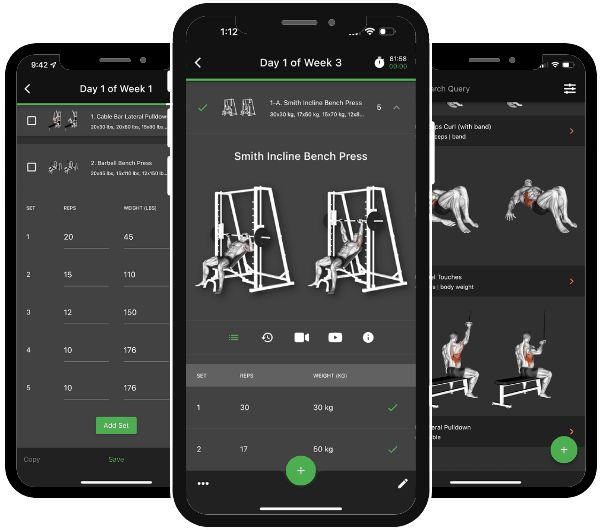
Achieve more with Fitwill: explore over 5000 exercises with images and videos, access built-in and custom workouts, perfect for both gym and home sessions, and see real results.
Start your journey. Download today!


Instructions
- Set the cable pulley at about shoulder height and stand sideways to the stack with the working arm farthest from the machine.
- Hold the handle with the working elbow lifted to shoulder height, bent at 90 degrees, and tucked so the upper arm stays level with the floor.
- Square your chest and hips, soften the knees, and take a stance that lets you stay tall without leaning toward the cable.
- Start with the forearm angled down or slightly across the body, keeping the wrist straight and the shoulder packed.
- Exhale and rotate the forearm upward from the shoulder until the hand opens away from the torso while the elbow stays fixed in space.
- Pause briefly at the top without letting the rib cage flare, the elbow drift back, or the torso twist open.
- Inhale and lower the handle slowly until the forearm returns to the start position under control.
- Keep the neck relaxed and repeat for the planned reps, then lower the handle and step away from the stack safely.
Tips & Tricks
- If your elbow slides up or down, lower the weight and freeze the upper arm before adding reps.
- Keep the cable line slightly in front of your wrist so the handle does not pull your shoulder into an awkward twist.
- Use a half-step away from the stack if the weight is yanking you into rotation at the start of each rep.
- A neutral wrist helps the shoulder do the work; don't let the hand bend back while you rotate.
- Stop the top position when the forearm is roughly vertical and the shoulder still feels set, not cranked open.
- Slow the lowering phase so the external rotators have to control the return instead of letting the stack drop you back.
- If the front of the shoulder takes over, check that the upper arm is still at shoulder height and not drifting forward.
- This movement should feel small and precise; chasing a big range usually means the torso or elbow is cheating.
Frequently Asked Questions
What does Cable Shoulder 90 Degrees External Rotation train?
It primarily trains the shoulder external rotators, especially the rotator cuff muscles that control the upper arm at shoulder height.
Why is my elbow bent at 90 degrees in Cable Shoulder 90 Degrees External Rotation?
The bent elbow shortens the lever so the movement isolates shoulder rotation instead of turning into a straight-arm pull.
Where should the cable be set for Cable Shoulder 90 Degrees External Rotation?
Set the pulley around shoulder height so the handle can line up with your forearm while your upper arm stays level.
How heavy should the cable stack be for this exercise?
Light to moderate resistance is usually enough; if the stack pulls your torso or elbow off position, the load is too heavy.
What is the most common mistake in Cable Shoulder 90 Degrees External Rotation?
The biggest mistake is letting the elbow drift or the torso rotate, which turns a shoulder isolation drill into a body movement.
Can beginners do Cable Shoulder 90 Degrees External Rotation?
Yes, beginners can do it well with very light resistance and a slow tempo, because the setup is simple and the range is small.
Should I feel Cable Shoulder 90 Degrees External Rotation in the rear shoulder?
You may notice some rear-shoulder tension, but the main work should come from the smaller external rotators around the shoulder joint.
Where does Cable Shoulder 90 Degrees External Rotation fit in a workout?
It works well in a warm-up, shoulder-prep block, or accessory slot before or after pressing and pulling work.