Seated Pulse Back Squeeze
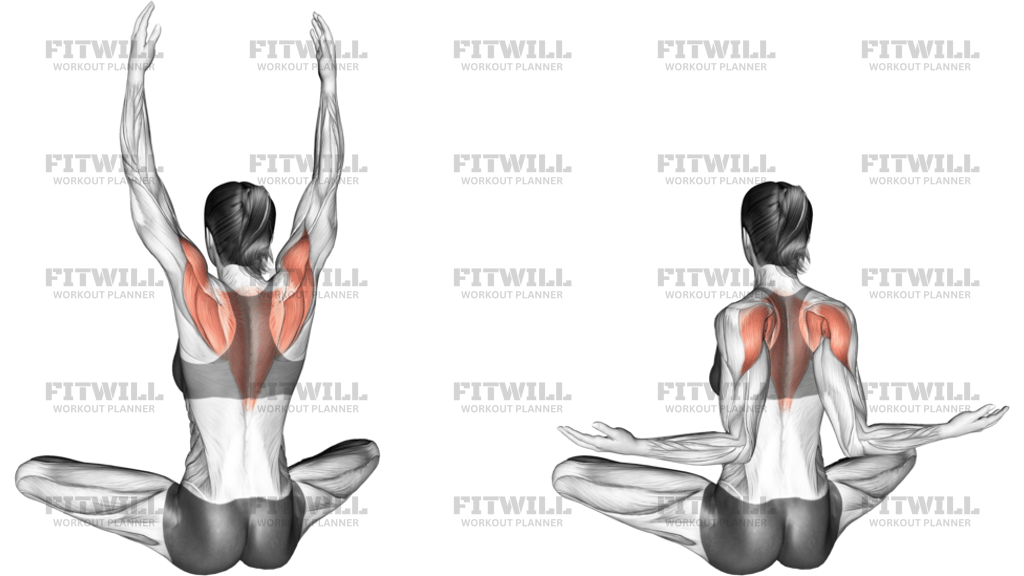
Seated Pulse Back Squeeze is a seated upper-back isolation drill built around short, deliberate shoulder-blade squeezes. In the image, the arms are held out to the sides with the elbows bent and the palms turned up, which shifts attention to the rear delts, rhomboids, and middle traps rather than to a large pulling motion. It is less about moving a load and more about owning the end range of scapular retraction without shrugging or leaning back.
This exercise is useful when you want cleaner posture, better scapular awareness, or an activation piece before rows, presses, or rear-delt work. The torso stays tall while the ribs stay stacked, because once the lower back starts arching the upper back stops doing the job. A steady seat gives you a fixed base so the pulses come from the shoulder girdle instead of from body momentum.
Start with the chest open, elbows lifted roughly level with the shoulders, and the forearms relaxed so the hands can stay open. Each pulse should be a small squeeze of the shoulder blades together and slightly down, followed by a controlled return to the starting position. The movement should look crisp and repetitive, not forced; if the shoulders creep up toward the ears, the load or range is too aggressive.
Because the range is short, this pattern works well as accessory work, warm-up activation, or a high-rep postural finisher. It is also a practical option for beginners because the movement teaches upper-back positioning before more complex rowing patterns. Keep the neck long, avoid jamming the elbows farther behind the torso, and stop short of any front-shoulder pinching or numbness.
Fitwill
Log Workouts, Track Progress & Build Strength.
Achieve more with Fitwill: explore over 9600 exercises with images and videos, access built-in and custom workouts, perfect for both gym and home sessions, and see real results.
Start your journey. Download today!




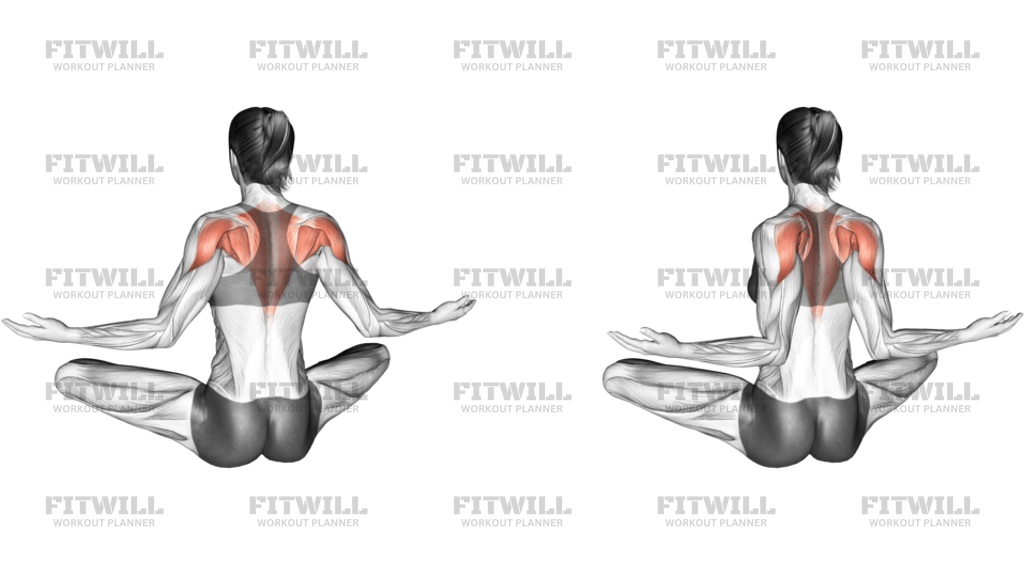
Instructions
- Sit on the floor with your legs crossed and your torso upright.
- Lift your upper arms out to the sides until your elbows are near shoulder height and bent about 90 degrees, with your palms facing up or slightly forward.
- Set your shoulders down away from your ears and keep your chest lifted without arching your lower back.
- Brace lightly through your midsection so your rib cage stays stacked over your pelvis.
- Pull your shoulder blades together and slightly down to start the first squeeze.
- Make a short pulse by tightening the upper back, then return only partway with control.
- Keep your elbows wide and level as you repeat the pulses, letting the shoulder blades do the work instead of the hands or wrists.
- Breathe out on each squeeze and inhale as you release.
- Finish by lowering your arms and relaxing your shoulders before the next set.
Tips & Tricks
- Keep the pulses small; if your hands travel a lot, the drill turns into a swing.
- Think about drawing your shoulder blades into your back pockets, not pinching them hard together.
- If your neck tightens, lower your elbows a few centimeters and reset your rib cage.
- Open hands and soft wrists help keep this from turning into an arm exercise.
- A slower release makes the rear delts and mid traps work harder than the squeeze itself.
- Stop before your upper traps rise or your lower back starts to arch.
- Use a mirror or video to check that both elbows stay level.
- Treat Seated Pulse Back Squeeze as a light, high-rep activation drill, not a maximal-strength lift.
Frequently Asked Questions
What muscles does Seated Pulse Back Squeeze work?
It mainly targets the rear delts, rhomboids, and middle traps, with the lower traps and rotator cuff helping stabilize the shoulder blades.
Is Seated Pulse Back Squeeze good for beginners?
Yes. The movement is simple, the load can stay very light, and it teaches shoulder-blade control before harder pulling exercises.
Should my elbows stay at shoulder height in Seated Pulse Back Squeeze?
Roughly, yes. If your shoulders pinch, lower the elbows slightly and keep the chest open instead of forcing the arms higher.
How big should the pulses be?
Very small. The goal is a short squeeze and release through the shoulder blades, not a big arm swing or a full row.
Why do I feel Seated Pulse Back Squeeze in my neck?
That usually means the shoulders are shrugging. Drop the shoulders away from your ears, keep the neck long, and reduce the range a little.
Can I add resistance to Seated Pulse Back Squeeze?
You can, but keep it light enough that the pulses stay crisp. The exercise is most useful when the upper back controls the motion instead of the load.
Is Seated Pulse Back Squeeze a replacement for rows?
No. It is more of a posture and activation drill. Rows build more full pulling strength, while this movement teaches scapular positioning and upper-back tension.
Should I feel Seated Pulse Back Squeeze in my lower back?
No. If your lower back is doing the work, your ribs are probably flaring. Reset tall, stack the rib cage over the pelvis, and keep the pulse in the upper back.