Barbell Standing Back Wrist Curl
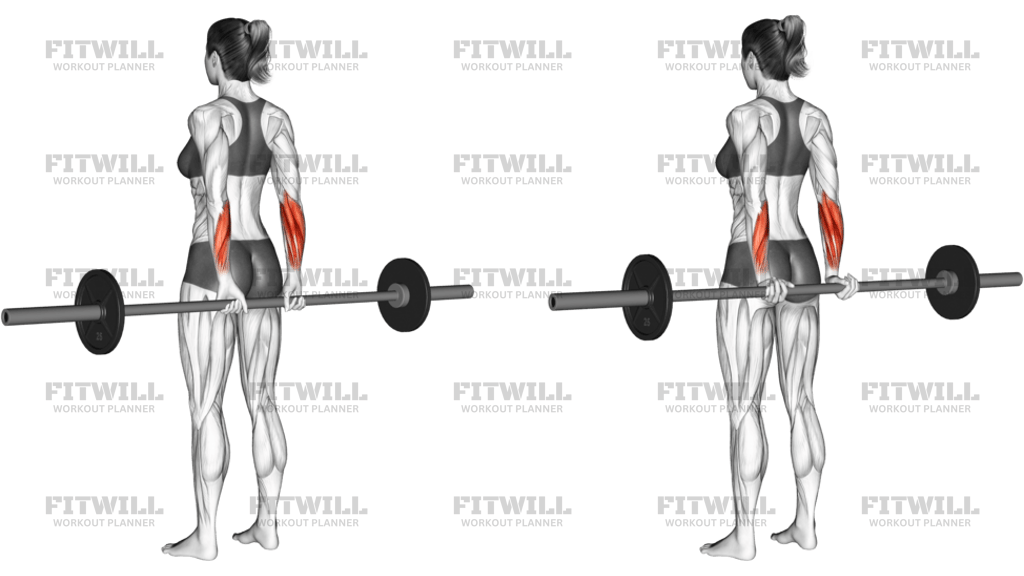
Barbell Standing Back Wrist Curl is a behind-the-body forearm exercise that trains the wrist extensors through a short, controlled range of motion. It is usually performed standing with the barbell held behind the hips, which gives the forearms a direct load without asking the elbows or shoulders to do much work. That makes the exercise useful when you want to build forearm strength, wrist control, and a more resilient grip without turning the movement into a full-body heave.
The setup matters more here than in many accessory lifts because the bar sits behind the body and the lever arm is long. A stable stance, quiet torso, and straight arms let the wrists do the work while the rest of the body stays out of the way. If you start with the bar too far from the legs or lean back to help the rep, the set quickly turns into a posture drill instead of a forearm exercise.
Barbell Standing Back Wrist Curl should feel like the bar is rolling subtly in the hands as the wrists extend and flex, not like you are swinging the bar upward. The movement is small, and that is normal. A strong rep finishes with the wrists fully controlled at the top, then lowers slowly until the forearms are loaded again at the bottom without letting the shoulders shrug or the elbows bend.
This exercise is often used as accessory work for lifters who want stronger forearms for pulling, carrying, grappling, racket sports, or general grip endurance. It can also be a good low-skill forearm movement for beginners because the body position is simple and the range is easy to learn, provided the load stays light enough to keep the wrists in charge. The goal is clean tension on the forearms, not a heavier bar at any cost.
Because the bar rests behind the body, the wrists and forearm tendons can feel irritated if the range is forced or the load is too ambitious. Keep the motion smooth, choose a weight that lets the bar move only a few inches, and stop the set if you have to swing, lean, or shorten the path to keep going. Barbell Standing Back Wrist Curl works best when the reps are deliberate, the torso stays stacked, and every repetition looks the same from the first to the last.
[ Workout Log & Planner ]
Put your next workout in Fitwill
Keep your plan and training log ready when you are.


Instructions
- Stand tall with your feet about hip-width apart and hold the barbell behind your hips with a shoulder-width overhand grip.
- Let the bar rest close to the backs of your thighs or just below your glutes, with your arms straight and your wrists neutral.
- Pull your shoulders down and back slightly, then stack your ribs over your pelvis so your torso stays quiet.
- Brace your midsection and keep your elbows straight but not locked before the first rep.
- Curl your wrists backward to raise the bar a few inches while the bar stays close to your body.
- Pause briefly at the top and squeeze the forearms without bending the elbows or leaning back.
- Lower the bar slowly until your wrists are back to the start position and the forearms are loaded again.
- Keep breathing steady, exhaling as you lift and inhaling as you lower.
- Finish the set by lowering the bar to your thighs and stepping away from the setup under control.
Tips & Tricks
- Keep the bar close to your thighs; if it drifts behind you, the shoulders and lower back start helping.
- Use a light load first because the behind-the-body position makes the bar feel heavier than it looks.
- Let the wrists move, not the elbows. Any elbow bend usually means the weight is too heavy.
- A short, deliberate range is normal here; chasing a huge wrist bend usually just strains the joint.
- If the bar rolls too much in your hands, reduce the load and keep a firmer but relaxed grip.
- Do not lean forward to start the rep. Keep your torso stacked so the forearms stay isolated.
- Lower the bar more slowly than you lift it to keep tension on the wrist extensors.
- If the bar bothers your wrists, try a slightly narrower grip and keep the hands aligned with the forearms.
- Stop the set before your shoulders shrug or your lower back starts to arch to finish the rep.
Frequently Asked Questions
What does Barbell Standing Back Wrist Curl work?
It mainly trains the wrist extensor muscles in the forearms. The grip, shoulders, and upper back mostly stabilize the bar.
Why hold the bar behind the body for Barbell Standing Back Wrist Curl?
The behind-the-back setup lengthens the leverage on the forearms and lets the wrists work through a very focused range. It also makes it easier to keep the elbows from taking over.
Should my elbows bend during Barbell Standing Back Wrist Curl?
No, keep the arms straight and let the wrists do the movement. If the elbows start bending, the load is too heavy.
How far should the bar move in Barbell Standing Back Wrist Curl?
Usually only a few inches. The motion is small on purpose, and the set should feel controlled rather than explosive.
Is Barbell Standing Back Wrist Curl safe for beginners?
Yes, if the load is light and the wrists stay in a comfortable range. Beginners should focus on stillness in the torso and slow lowering reps.
What is the most common mistake in Barbell Standing Back Wrist Curl?
Using too much weight and turning it into a sway or shrug. The bar should stay close to the body and the movement should come from the wrists only.
Can I use an EZ bar for Barbell Standing Back Wrist Curl?
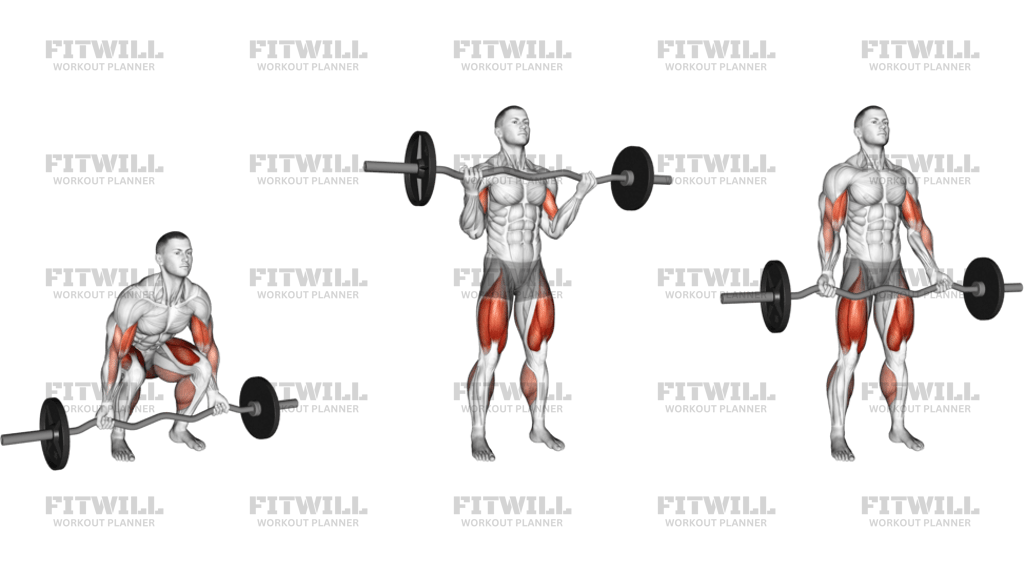
Yes, an EZ bar can be easier on the wrists for some lifters. The same rules still apply: arms straight, bar close to the body, and no torso swing.
Where should I feel Barbell Standing Back Wrist Curl?
You should feel it mostly across the forearms, especially along the top side of the wrist and forearm. The shoulders should stay quiet.
How many reps work best for Barbell Standing Back Wrist Curl?
Moderate to higher reps usually work well because the range is small and the exercise is meant for controlled accessory work. Choose a rep target that lets every rep look the same.