Posterior Neck Isometric
Posterior Neck Isometric is a standing bodyweight neck drill that builds strength and endurance in the muscles that hold your head aligned over your torso. The goal is not to move through a visible range of motion, but to create controlled tension behind the neck while the head, ribs, and pelvis stay stacked.
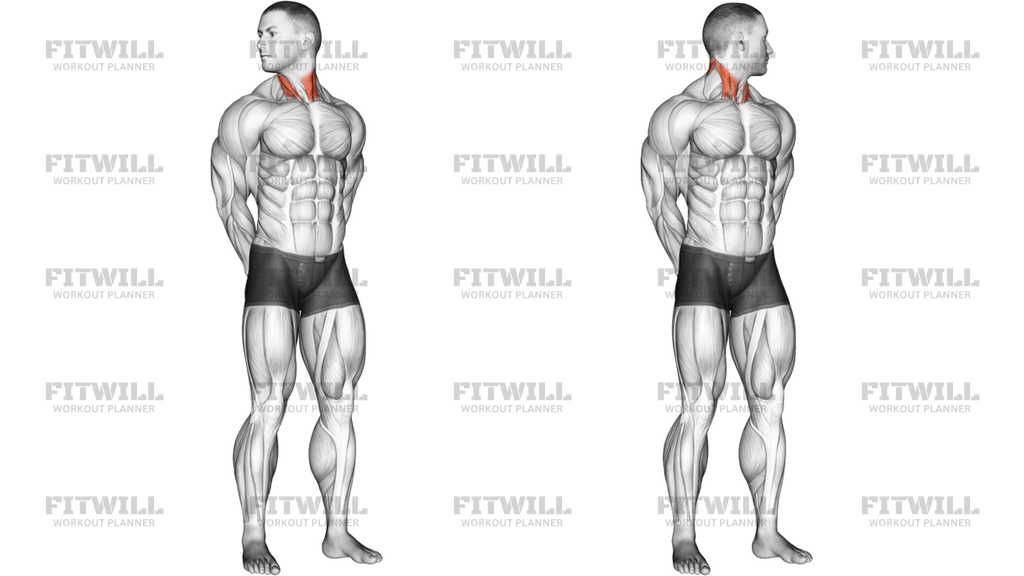
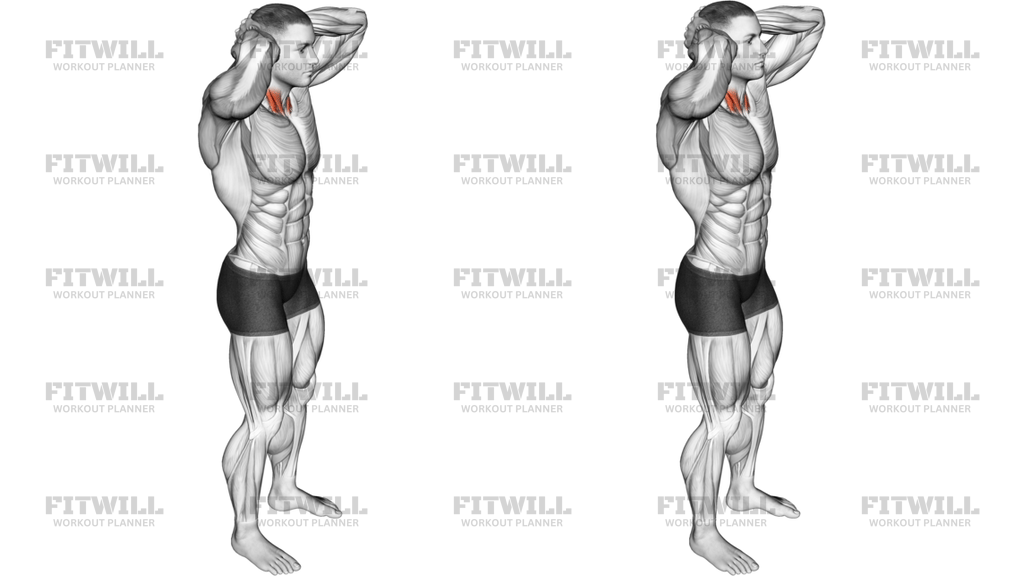
The pictured setup uses a simple self-resistance position: stand tall, place your hands behind your head, and keep the elbows open enough that the neck does not feel squeezed forward. That hand position lets you apply gentle pressure without needing a machine, band, or partner. Because the movement is isometric, the setup matters more than in many other exercises. Small changes in chin angle, rib position, or shoulder tension can shift the work away from the back of the neck.
To perform the exercise well, keep the chin level or slightly tucked, then press the back of the head into the hands as if you are trying to tilt the head backward without actually letting it move. The pressure should feel steady, not explosive. Hold that contraction for a short count, breathe through the brace, and then fully relax before the next rep. If you rush the hold or crank the head back, the exercise turns into a sloppy neck extension instead of a controlled posterior neck isometric.
This movement is useful for posture work, contact-sport preparation, and targeted neck accessory training when you want low-equipment loading and precise tension. It can also be a practical warm-up before lifting, grappling, or other activities where the neck needs to stay organized under force. Keep the effort moderate, avoid pain, and stop if you feel dizziness, nerve symptoms, or sharp pressure. Done correctly, the exercise should build awareness and resilience in the back of the neck without irritating the joint surfaces.
[ Workout Log & Planner ]
Put your next workout in Fitwill
Keep your plan and training log ready when you are.


Instructions
- Stand tall with your feet about hip-width apart and your knees softly unlocked.
- Interlace your fingers behind your head, or place both hands at the back of the skull, and keep the elbows open.
- Stack your ribs over your pelvis and keep your chin level so the head sits over the shoulders.
- Gently tuck the chin to lengthen the back of the neck without rounding your upper back.
- Press the back of your head into your hands as if you are trying to tilt the head backward, but do not let the head actually move.
- Build the tension smoothly until you feel the posterior neck working, then hold the contraction for the prescribed count.
- Keep breathing while you hold, using short calm breaths instead of bracing so hard that your jaw or shoulders tighten.
- Release the pressure slowly, reset your posture, and repeat for the planned number of holds.
Tips & Tricks
- Use only enough hand pressure to create a clear neck contraction; max effort usually turns this into a jaw-and-trap exercise.
- Keep the elbows comfortably wide so the hands support the skull without forcing the head forward.
- If your lower back arches, reset the ribs over the pelvis before the next hold.
- A slight chin tuck usually shifts the work to the back of the neck better than a fully neutral or upward-tilted head.
- Do not grind through long painful holds; short, clean contractions are safer for the cervical joints.
- Keep the jaw unclenched and the tongue relaxed so you do not add unnecessary tension at the front of the neck.
- If you feel the effort mostly in your throat or front neck, reduce pressure and re-stack the head.
- Stop immediately if you feel dizziness, shooting pain, numbness, or a headache that builds during the hold.
Frequently Asked Questions
What does Posterior Neck Isometric work?
It primarily trains the muscles that keep the head and neck aligned, especially the posterior neck extensors and deep cervical stabilizers.
Can beginners do this with no equipment?
Yes. The hands provide the resistance, so beginners can start with very light pressure and short holds.
How hard should I press into my hands?
Press firmly enough to feel the back of the neck engage, but not so hard that the head shifts, the jaw tightens, or the shoulders rise.
What should I feel during the hold?
You should feel steady tension around the back of the neck and base of the skull, not a pinch in the cervical spine or strain in the throat.
Why are my elbows held out to the sides?
Open elbows let the hands brace the head without driving it forward, which keeps the neck position cleaner.
Can I do this seated instead of standing?
Yes. Sitting tall with the ribs stacked works well if standing makes you sway or arch your lower back.
What is the most common form mistake?
The biggest mistake is turning the isometric into a hard neck crank by pushing the head backward instead of resisting the motion.
When should I stop the exercise?
Stop if you feel sharp pain, tingling, dizziness, or a headache that appears or worsens during the hold.