Kipping Handstand Push-Up
Kipping Handstand Push-Up is a wall-supported inverted pressing movement that combines a handstand position with a small hip and leg kip to help drive out of the bottom. It is an advanced bodyweight exercise that builds overhead strength, power, and body control while asking the shoulders, triceps, upper back, and core to work together. The kip does not replace the press; it gives you enough rhythm to keep the rep moving when strict strength alone would stall.
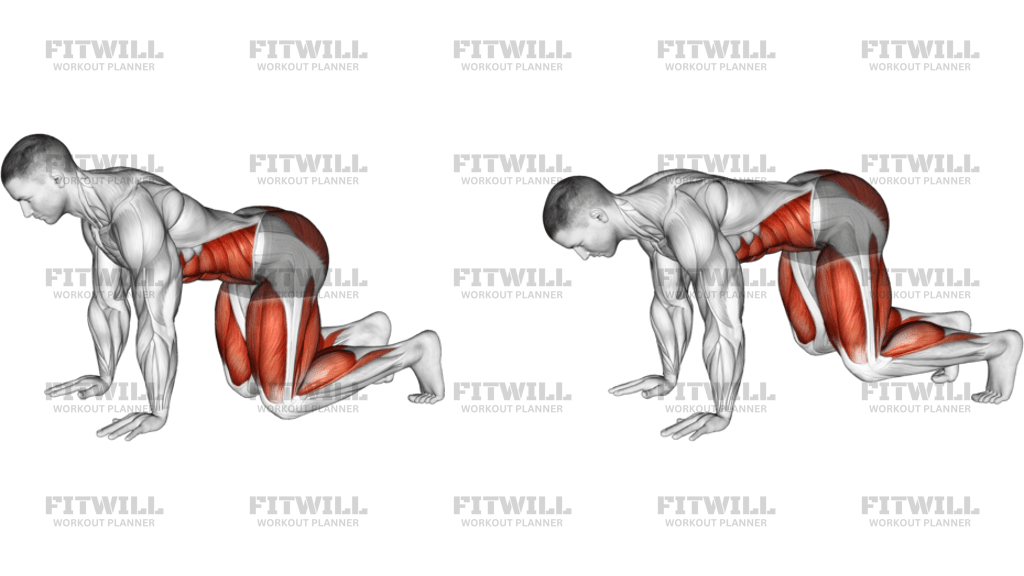
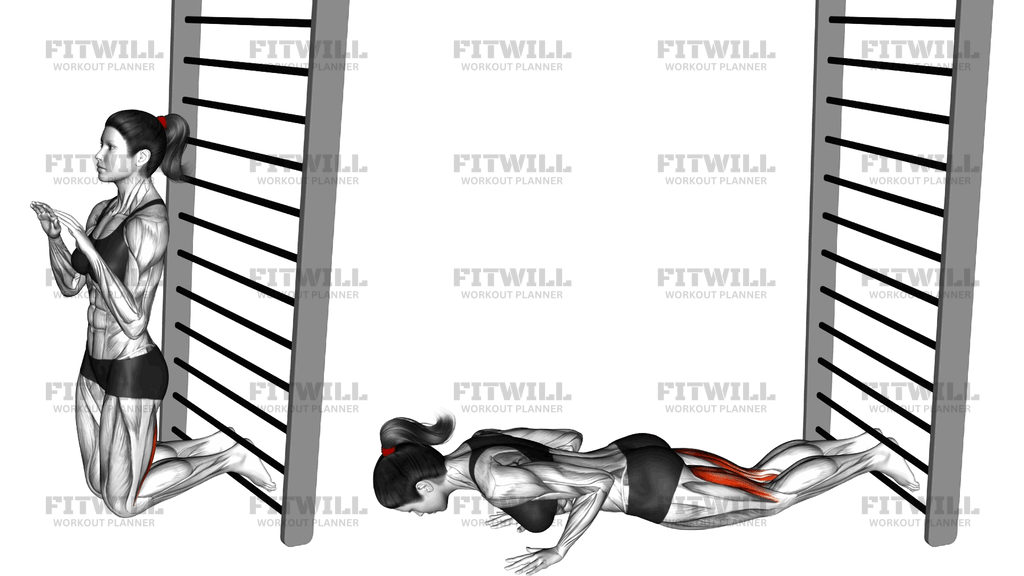
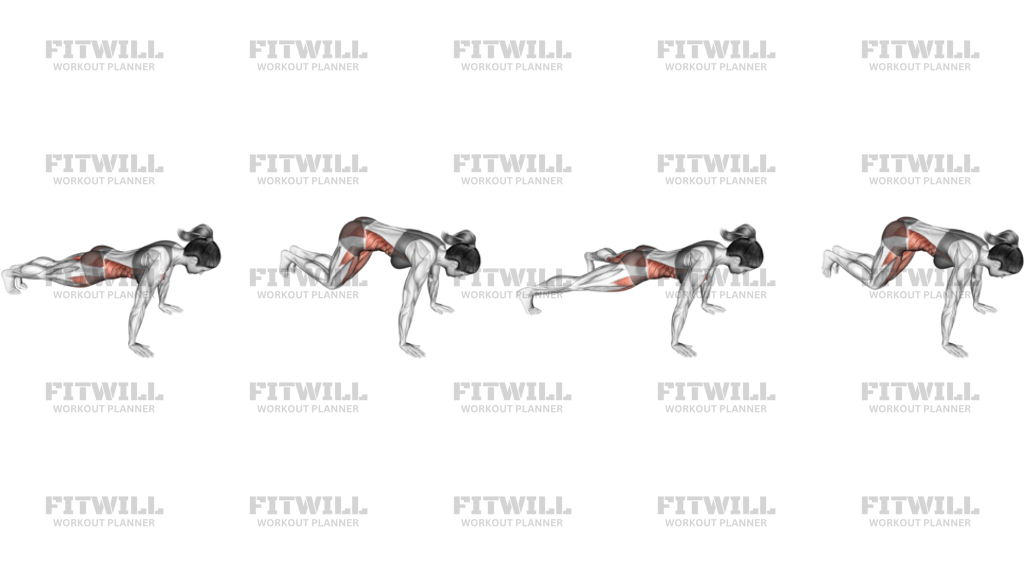
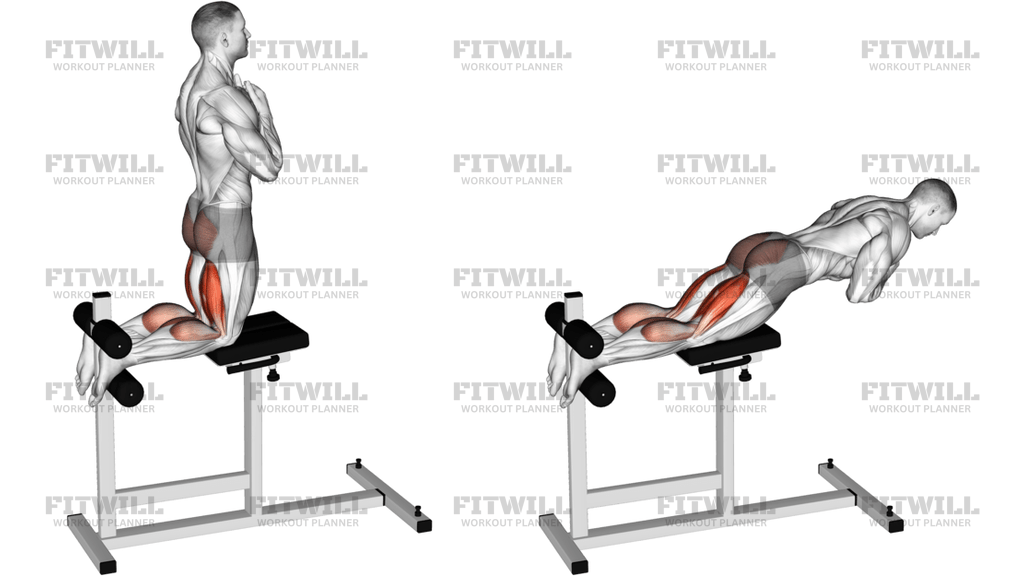
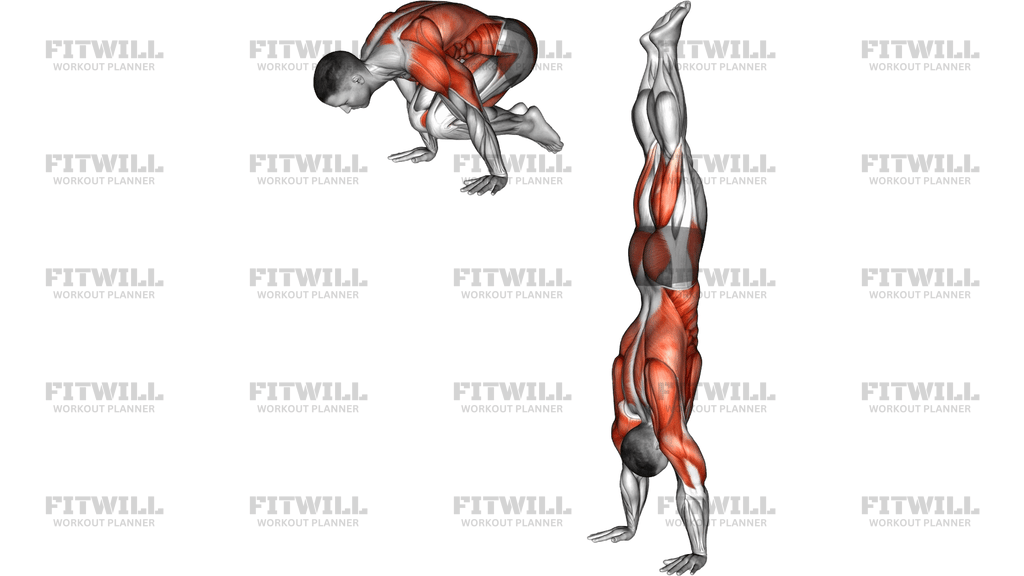
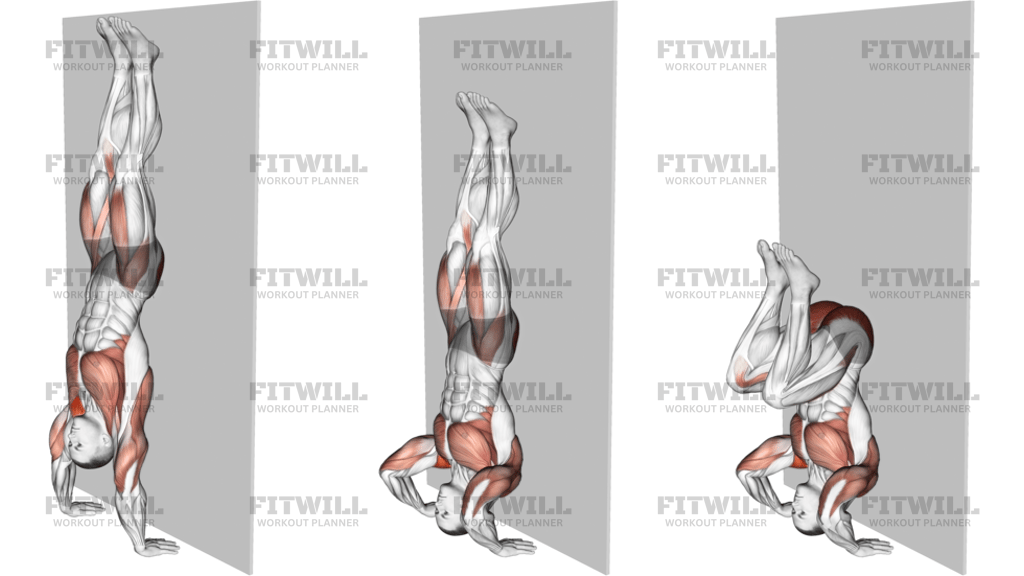
The setup matters because the whole rep starts from a stable inverted base. Your hands should be planted on the floor with a strong grip, your elbows locked, and your body stacked so the shoulders stay over the hands. In the image pattern shown here, the legs stay close to the wall for balance while the torso stays braced and the head lowers between the hands before the press back up.
A clean repetition uses a compact hollow-to-arch transition or knee tuck to create just enough momentum for the first inch or two of the press. As you lower, keep the elbows under control and let the head travel to the same contact point each rep, usually on a pad or the floor between the hands. On the way up, drive hard through the shoulders and triceps, finish with locked elbows, and re-stack before the next rep instead of letting the next swing happen too early.
This exercise is best used when you already have solid overhead pressing strength and want a more explosive variation for gymnastic or CrossFit-style training. It rewards tight body position, consistent depth, and good timing far more than a big kip or a fast rep count. If your neck collapses, your ribs flare, or your legs whip wildly off the wall, the set is too heavy or too advanced for the moment. Use a pad, keep the head position consistent, and stop before the kip becomes uncontrolled.
[ Workout Log & Planner ]
Put your next workout in Fitwill
Keep your plan and training log ready when you are.


Instructions
- Place your hands on the floor shoulder-width apart with fingers spread, then kick up to a wall-supported handstand with the body stacked and the heels lightly touching the wall.
- Lock your elbows, press tall through the shoulders, and keep your ribs down so the midline stays tight before you start the first rep.
- Take a small breath, then create a compact hollow-to-arch shift or knee tuck to load the kip without letting the lower back overextend.
- Bend the elbows and lower under control until your head touches the pad or floor between your hands at the same point each rep.
- Reverse the motion with a quick hip drive and leg snap while keeping the hands planted and the shoulders active.
- Press the floor away as hard as you can, finish with straight elbows, and return to a fully stacked handstand at the top.
- Reset your ribs, glutes, and balance against the wall before the next repetition.
- If you lose position, step down under control and restart from a stable handstand setup.
Tips & Tricks
- Keep the kip small; the best reps use a quick hip snap, not a big swing that throws your line apart.
- Touch the same head position every rep so depth stays consistent and you do not chase range with your neck.
- Push through the whole palm and spread the fingers to reduce wrist collapse when your body weight shifts overhead.
- Slightly turn the elbows in as you lower so the forearms stay more vertical and the press path stays efficient.
- Keep the wall contact light; if you slam the heels into the wall, the set usually turns into a balance bailout instead of a press.
- Use a folded mat or ab mat under the head if you need a cleaner bottom position and less neck compression.
- Exhale through the press and reset at the top before starting the next kip so the reps do not blur together.
- Stop the set when the hollow position disappears or the legs start flailing, because the kip then becomes the limiter instead of the press.
Frequently Asked Questions
What muscle does Kipping Handstand Push-Up target most?
The main work comes from the shoulders and triceps, with the upper back and core helping you stay stacked and balanced.
How is a kipping handstand push-up different from a strict handstand push-up?
The kipping version uses a small hip and leg drive to help you get through the bottom, while the strict version relies on pure pressing strength.
Where should my head touch during the rep?
Touch the same spot each time, usually on a pad or the floor between your hands, so depth stays consistent and your neck does not drift.
Should my heels stay on the wall?
Light heel contact is normal for balance, but you should not drive hard into the wall or let it become a wall walk between reps.
Is this exercise good for beginners?
Usually not. If you cannot hold a stable wall handstand or lower under control, start with pike push-ups, wall handstand holds, or strict negatives.
Why do my elbows flare out on the way down?
That usually means the load is too hard or the hands are too wide. Bring the hands into a shoulder-width press line and keep the forearms more vertical.
Do I need a big kip to get the rep up?
No. The kip should be compact and timed with the press. If you need a large swing, the movement is too advanced for the current set.
What is the safest way to stop if I lose balance?
Come down under control to one foot or both feet rather than trying to save a sloppy rep overhead.