Lateral Step-Up
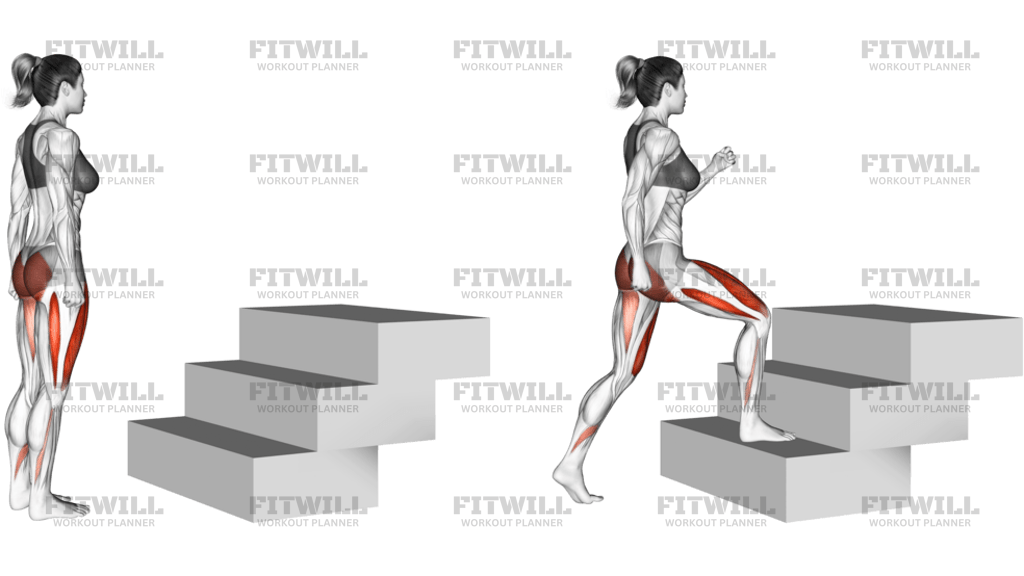
Lateral Step-Up is a sideways single-leg step-up performed on a box, bench, or other stable platform. It builds lower-body strength while training the hip and knee to stay organized as you move laterally instead of straight forward. The exercise is useful when you want more than simple leg drive: it also asks the glute, thigh, and trunk to control balance, pelvic position, and the transfer of weight from the floor to the platform.
The setup matters because the working leg has to own the lift from the first inch of motion. Place the whole foot on the step, keep the stance close enough that you can load the platform leg without reaching, and square the hips and shoulders before you start. A box that is too high will usually turn the rep into a hip hike or push-off from the floor leg, while a lower step lets you feel clean drive through the heel and midfoot of the working leg.
As you step up, press through the platform foot and stand by extending the hip and knee together. Keep the knee tracking over the middle toes, keep the pelvis level, and avoid twisting the torso toward the box. At the top, finish tall without leaning back or dumping weight into the free leg. Lower with control so the working leg keeps tension through the descent instead of dropping off the platform.
This movement is a strong choice for glute and thigh development, athletic warmups, unilateral strength work, and lower-body accessory training. It can also help expose side-to-side differences in balance or hip control, which is why the tempo should stay deliberate. Beginners should start with a low step and body weight only; advanced lifters can add dumbbells once every rep is stable and quiet. If the knee caves inward, the hips hike, or the torso has to swing to finish the rep, reduce the height and clean up the path before loading it harder.
[ Workout Log & Planner ]
Put your next workout in Fitwill
Keep your plan and training log ready when you are.


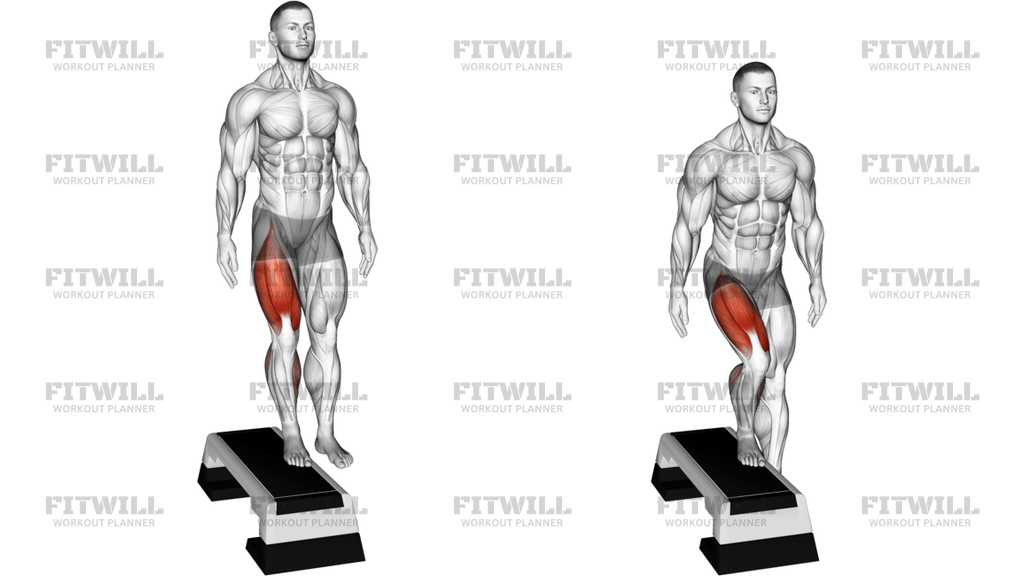
Instructions
- Place a stable box or bench beside you at a low-to-moderate height, then stand next to it with the working foot closest to the platform.
- Set the entire working foot on the step with the toes pointing forward and your weight centered through the heel and midfoot.
- Square your hips and shoulders, stand tall, and lightly brace your trunk before you move.
- Shift enough weight onto the platform leg to feel the glute and thigh turn on before the rep starts.
- Drive through the foot on the box to step up sideways, extending the hip and knee together.
- Keep the knee tracking over the middle toes and avoid pushing off hard from the floor leg.
- Bring the trailing foot onto the platform without bouncing or twisting your torso toward the step.
- Stand tall at the top for a brief pause, then lower back down under control and reset for the next rep.
Tips & Tricks
- Choose a step height that lets the pelvis stay level; if you have to hitch the hip to finish, the box is too high.
- Press through the heel and big toe of the foot on the platform so the rep stays in the glute and thigh instead of the lower back.
- Keep the free leg light; if it is doing real work, you are probably pushing off the floor too much.
- Let the knee travel in line with the second and third toes instead of collapsing inward.
- Use a slower lowering phase so the working leg keeps tension as you return to the floor.
- Keep the ribs stacked over the pelvis; a big torso lean usually means you are stealing the rep with momentum.
- If balance is limiting you, hold a wall or rack lightly with one hand instead of cutting the range short.
- Add dumbbells only after bodyweight reps look identical from the first rep to the last.
Frequently Asked Questions
What muscle does Lateral Step-Up target most?
The main work is in the glutes and thighs, especially the gluteus maximus and quadriceps, with the hamstrings and core helping to stabilize the body.
Can beginners perform this exercise?
Yes. Start with a low step and body weight only so you can learn the side-on setup and keep the pelvis level during the climb.
How high should the bench or box be?
Use a height that stays below or around knee level and lets you stand up without bouncing or twisting to finish the rep.
Should I push off the floor leg?
The foot on the floor should only help you balance. Most of the lift should come from the foot on the box.
Where should I feel the exercise?
You should feel the working-side glute and thigh, with the outer hip and core helping keep you steady.
Can I hold dumbbells during lateral step-ups?
Yes, once the bodyweight version is clean. Hold the dumbbells at your sides and keep the torso quiet.
What does it mean if my knee caves inward?
It usually means the step is too high, the load is too heavy, or the glute is not controlling the hip well enough. Lower the step and slow the descent.
Is this different from a forward step-up?
Yes. The sideways setup places more demand on balance, hip control, and single-leg stability than a straight-ahead step-up.