Curtsey Squat
Curtsey Squat is a bodyweight lower-body exercise built around a diagonal step-behind pattern that challenges the glutes, quads, adductors, and hip stabilizers at the same time. It is a squat variation with a balance demand, so the value of the movement comes from controlling the crossing step and keeping the working leg aligned while you lower and rise.
The exercise is useful when you want more than a straight up-and-down squat. The curtsy position asks the stance leg to control the knee and hip while the trailing leg crosses behind, which adds side-to-side stability work and usually shifts more attention to the outer hip and glute area. Done well, Curtsey Squat feels coordinated and athletic rather than rushed or awkward.
Set your feet under your hips, then step one leg diagonally behind and across the other so the front foot stays planted and the rear foot lands lightly on the ball of the foot. Keep your chest lifted and your pelvis mostly square to the front as you bend both knees. The front knee should track in line with the toes instead of collapsing inward, and the back leg should stay long enough to create balance without dragging the movement off course.
Lower under control until the front thigh is as low as your hip and knee comfort allow, then drive through the front heel and midfoot to stand back up. A small torso lean is normal, but the spine should stay long and the weight should remain centered over the working leg. Inhale as you lower, exhale as you rise, and reset your stance before repeating on the same side or switching sides.
Curtsey Squat fits well in home workouts, lower-body warm-ups, glute-focused circuits, and conditioning sessions where you want a simple movement with a strong stability requirement. It is also a good option for people who need a bodyweight squat variation that trains control, balance, and hip awareness without adding equipment. If the knees feel irritated, shorten the cross-behind step and reduce depth before adding volume.
Fitwill
Log Workouts, Track Progress & Build Strength.
Achieve more with Fitwill: explore over 9600 exercises with images and videos, access built-in and custom workouts, perfect for both gym and home sessions, and see real results.
Start your journey. Download today!




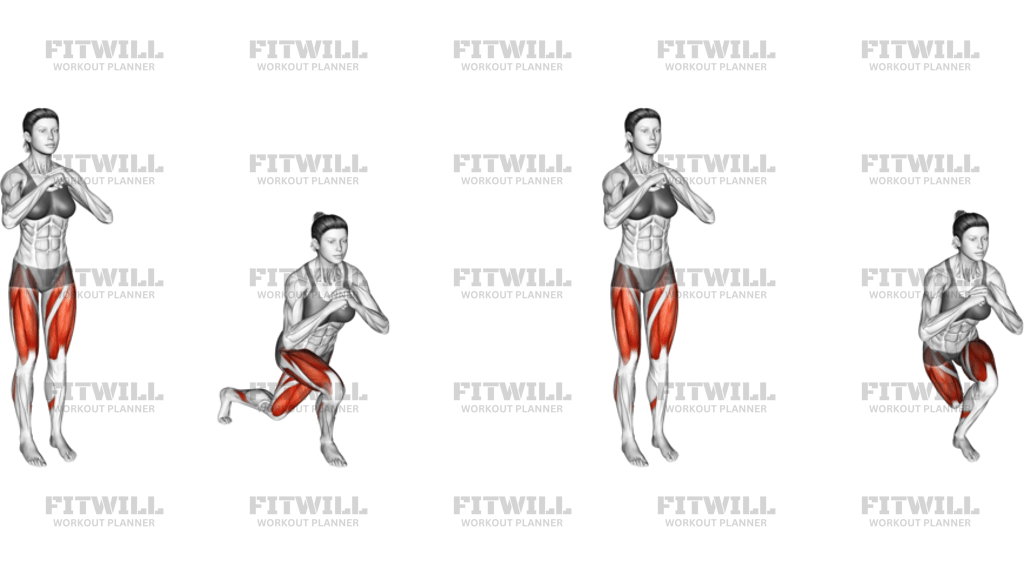
Instructions
- Stand tall with your feet under your hips and your hands held in front of your chest or at your sides for balance.
- Shift your weight onto one leg and step the other leg diagonally behind and across it, landing lightly on the ball of the rear foot.
- Keep your front foot flat, your chest lifted, and your hips facing mostly forward before you lower.
- Bend both knees and sit down between your hips, letting the front knee track over the middle toes instead of collapsing inward.
- Lower until the front thigh reaches a comfortable depth and the back knee points down toward the floor.
- Pause briefly at the bottom without bouncing or letting the pelvis twist away from the working leg.
- Drive through the front heel and midfoot to stand back up, squeezing the glute on the working side as you rise.
- Bring the trailing foot back under your hips with control, then reset your stance before the next rep.
- Repeat for the planned reps on one side, then switch sides and match the same range and tempo.
Tips & Tricks
- Keep the crossing step modest; a huge diagonal step usually twists the hips and turns the squat into a balance scramble.
- Think about sitting down over the front heel instead of reaching the chest toward the floor.
- Let the back foot stay light and quiet. If you start pushing off it, the front leg stops doing the work.
- Use a smaller range if the front knee caves inward or the pelvis rotates away from center.
- A slight torso lean is fine, but your ribs should stay stacked over your hips instead of folding at the waist.
- Hold your hands in front of you if you need balance; that is better than wobbling through the rep.
- Pause for one second near the bottom to clean up the line from hip to knee to foot.
- If your inner thigh feels stretched too hard, narrow the cross-behind angle and shorten the descent.
- Slow the lowering phase so the working leg has to control the side-to-side shift instead of dropping into it.
Frequently Asked Questions
What muscles does Curtsey Squat work?
Curtsey Squat mainly trains the glutes and quads, with a strong assist from the adductors, outer hip, and core stabilizers. The crossing step is what makes the hip and balance demand different from a regular squat.
Is Curtsey Squat more of a glute or thigh exercise?
It hits both, but most people feel it strongly in the glute of the front leg and the inner and outer thigh muscles that control the diagonal step. The deeper and cleaner the descent, the more the glutes and quads have to manage the rep.
How should my back foot move in Curtsey Squat?
The back foot should cross behind lightly and stay mostly on the ball of the foot, not drive the rep. Keep the rear leg there for balance, but let the front leg own the squat.
How deep should I go on Curtsey Squat?
Lower only as far as you can keep the front knee tracking well and the hips squared. If the pelvis twists or the front knee caves, shorten the range and clean up the stance.
Can beginners do Curtsey Squat?
Yes. Start with a small cross-behind step, a shallow squat, and your hands in front for balance. Once the pattern feels smooth, you can increase depth or add tempo before adding load.
What is the biggest form mistake in Curtsey Squat?
The most common mistake is letting the front knee cave inward while the torso folds forward. Keep the knee lined up with the toes and sit down instead of collapsing into the front hip.
Can I hold weights during Curtsey Squat?
Yes, but only after you can keep the diagonal step and knee tracking clean with body weight. A light goblet hold usually works better than heavy dumbbells at first because it helps you stay centered.
Is Curtsey Squat safe for knees?
It can be, but the diagonal angle puts more demand on control than a straight squat. If your knees feel pinchy, reduce the cross-behind angle, limit depth, and keep most of the load on the front leg.