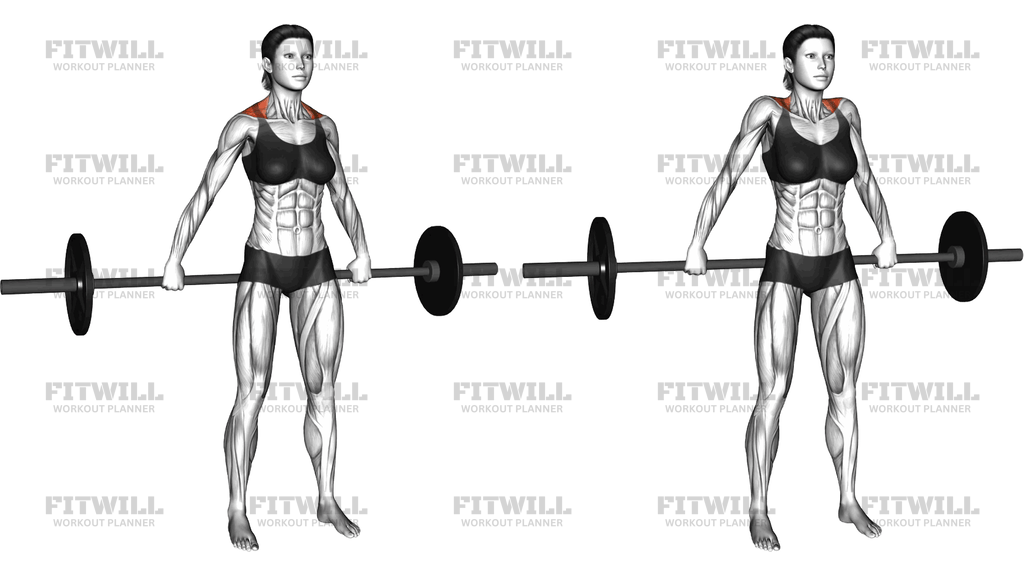
Barbell Back Wide Shrug
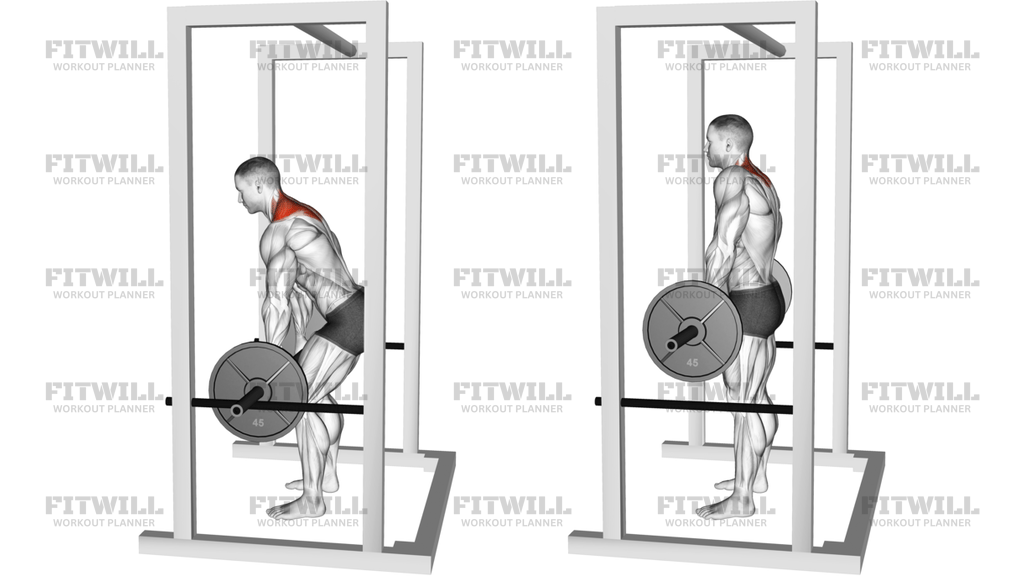
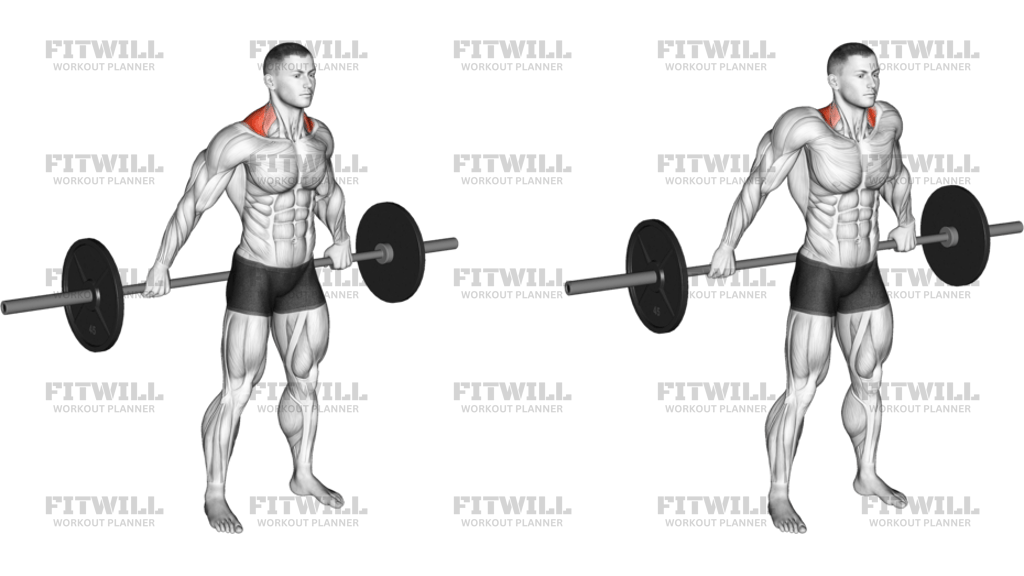
Barbell Back Wide Shrug is a standing barbell shrug performed with the bar held behind your body and a wider-than-shoulder overhand grip. The setup shifts the line of pull so the upper traps have to do more of the lifting while the upper back, lats, and arms stabilize the bar. It is a simple movement on paper, but the behind-the-body position makes clean shoulder motion and a quiet torso more important than loading the bar aggressively.
Stand tall with the bar resting behind your thighs, feet about hip-width apart, and your grip wide enough that the plates clear your legs. Keep your knees soft, chest lifted, wrists straight, and arms fully extended so the shrug starts from the shoulders instead of the elbows. If you lean back or let the bar drift away from your legs, the movement turns sloppy fast and the shoulders lose the line they need for a clean contraction.
Each rep should be a straight shoulder elevation: drive the shoulders up toward the ears, hold the top for a brief squeeze, and lower the bar under control until the shoulders are fully relaxed again. The bar should travel almost vertically and stay close to the thighs the whole time. There is no need to roll the shoulders, bounce the torso, or turn the lift into a partial deadlift; the goal is a controlled trap contraction, not momentum.
Barbell Back Wide Shrug is useful when you want direct upper-trap work without a machine. It can fit into back day, shoulder day, or an upper-body accessory block, especially if you want to build the thickness and firmness that help the neck-to-shoulder line look stronger. Lifters often use it to add trap volume after rows, presses, or pulls, because it trains a very specific part of the shoulder girdle without demanding much elbow movement.
The exercise is generally beginner-friendly if the load is kept modest and the range stays pain-free, but the wide grip and behind-the-body position should still feel smooth in the shoulders. If the front of the shoulder pinches, the wrists bend back, or the bar bangs the thighs, adjust the grip width and stance before adding weight. Clean reps with a controlled lowering phase are more useful here than chasing a heavy shrug that only moves because the body is swinging.
[ Workout Log & Planner ]
Put your next workout in Fitwill
Keep your plan and training log ready when you are.


Instructions
- Stand tall with feet hip-width apart and hold the bar behind your thighs with a wide overhand grip, arms straight and wrists stacked over forearms.
- Let the bar hang close to your legs, keep your chest lifted, and soften the knees just enough for the bar to clear the thighs.
- Brace your midsection and keep your chin level before the first rep so your torso stays quiet.
- Shrug both shoulders straight up toward your ears without bending the elbows or leaning back.
- Squeeze the traps briefly at the top while keeping the bar path vertical and close to the body.
- Lower the bar slowly until the shoulders are fully lowered again and the arms are long.
- Reset the neck and shoulder position at the bottom, then repeat with the same clean path.
- Breathe in as the bar lowers and exhale as you shrug up.
- After the final rep, lower the bar to the rack or floor under control before stepping away.
Tips & Tricks
- Use a grip just wide enough for the plates to clear your thighs; excessive width shortens range and can stress the shoulders.
- Keep the elbows locked so the movement stays a shrug instead of turning into a partial upright row.
- Drive the shoulders straight up and down, not in circles, to keep the tension on the traps.
- A small knee unlock helps the bar stay behind you without forcing an exaggerated low-back arch.
- Pause for a beat at the top if you want more trap tension; do not bounce out of the bottom.
- Keep the bar brushing close to the legs; if it drifts backward, the lift becomes harder to control.
- Choose a lighter load than you would use for front shrugs, because the behind-the-body position is less forgiving.
- Stop the set if the front of the shoulder pinches or the wrists have to extend hard to hold the bar.
Frequently Asked Questions
What muscles does Barbell Back Wide Shrug work most?
It mainly targets the upper traps, with the upper back, lats, and arms helping stabilize the bar. The wide behind-the-body setup makes shoulder elevation the main job.
Why is the bar held behind my thighs in Barbell Back Wide Shrug?
The behind-the-body position changes the line of pull and keeps the focus on shrugging the shoulders straight up. It also makes bar control and posture more important than in a standard front shrug.
How wide should my grip be on Barbell Back Wide Shrug?
Wide enough that the plates clear your legs, but not so wide that your wrists fold back or your shoulders feel crowded. If the bar bangs your thighs, narrow the grip slightly or stand a little taller.
Should I roll my shoulders during Barbell Back Wide Shrug?
No. Rolling usually turns the lift into a shoulder circle and can irritate the joint; think straight up on the way up and straight down on the way down.
Is Barbell Back Wide Shrug beginner-friendly?
Yes, if the load is kept light enough to control and the grip feels natural behind the body. Beginners should practice the setup first so the bar stays close and the torso stays still.
How heavy should I go on Barbell Back Wide Shrug?
Use a weight that lets you pause at the top and lower the bar without swaying or bending the elbows. If you have to lean back to finish a rep, the load is too heavy.
What should I feel if the form is right?
A strong squeeze across the upper traps at the top, with the rest of the body mostly quiet. You should not feel like you are rowing or using hip drive to move the bar.
What if Barbell Back Wide Shrug irritates my shoulders?
Reduce the grip width, soften the knees a little more, and keep the bar closer to the thighs so the shoulders do not have to reach behind you as far. If the pinch remains, skip the variation and use a standard shrug instead.