Barbell Power Shrug
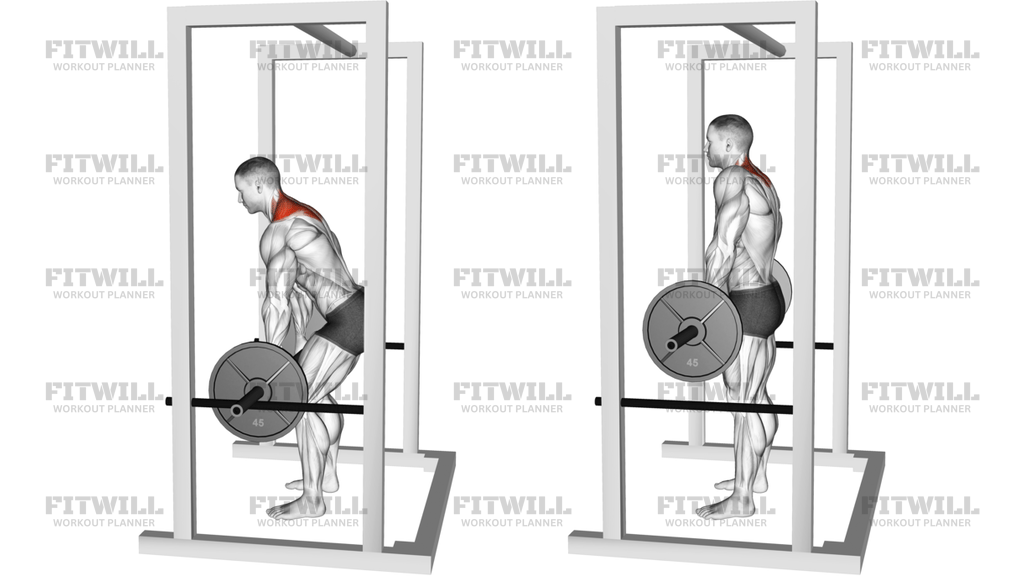
Barbell Power Shrug is an explosive barbell pull for the upper back and traps. The movement starts from a hinged position with the bar hanging close to the legs, then finishes with a fast stand and shrug while the arms stay long. It is built to teach you how to create force through the floor and finish the rep with the shoulders, not by curling the bar or yanking with the elbows.
This exercise is useful when you want more power in the lockout portion of pulls, stronger upper-trap recruitment, and a cleaner transition from hip drive into shoulder elevation. Because the torso changes angle under load, the setup matters as much as the pull itself. If the bar drifts away from the body or the back rounds, the rep turns into a loose heave instead of a controlled power shrug.
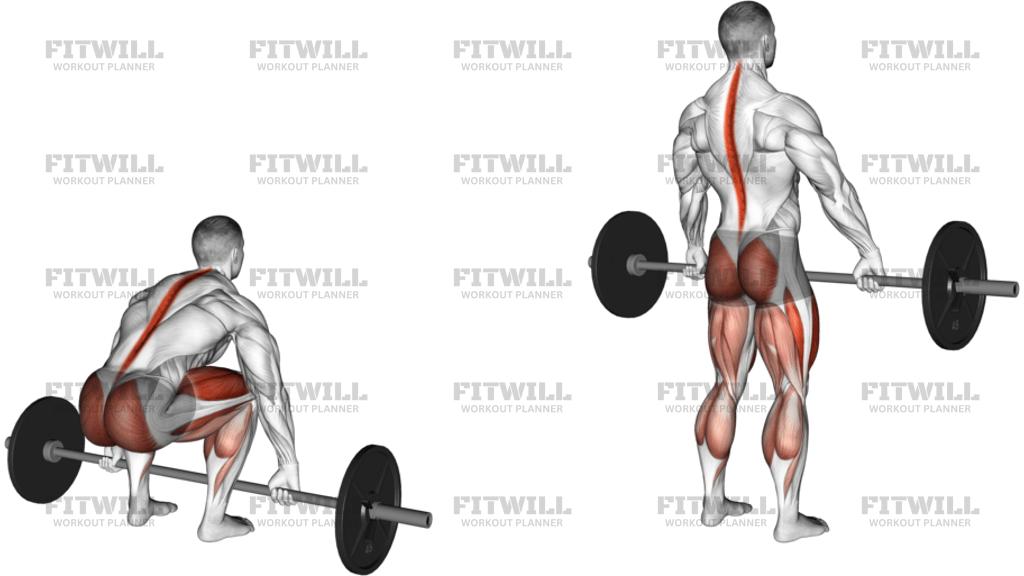
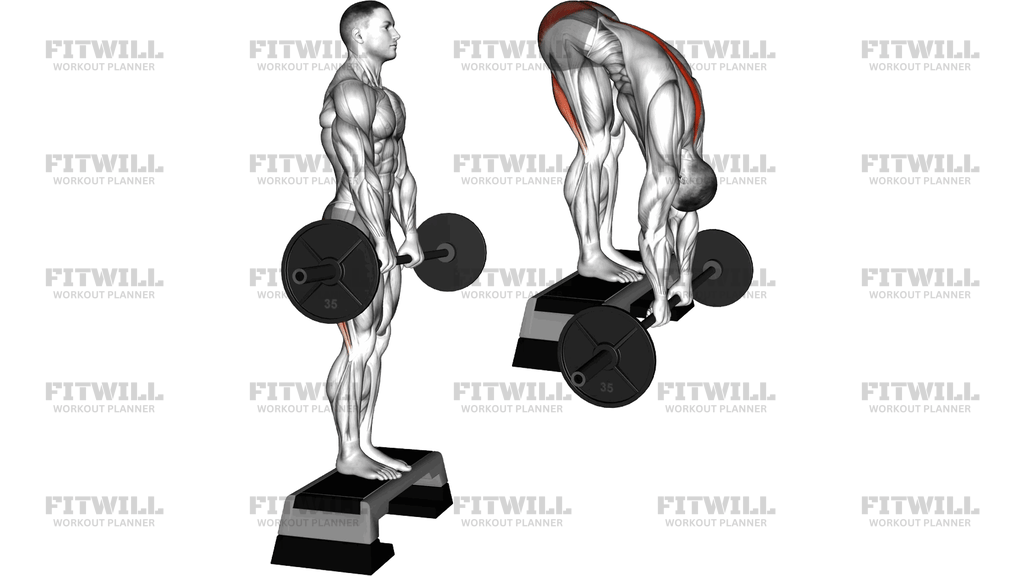
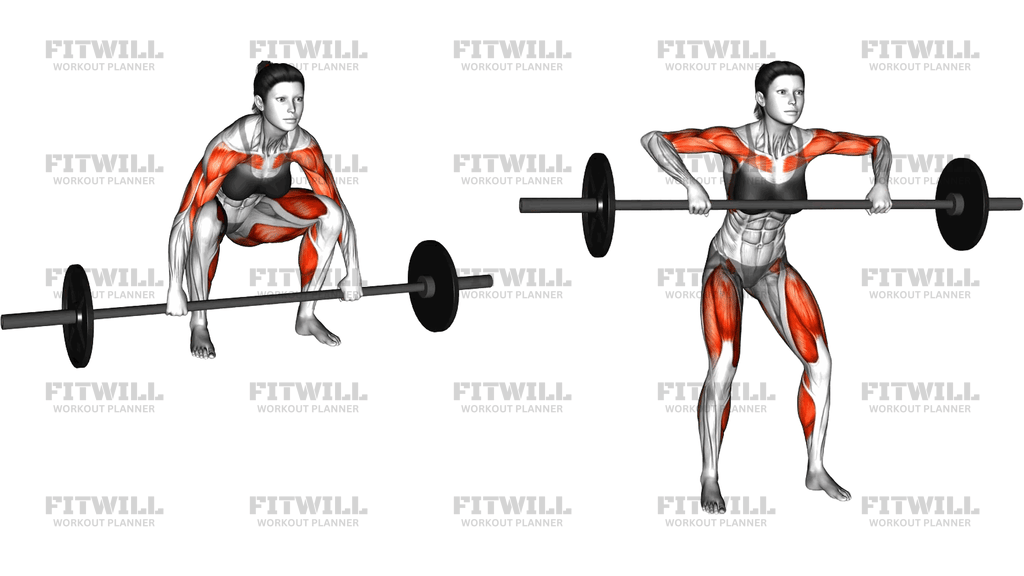
The image shows a hinged start with the bar hanging around shin to lower-thigh height and a tall finish with the shoulders raised. That means each repetition should begin with the hips loaded, chest proud, and spine neutral, then move in one crisp action: extend the legs and hips, keep the elbows soft but not bent, and let the shrug happen at the top. The bar should stay close to the body the entire time.
Barbell power shrugs are usually programmed as an accessory after deadlifts, rows, clean pulls, or other hinge-based work, because they reinforce speed and upper-back finish without needing a full pull from the floor. They also work well in a short power block when you want a simpler pattern than a clean variation but still want an explosive intent. Keep the repetitions low enough that every rep looks sharp.
Use a load that lets you move fast without losing position. If the weight slows the rep so much that you have to lean back, bend the arms hard, or hitch the bar up your torso, it is too heavy for this drill. Most lifters use the barbell power shrug as an accessory movement after a main pull, or as a technical power exercise in a lower-volume session.
Treat every rep as a power rep, not a grinder. Reset your hinge, breathe, brace, and repeat with the same path every time. The goal is a sharp upward drive, a brief shrug at the top, and a controlled return to the start so the next repetition begins from the same strong position.
[ Workout Log & Planner ]
Put your next workout in Fitwill
Keep your plan and training log ready when you are.


Instructions
- Stand hip-width with the bar over mid-foot and hinge until your torso is angled forward, the chest is open, and the bar hangs close to the shins or lower thighs.
- Grip the bar just outside your legs with straight wrists, let your arms hang long, and set your shoulders down before the first rep.
- Take a breath, brace your trunk, and keep your weight balanced through the whole foot.
- Drive the feet into the floor and extend the hips and knees together so the bar rises close to the body.
- Finish each rep by shrugging the shoulders hard toward the ears while the elbows stay mostly straight.
- Keep the bar path vertical and avoid swinging it forward or turning the pull into an upright row.
- Lower the bar under control back to the hinged start position and re-set your brace before the next rep.
- Reset fully between reps if needed so every pull starts from the same posture and bar position.
Tips & Tricks
- If the bar brushes away from your legs, narrow the path and think about dragging it up your shirt or thighs.
- Keep the elbows soft; once the arms start doing the lift, the shrug loses its power focus.
- Do not overextend the lower back at the finish, especially when the shrug makes the load feel lighter than it is.
- A fast concentric with a controlled descent works better here than a slow, grinding rep.
- Use straps if grip is the limiting factor and you want the upper-back work to stay the priority.
- Stop the set when you can no longer keep the chest set and the bar close through the pull.
- Think about standing tall before shrugging, not leaning back to fake extra height.
- Heavier loads should still look explosive; if the bar stalls, drop the weight instead of forcing a cheat rep.
Frequently Asked Questions
What does the barbell power shrug work most?
It mainly targets the upper traps and other upper-back muscles that help finish an explosive pull.
Can beginners perform this exercise?
Yes, if they start light and keep the hinge, brace, and straight-arm finish under control.
Should my arms bend during the pull?
No, the arms should stay long enough that the shrug and hip drive do the work instead of a curl.
Do I need to start from the floor every rep?
Not necessarily. Many lifters use a hinged start just below the knees or lower thighs, then reset there for each rep.
What is the biggest form mistake?
Letting the bar drift away from the body or turning the movement into a jerky upright row.
Where should I feel the finish of the rep?
You should feel the shoulders and upper traps contract hard at the top, not the lower back or biceps.
Is this the same as a barbell shrug?
It is similar, but the power shrug adds a more explosive leg and hip drive before the shrug.
How heavy should I load it?
Use a load you can move quickly and repeat cleanly; if the speed disappears, the weight is too heavy for this drill.