Lever Preacher Curl Turned Torso
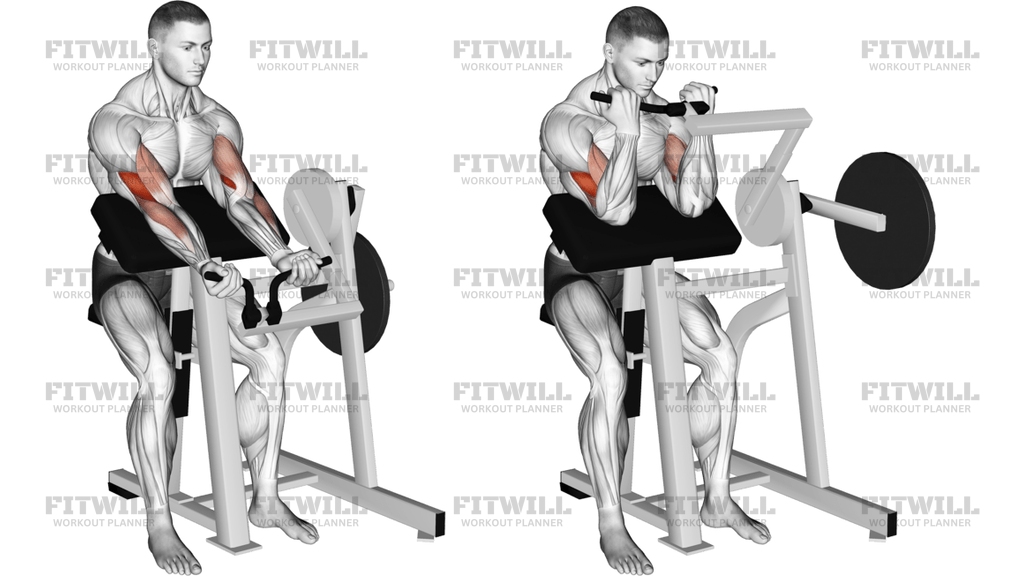
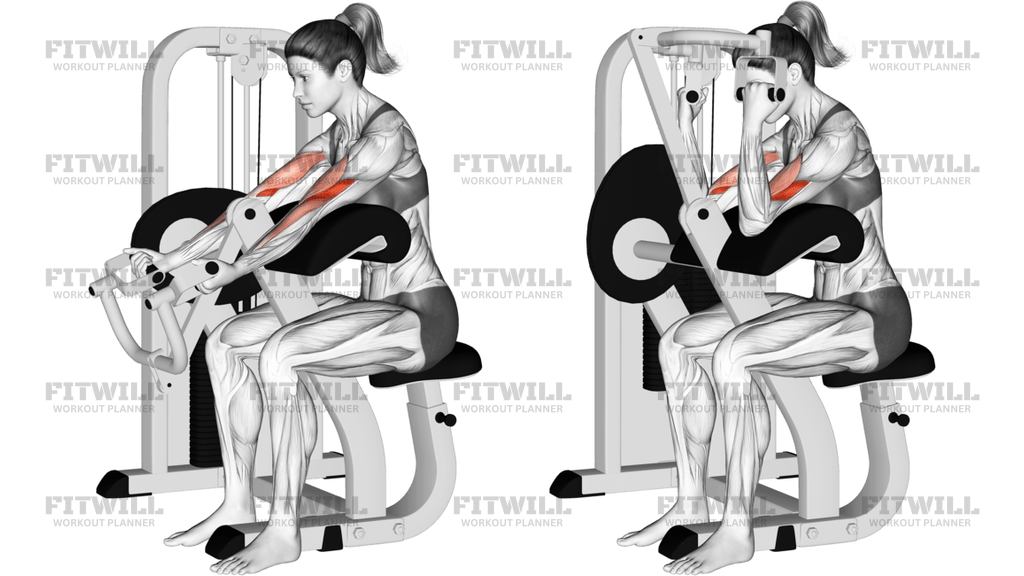
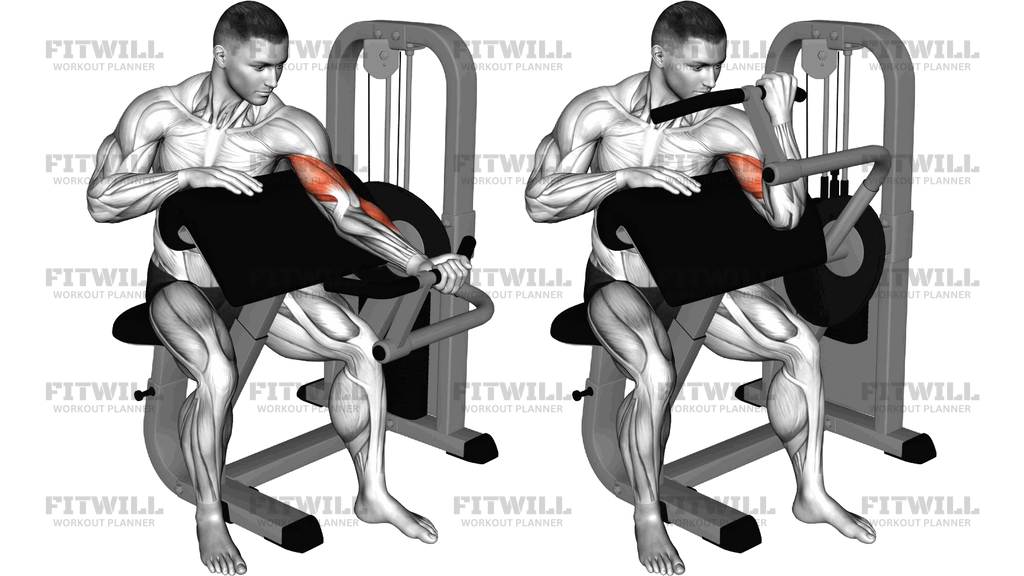
Lever Preacher Curl Turned Torso is a strict unilateral machine curl that keeps the upper arm supported on a preacher pad while you angle the torso slightly toward the working side. The leverage arm gives the movement a fixed path, which makes it easier to train the elbow flexors without needing to balance a free weight or swing the shoulder through the rep.
The turned-torso setup matters because it locks the working side into a cleaner line of pull. Your chest stays close to the pad, the upper arm stays planted, and the elbow becomes the main hinge. That setup shifts the emphasis onto the biceps while still involving the brachialis and brachioradialis to finish the curl and control the descent.
A good repetition starts from a long but controlled bottom position, with the wrist stacked over the forearm and the shoulder quiet. Curl the handle in a smooth arc until it comes toward the upper chest or front of the shoulder, then squeeze briefly before lowering under tension. The rep should feel like elbow flexion, not a torso twist or a shoulder roll.
Because the preacher pad removes most of the opportunity to cheat, this variation is useful for strict hypertrophy work, unilateral arm balance, and controlled strength practice. It is also a good option when you want to train the biceps with less momentum than standing curls allow. The tradeoff is that the setup has to be right: if the seat is too high, too low, or too far away, the shoulder will take over and the elbow will lose its clean path.
Use a load that lets you keep the torso angle fixed, the upper arm glued to the pad, and the lowering phase smooth. If you have to jerk the handle, let the chest come off the pad, or let the wrist bend back at the top, reduce the weight and reset the seat position. The goal is a repeatable curl with steady tension from the first rep to the last.
[ Workout Log & Planner ]
Put your next workout in Fitwill
Keep your plan and training log ready when you are.


Instructions
- Set the seat so your upper arm rests fully on the preacher pad and your chest stays close to the pad when you turn slightly toward the working arm.
- Plant both feet, keep your ribs down, and grip the single handle with your palm facing up and your wrist stacked over the forearm.
- Let the arm start near full extension without letting the shoulder drift forward or the elbow slide off the pad.
- Brace lightly, then curl the handle by bending only at the elbow while keeping the torso angle fixed.
- Bring the handle toward the front of the shoulder or upper chest and keep the upper arm pressed into the pad as you finish the rep.
- Squeeze the biceps briefly at the top without shrugging the shoulder or rolling the wrist back.
- Lower the handle slowly until the arm is almost straight again, keeping tension on the biceps instead of dropping into the bottom.
- Reset the shoulder, breathe in on the way down, and repeat for the planned reps before switching sides.
Tips & Tricks
- Match the seat height so the pivot of the curl lines up with your elbow, not your wrist or shoulder.
- Keep the torso turn fixed for the whole set; do not twist a little more on each rep to chase extra range.
- Use a wrist position that stays straight through the curl so the forearm does not take over the lift.
- Pause for a split second at the top if the machine wants to pull you through the rep with momentum.
- Lower under control until the arm is long, but stop short of a hard lockout if the elbow feels irritated.
- Keep the chest lightly anchored to the pad so the shoulder does not drift forward at the bottom.
- Choose a load that lets you control the last third of the lowering phase, where many lifters lose tension.
- If the forearm burns before the biceps, reduce the load and make the rep smoother rather than faster.
Frequently Asked Questions
What does Lever Preacher Curl Turned Torso train most?
It primarily trains the biceps, with the brachialis and brachioradialis helping during the curl and the lowering phase.
Why turn the torso instead of sitting square to the machine?
A slight torso turn helps line the working side up with the preacher pad and keep the curl path cleaner. The twist should be set once and held still, not added rep by rep.
Where should the upper arm sit on the pad?
The upper arm should stay fully supported on the preacher pad so the elbow can act as the main hinge. If the shoulder is floating or the arm is sliding, the seat needs to be adjusted.
How far should I lower the handle?
Lower until the arm is almost straight and the biceps still have tension. Avoid dropping so deep that the shoulder rolls forward or the elbow snaps into a hard lockout.
Can beginners use this machine curl?
Yes. It is beginner-friendly if the seat is set correctly and the load is light enough to keep the rep strict.
Why does my shoulder feel involved during the curl?
That usually means the shoulder is drifting forward or the chest is leaving the pad. Re-seat yourself so the upper arm stays anchored and the elbow drives the movement.
What is the main mistake to avoid on this exercise?
Do not use body sway or a bigger torso twist to move the handle. The exercise works best when the elbow flexes while the rest of the body stays quiet.
What is a good alternative if I do not have this machine?
A standard preacher curl, a single-arm cable curl, or a concentration curl can all give a similar strict elbow-flexion stimulus.