EZ Bar Seated Wrist Curl
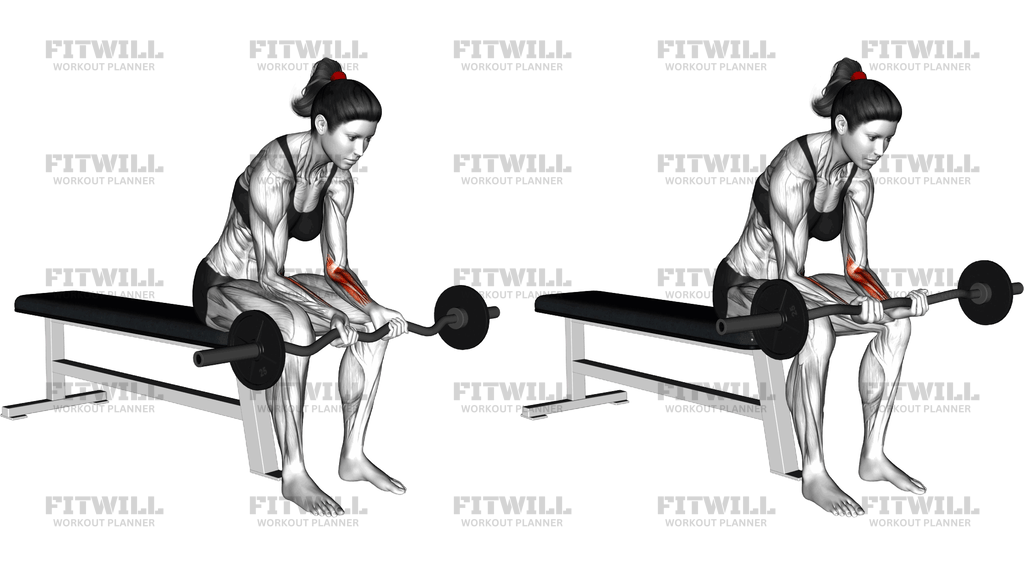
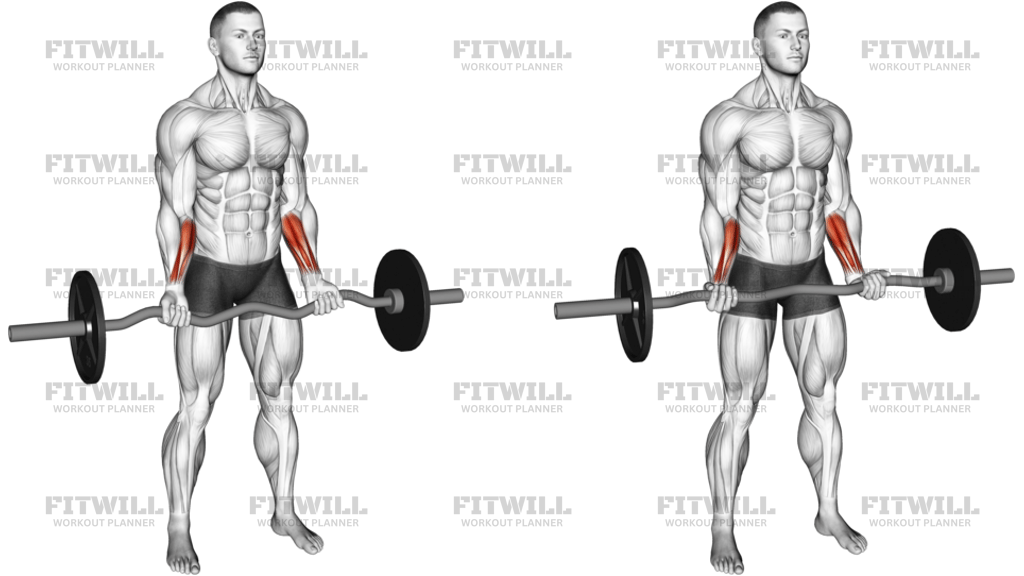
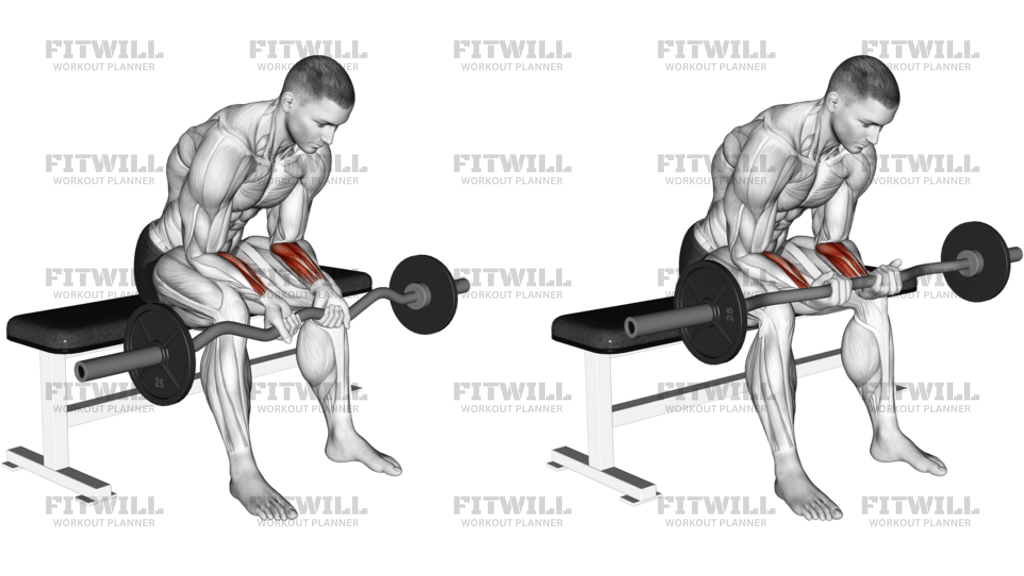
EZ Bar Seated Wrist Curl is a seated forearm isolation exercise that trains wrist flexion against a loaded EZ bar. In the setup shown here, the lifter sits on a flat bench with the forearms supported on the thighs and the wrists hanging just past the knees so the bar can move through a controlled arc. The angled grips of the EZ bar usually make this variation more comfortable than a straight bar for people whose wrists do not love a fully supinated handle.
The exercise is aimed at the muscles that close the hand and flex the wrist, especially the flexor side of the forearm. Because the forearms are anchored on the thighs, the movement becomes very easy to cheat if the elbows slide, the torso bounces, or the shoulders take over. The support position matters: it shortens the lever arm, reduces body swing, and forces the rep to come from the wrist joint rather than from a shoulder or hip drive.
A good set starts by sitting tall, planting the feet, and setting the forearms so they stay fixed on the thighs. From there, the wrists begin in the lowered position with the bar hanging under control, then curl the EZ bar upward by flexing the wrists and squeezing the forearms at the top. The lowering phase should be deliberate and smooth, with the bar rolling back toward the fingertips only as far as the wrists can control without losing the grip or collapsing the elbows.
This is usually programmed as accessory work for forearm size, grip support, and wrist strength rather than as a main strength lift. It pairs well with pulling sessions, arm days, or grip-focused finishers, especially when the goal is to build tolerance in the wrist flexors without needing heavy load. Keep the motion pain-free, avoid jerking the bar off the bottom, and stop the set if the wrists start to ache in the joint instead of the forearm muscle belly.
[ Workout Log & Planner ]
Put your next workout in Fitwill
Keep your plan and training log ready when you are.


Instructions
- Sit on a flat bench and place the EZ bar across your thighs with your palms facing up on the angled grips.
- Slide your forearms onto your thighs so your wrists and hands hang just past your knees.
- Keep your feet flat, chest tall, and elbows pinned in place against your legs.
- Let the bar lower slowly by opening the wrists until you feel a controlled stretch in the forearms.
- Curl the bar upward by flexing the wrists and bringing the knuckles toward the forearms.
- Squeeze briefly at the top without lifting the forearms off your thighs.
- Lower the bar back down under control until the wrists are extended again.
- Breathe out as you curl up and inhale on the lowering phase.
Tips & Tricks
- Keep the bar sitting in the lower palm and fingertips at the bottom so the wrists can move through a real range of motion.
- Do not let the elbows drift forward off the thighs; that turns the exercise into a sloppy arm curl.
- Use a load that lets the bar move smoothly from full wrist extension to a strong top squeeze without bouncing.
- Lower the bar slower than you lift it so the forearm flexors stay under tension instead of relaxing between reps.
- If the EZ bar digs into your legs, shift the forearms slightly higher on the thighs or adjust your seat position before starting the set.
- Keep the shoulders relaxed and down; shrugging usually means you are trying to help the wrists with the upper body.
- Stop just before the wrists collapse into pain at the bottom; the goal is forearm tension, not an irritated joint.
- Use higher reps when the grip starts to fail before the forearms do, since this movement is easy to overload too quickly.
Frequently Asked Questions
What does the EZ Bar Seated Wrist Curl train most?
It mainly targets the wrist flexors on the palm side of the forearm, helping build forearm size and wrist strength.
Where should my forearms sit during the rep?
Your forearms should stay supported on your thighs with the wrists hanging just over the knees so the wrists can move freely.
Should I move my elbows or shoulders while curling?
No. The elbows and shoulders should stay quiet while the wrists do the work.
Why use an EZ bar instead of a straight bar?
The angled grips often feel easier on the wrists and allow many lifters to keep a more comfortable hand position.
How low should the bar go at the bottom?
Lower it until the wrists are extended and the forearm flexors feel a stretch, but stop before the joints feel strained or the grip opens.
Is this a good exercise for beginners?
Yes, as long as the load is light and the movement stays slow enough that the wrists, not the torso, control the bar.
What is the most common mistake with this exercise?
Letting the forearms lift off the thighs or bouncing out of the bottom instead of curling the bar with the wrists.
When should I use this in a workout?
It works well near the end of an arm, pull, or grip session as accessory work after the bigger lifts are done.