Bodyweight Narrow Stance Squat
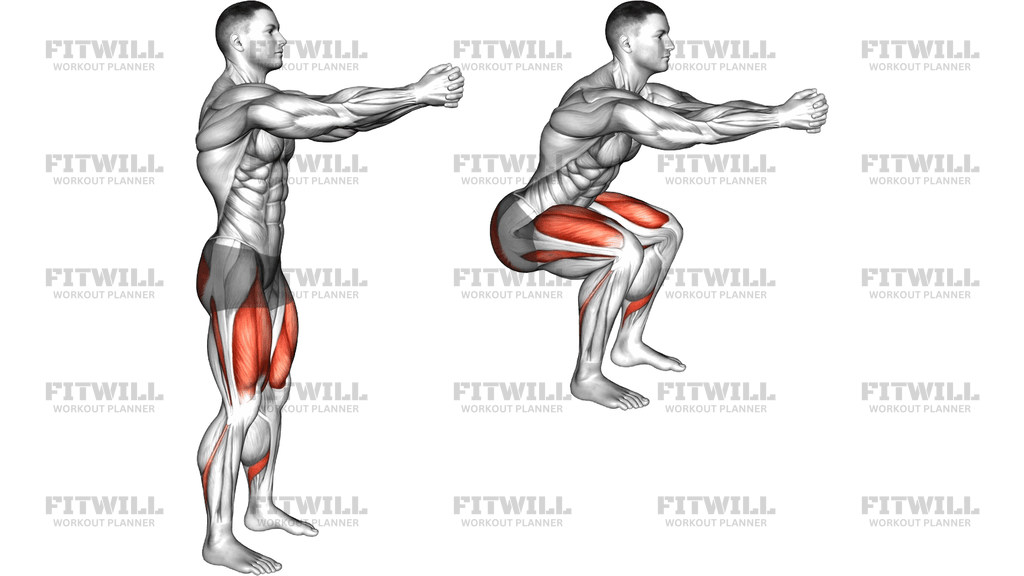
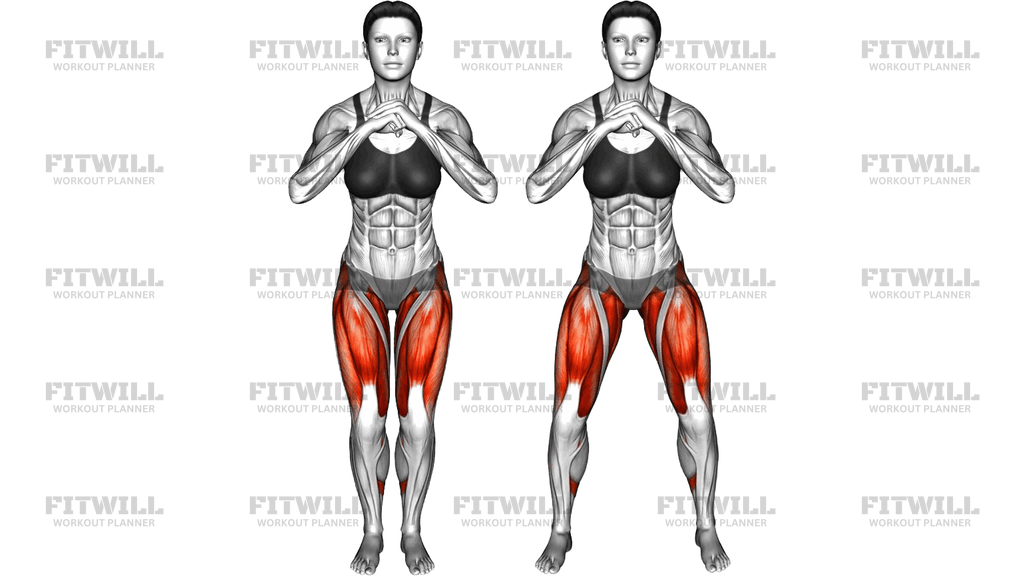
Bodyweight Narrow Stance Squat is a close-stance squat performed with your own body weight, usually with the hands held at the chest for balance. The narrow stance keeps the feet close together and makes the squat feel more demanding through the thighs, glutes, and inner-leg stabilizers than a wider bodyweight squat. It is a simple but useful lower-body pattern for warming up, building control, or adding high-quality reps without load.
The narrow base changes the balance demands, so the squat works best when you stay tall through the torso and keep the knees tracking over the toes. Because the feet are closer together, depth should come from bending at the hips and knees together instead of forcing the hips straight down. If the heels lift or the knees cave inward, the stance is usually too narrow for your current mobility or control.
A good rep starts from a stable stance with the feet planted, weight balanced through the whole foot, and the chest lifted. Lower under control until the thighs reach a comfortable depth and the hips stay centered over the feet. The goal is not to crash into the bottom position, but to keep tension on the legs and make the descent and drive back up look smooth and repeatable.
This exercise is useful when you want a squat variation that is easy to learn, easy to regress, and good for rehearsing lower-body mechanics. It can fit into a warmup, conditioning circuit, or accessory block for leg endurance and movement quality. Because there is no external load, the quality of the stance, knee track, and tempo matters more than chasing a larger range than your ankles or hips can support.
Keep the movement controlled and symmetrical from rep to rep. If the narrow stance feels cramped, slightly widen the feet while keeping them closer than shoulder width, then squat to the deepest position you can hold without losing heel contact or torso control. That adjustment usually makes the exercise more productive than forcing an overly tight stance.
Fitwill
Log Workouts, Track Progress & Build Strength.
Achieve more with Fitwill: explore over 9600 exercises with images and videos, access built-in and custom workouts, perfect for both gym and home sessions, and see real results.
Start your journey. Download today!




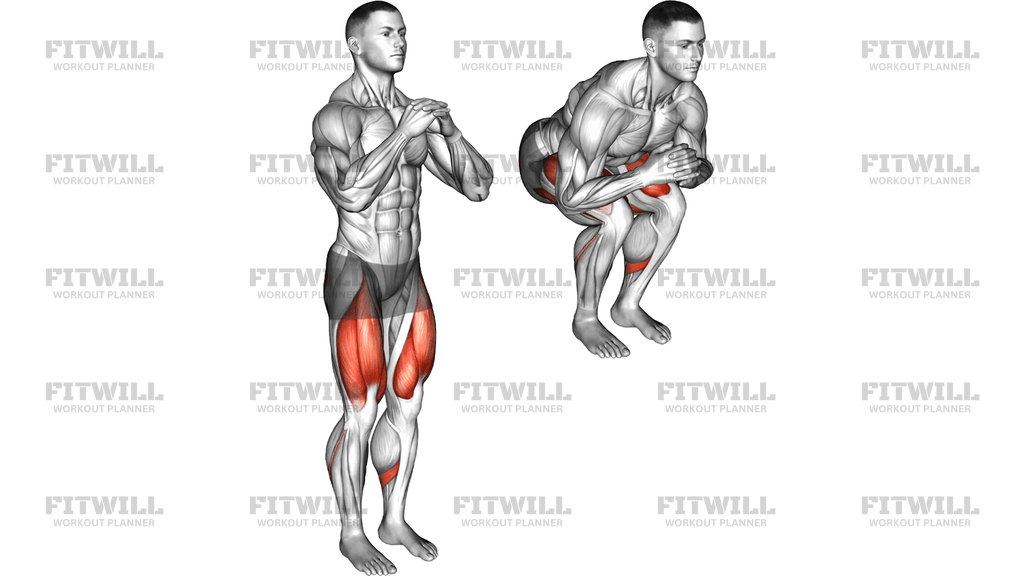
Instructions
- Stand with your feet close together, toes turned slightly out, and your hands clasped at chest height for balance.
- Plant your whole foot on the floor and keep your weight centered between heel and forefoot before you start the descent.
- Brace your midsection and keep your chest tall so your torso does not collapse forward as you squat.
- Push your hips back slightly and bend your knees together, lowering straight down between your legs under control.
- Keep your knees tracking in line with your toes and let them move forward only as far as your balance and ankle mobility allow.
- Squat to a depth where your heels stay down and your lower back stays neutral, then pause briefly at the bottom if you can hold position cleanly.
- Drive through the floor to stand up, squeezing your glutes as your knees and hips extend at the same time.
- Exhale as you rise, then reset your stance at the top before starting the next repetition.
- Repeat for the planned number of reps, and stop the set if your knees collapse inward or your heels start to lift.
Tips & Tricks
- Treat the stance width as a setup variable: close, but not so tight that your knees or ankles cannot move freely.
- Keep your heels heavy; if they pop up, shorten the depth or widen the stance slightly.
- Think about sitting between your heels instead of folding at the waist.
- Let your elbows stay lifted in front of your chest so your torso stays upright.
- Use a slower lowering phase if you tend to bounce out of the bottom position.
- If your knees drift inward, aim them toward the second or third toe on the way down and up.
- Do not chase depth by rounding the lower back; stop where your pelvis can stay under control.
- This variation is often better for clean reps and warmups than for max speed or maximal fatigue work.
Frequently Asked Questions
What does Bodyweight Narrow Stance Squat train most?
It mainly trains the thighs and glutes, with the core and inner-leg stabilizers helping you stay upright and balanced.
How narrow should my stance be for Bodyweight Narrow Stance Squat?
Keep the feet closer than shoulder width, but not so close that your knees touch or your heels lift. A slightly narrow stance is usually easier to control than an extreme one.
Why do my heels come up in this squat?
That usually means the stance is too narrow or your ankles need more room to bend. Widen the feet a little and only squat as low as you can while keeping the whole foot down.
Should my knees stay together in Bodyweight Narrow Stance Squat?
No. The knees should track in line with the toes rather than press inward, even though the stance is narrow.
Is Bodyweight Narrow Stance Squat good for beginners?
Yes. It is a good bodyweight squat variation for learning control, but beginners should start with a comfortable depth and a stance that feels stable.
How low should I go in Bodyweight Narrow Stance Squat?
Go as low as you can without losing heel contact, letting the knees collapse, or rounding the lower back. Clean position matters more than reaching a specific depth.
Can I use this instead of a regular squat?
Yes, especially for warmups, technique work, or higher-rep conditioning. A regular squat with a normal stance may still be better if you need more load or a deeper range.
What is the biggest mistake in Bodyweight Narrow Stance Squat?
Most people rush the descent and let the knees cave inward. Keep the lowering phase controlled and think about pushing the knees out in line with the toes.