Dumbbell Walking Calf Raise
Dumbbell Walking Calf Raise is a loaded calf exercise where you stay high on the balls of your feet while taking short, controlled steps forward. The dumbbells increase the demand on the calves, ankles, and small stabilizers around the foot and lower leg, while the walking pattern challenges balance and the ability to keep tension through repeated single-leg support. It is a simple-looking movement, but the quality of each step depends on staying tall, staying lifted, and not letting the heels collapse between steps.
This exercise is most useful when you want direct calf work with a little more athletic carryover than a stationary raise. The calves have to produce force repeatedly, and the ankle has to stay organized while the body moves. That makes the movement helpful for lower-leg strength, tendon capacity, balance, and the ability to keep tension through a longer set. It can also be a good finisher after squats, lunges, or deadlift work because it isolates the lower leg without requiring much equipment.
The setup matters because the range is small and the leverage is unforgiving. Hold the dumbbells at your sides, stand tall, and rise up onto the balls of both feet before you start walking. From there, keep the knees mostly straight but not locked, keep the ribcage stacked over the pelvis, and take short steps so you can stay elevated instead of rocking forward onto the toes. If the heels drop hard between steps, the set turns into a regular walk rather than a calf raise.
Each rep should feel like a controlled transfer from one forefoot to the other. Push the floor away through the big toe and second toe, keep the arch active, and let the heel hover high instead of drifting down. The calves should stay working through the whole set, including the transition from one step to the next. A brief pause at the top of each step helps you keep tension and prevents the movement from becoming a bounce.
Use a load that lets you keep your torso quiet and your steps even from start to finish. If you need to lean side to side, swing the dumbbells, or let one heel sink more than the other, the weight is too heavy or the steps are too long. Keep the motion smooth, controlled, and pain-free through the ankle and forefoot. This is a straightforward accessory movement, but when it is done well it can build strong calves without needing machines or complex setup.
Fitwill
Log Workouts, Track Progress & Build Strength.
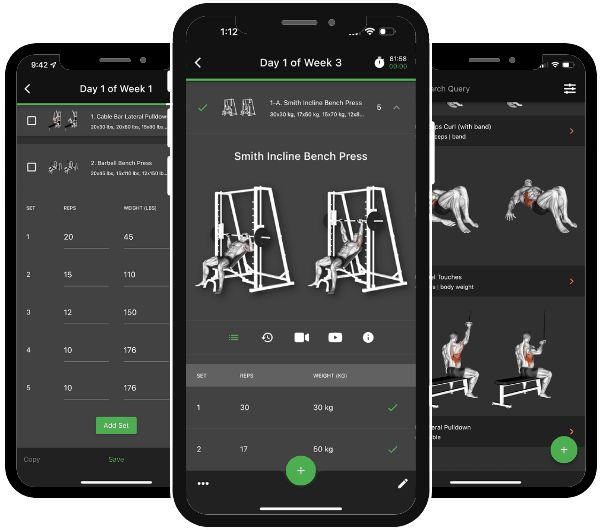
Achieve more with Fitwill: explore over 5000 exercises with images and videos, access built-in and custom workouts, perfect for both gym and home sessions, and see real results.
Start your journey. Download today!


Instructions
- Hold a dumbbell in each hand and stand tall with your feet hip-width apart.
- Rise onto the balls of both feet before you take the first step.
- Keep your chest stacked over your pelvis and your gaze forward.
- Take a short forward step while staying as high on your toes as you can.
- Shift the weight smoothly to the lead leg without letting the heel crash down.
- Push through the big toe and second toe of the lead foot as the rear foot follows.
- Continue walking forward for the planned distance or number of steps.
- Keep the calves loaded the whole time, then lower the heels only after the set is finished.
Tips & Tricks
- Keep the steps short; long strides usually force the heel to drop and shift the work away from the calves.
- Think about staying tall through the crown of your head instead of leaning forward to chase balance.
- Press through the first two toes on each foot so the arch stays active and the ankle does not cave inward.
- If the dumbbells start swinging, reduce the load before the torso starts helping the movement.
- A slight knee bend is fine, but locking the knees hard can make the step choppy and uncomfortable.
- Use a smooth breathing rhythm so you do not hold your breath while balancing on the forefoot.
- The set should burn in the calves and lower legs, not in the low back or hips.
- Stop if the forefoot or Achilles area feels sharp pain rather than normal muscular fatigue.
Frequently Asked Questions
What muscles does Dumbbell Walking Calf Raise train?
It primarily trains the calves, especially the gastrocnemius and soleus, with support from the ankles, feet, and small stabilizers around the lower leg.
Do I need to stay on my toes the entire time?
Yes, that is the point of the exercise. Keep the heels high during the walking portion and only lower them after the set if you need to reset.
How far should each step be?
Keep the steps short and controlled. If the stride gets too long, the heel usually drops and the calves lose tension.
Should my knees be straight or bent?
Keep them mostly straight with a soft, natural bend. Do not lock them hard, but avoid turning the movement into a squat.
Why do my calves feel the burn so quickly?
The calves are working continuously to hold you up and move you forward on a small base of support, so they fatigue fast even with light weight.
Can I do this with one dumbbell instead of two?
Yes, but using two dumbbells usually keeps the load balanced and makes it easier to stay upright while you walk.
Is this a good calf finisher after leg day?
Yes. It works well at the end of a lower-body session because it targets the calves without needing much setup.
What should I do if I lose balance during the set?
Shorten the steps, lower the load, and keep your torso stacked over your hips. Balance usually improves when the movement stays smaller and more controlled.