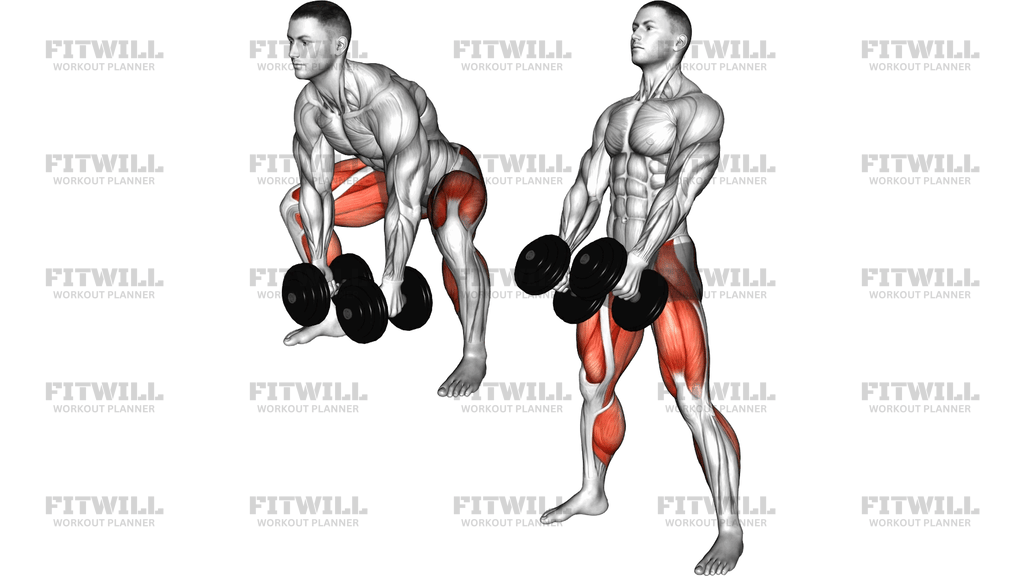
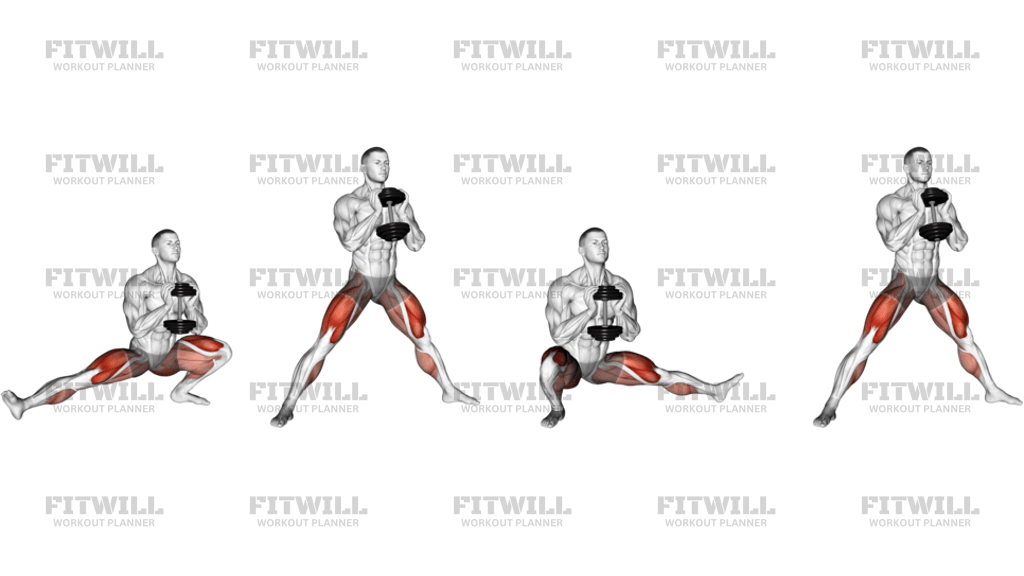
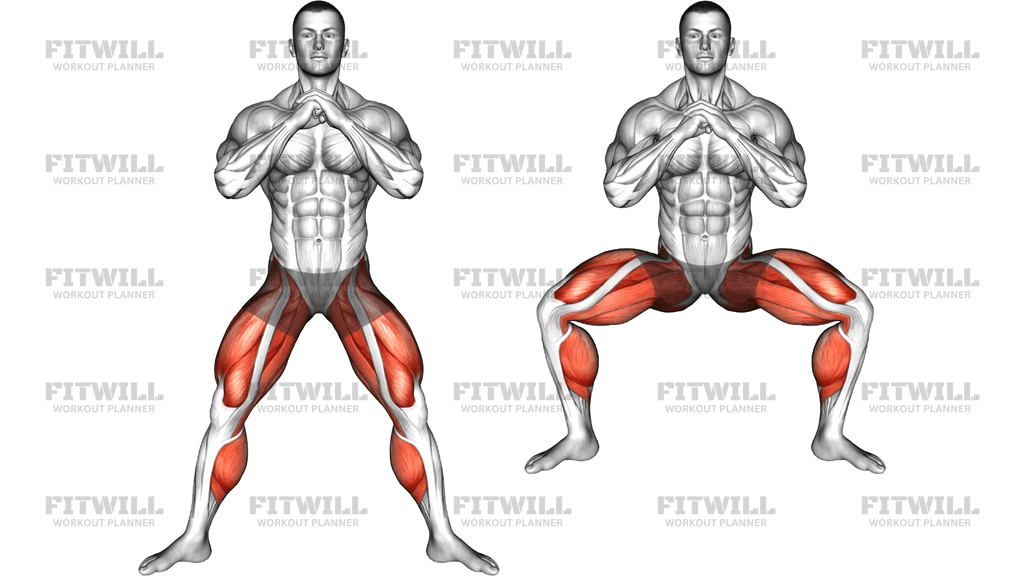
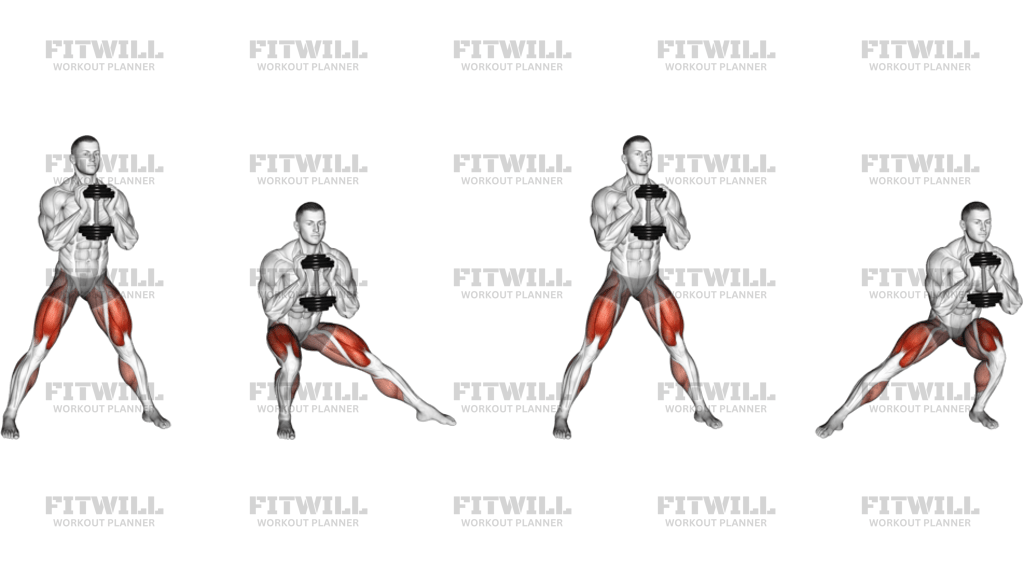
Dumbbell Step-Up Split Squat
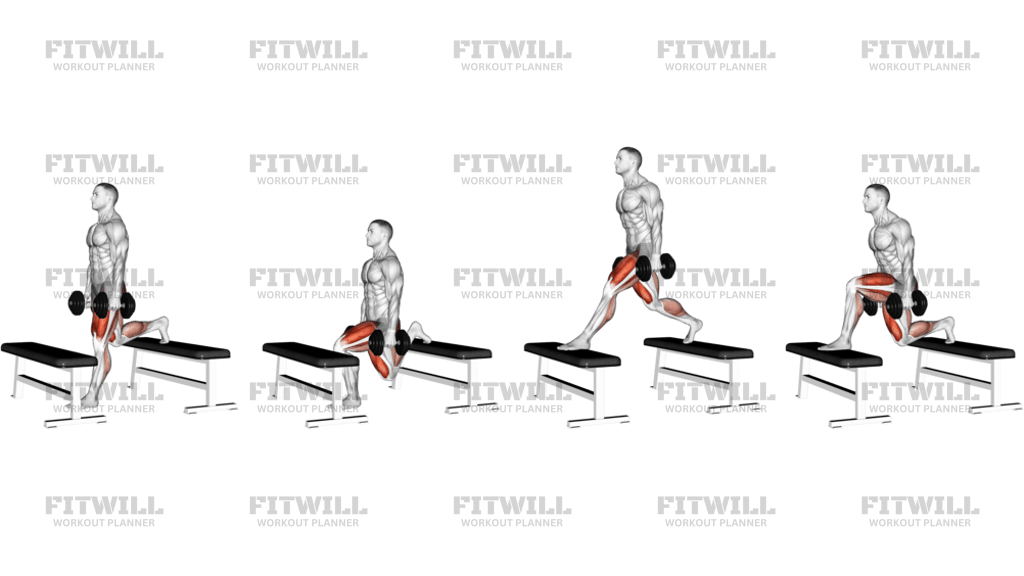
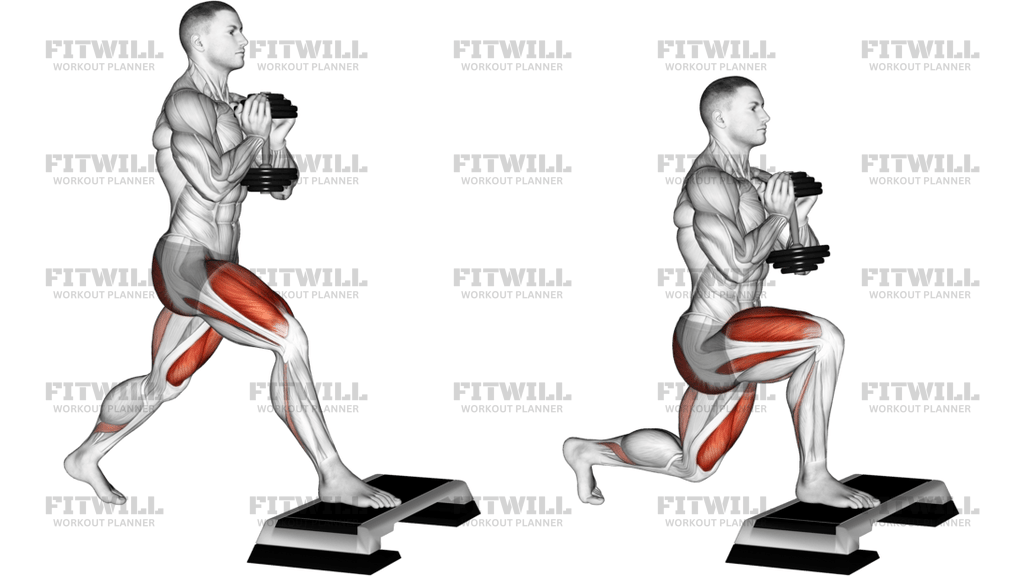
Dumbbell Step-Up Split Squat is a unilateral lower-body strength exercise that loads one leg at a time while the rear foot stays supported on a bench. The dumbbells hang at your sides, the front leg does most of the work, and the body has to stay organized through a long range of motion. That combination makes the movement especially useful when you want stronger quads with enough balance demand to expose differences between your left and right sides.
The setup matters because small changes in foot distance and torso angle change where the stress goes. Put the rear foot laces-down on the bench behind you, then step the working foot far enough forward that the front heel can stay planted and the pelvis stays square. If the stance is too short, the front heel usually pops up and the rep turns into a wobble; if it is too long, you lose the deep knee bend that makes this version so quad focused.
On the way down, think about lowering straight toward the floor rather than reaching forward. The front knee should track over the toes, the rear knee should travel down and slightly back, and the dumbbells should stay quiet instead of swinging. At the bottom, the front thigh can approach parallel while the rear knee hovers just above the floor. From there, drive through the front heel and midfoot to stand tall without kicking off the back leg.
This exercise fits well in accessory work, leg-focused strength sessions, or as a single-leg primer before heavier squats and deadlifts. It is usually easier to learn with bodyweight or light dumbbells first, because the bench support creates a strong stretch in the back leg and a real balance challenge for the front leg. Keep the motion smooth and controlled so the front quad, glute, and hip stabilizers do the work instead of momentum.
Dumbbell Step-Up Split Squat is at its best when every rep looks nearly identical. A clean set feels steady, deliberate, and centered over the front foot, with the torso tall and the rear foot acting as support rather than propulsion. When the setup is right, it becomes a reliable way to build single-leg strength, knee control, and lower-body confidence without needing much equipment.
[ Workout Log & Planner ]
Put your next workout in Fitwill
Keep your plan and training log ready when you are.


Instructions
- Stand facing away from a bench, hold a dumbbell in each hand, and place the rear foot laces-down on the bench behind you.
- Step the working foot forward and plant it flat on the floor so the front heel stays down and the torso can stay tall.
- Square your hips, keep your chest lifted, and let the dumbbells hang still beside your legs.
- Take a breath, brace your trunk, and begin lowering straight down under control.
- Let the front knee track over the toes while the rear knee travels toward the floor.
- Descend until the front thigh is close to parallel and the back knee hovers just above the ground.
- Pause briefly in the bottom position without bouncing off the rear foot.
- Drive through the front heel and midfoot to stand back up, finishing with the front hip and knee extended.
- Reset under control, keep the bench contact light, and complete the next rep or switch sides when the set is done.
Tips & Tricks
- Choose a bench height that lets the rear knee drop close to the floor without forcing your pelvis to twist.
- A slightly shorter stance puts more work on the front quad; if the front heel lifts, step the working foot a little farther forward.
- Keep the rear foot relaxed on the bench. If you are pushing off the back leg, the load is too heavy or the front foot is too far back.
- Let the dumbbells hang vertically. If they swing at the bottom, the set is usually too fast or too heavy.
- Track the front knee in line with the second or third toe instead of letting it cave inward.
- Use a 2-3 second lowering phase to keep tension on the front leg and avoid dropping into the bottom position.
- Keep the torso tall enough that the exercise stays knee dominant instead of turning into a forward hinge.
- If your front foot cramps or you lose balance, reduce the load and reset your tripod foot before the next rep.
- Stop the set when the rear foot starts to drive the rep or when the front knee position gets sloppy.
Frequently Asked Questions
What muscles does Dumbbell Step-Up Split Squat work most?
It mainly trains the front-leg quads, with the glutes, adductors, and core helping to stabilize the pelvis and torso.
Is Dumbbell Step-Up Split Squat beginner friendly?
Yes, but it is best learned with bodyweight or light dumbbells first. The rear-foot-elevated setup adds balance demands, so start with a conservative load.
How should my rear foot sit on the bench?
Place the laces or top of the foot on the bench and keep that leg relaxed. The rear foot should support balance, not push the body up.
How far forward should my front foot be?
Far enough that the front heel stays down and the knee can bend without the pelvis tipping. If the heel lifts, lengthen the stance slightly.
Why do I feel this mostly in my front quad?
The upright torso and single-leg stance shift a lot of the load onto the front knee and thigh. That is the main point of the exercise.
What is the most common mistake on Dumbbell Step-Up Split Squat?
Most people either bounce off the rear foot or let the front knee cave inward. Both problems usually mean the load is too heavy or the stance is off.
Can I use this instead of regular split squats or lunges?
Yes. It is a good substitute when you want similar unilateral leg work with more balance demand and a stronger stretch in the back leg.
Should my torso stay upright the whole time?
Mostly yes. A slight forward lean is fine, but if the chest folds over, the rep turns into a hip-dominant lunge instead of a quad-focused split squat.