Dumbbell Lunge Version 2
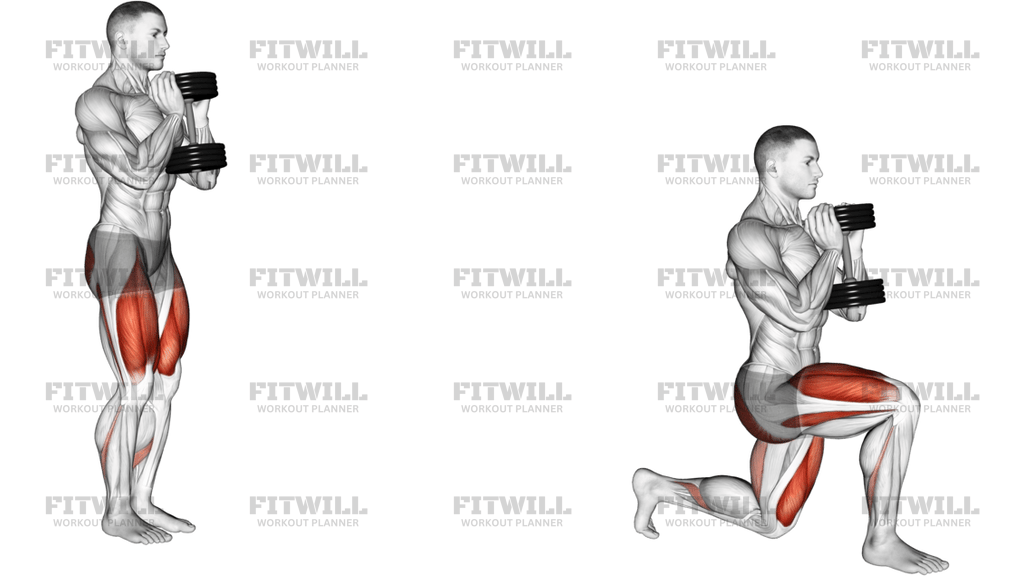
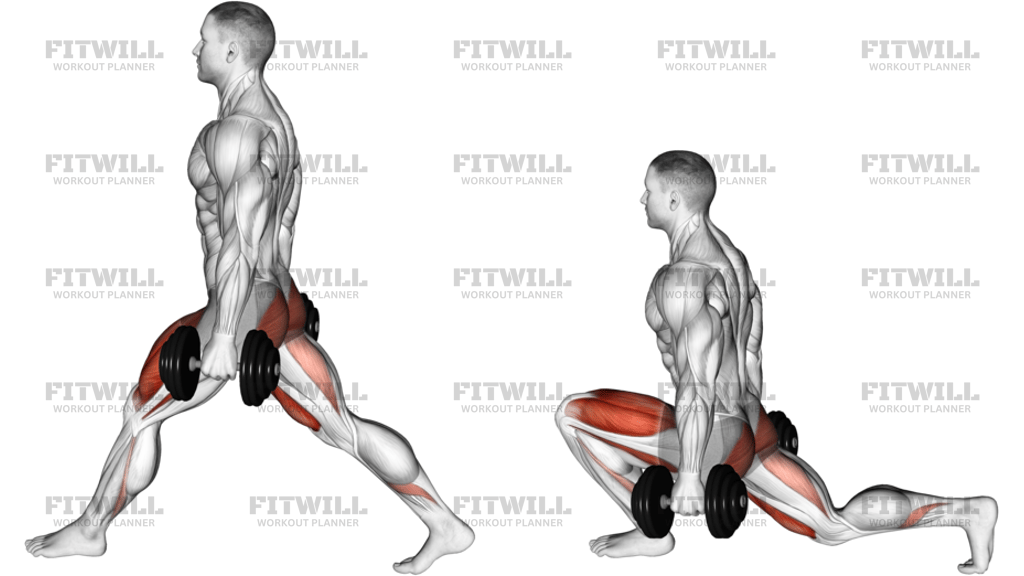
Dumbbell Lunge Version 2 is a front-rack lunge performed with a dumbbell in each hand held near the shoulders. The setup encourages a tall torso, a stable rib cage, and steady balance while one leg works through a deep split stance. It is a practical lower-body strength exercise for building glute, thigh, and hip control without needing a machine or bench.
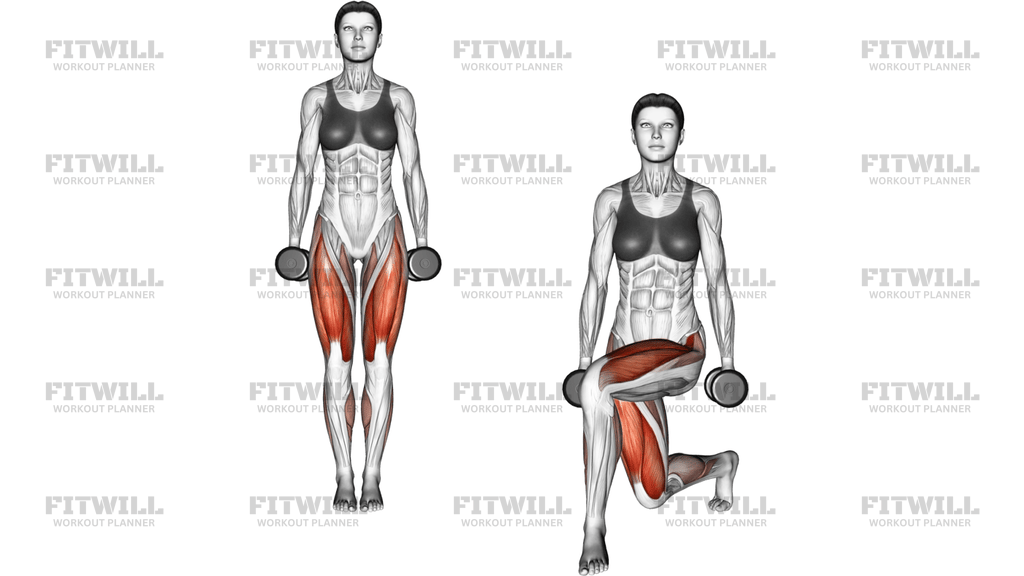
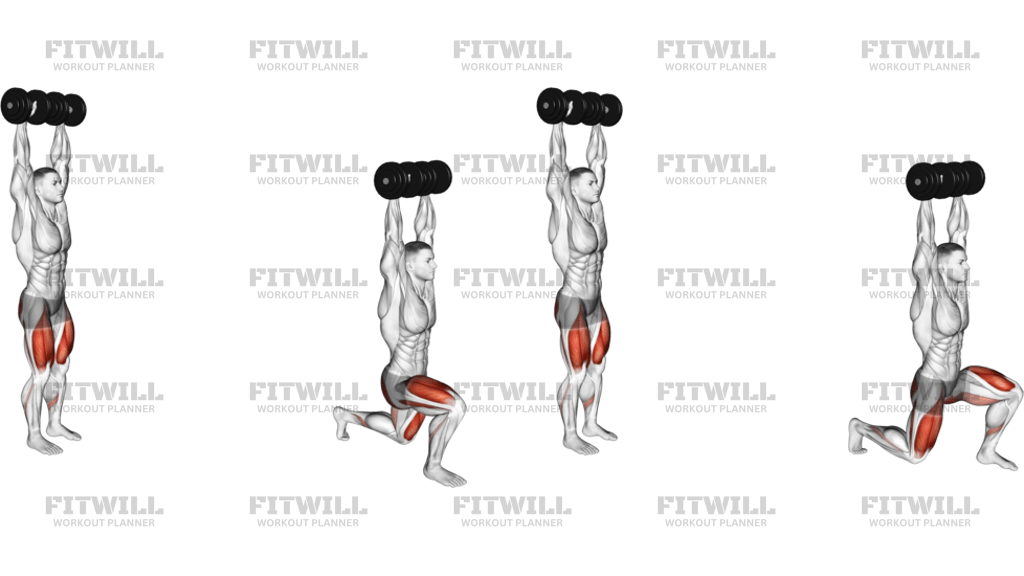
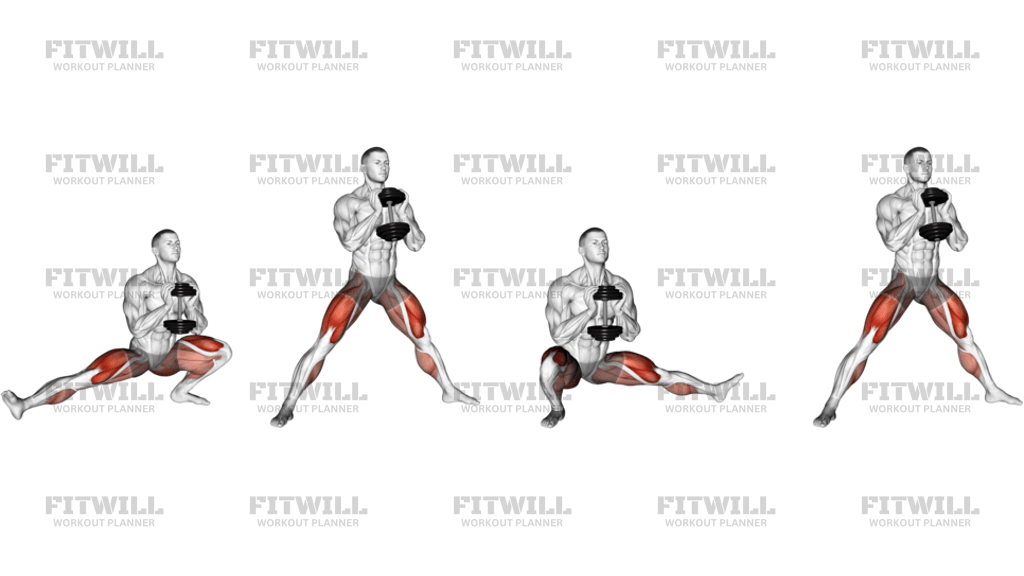
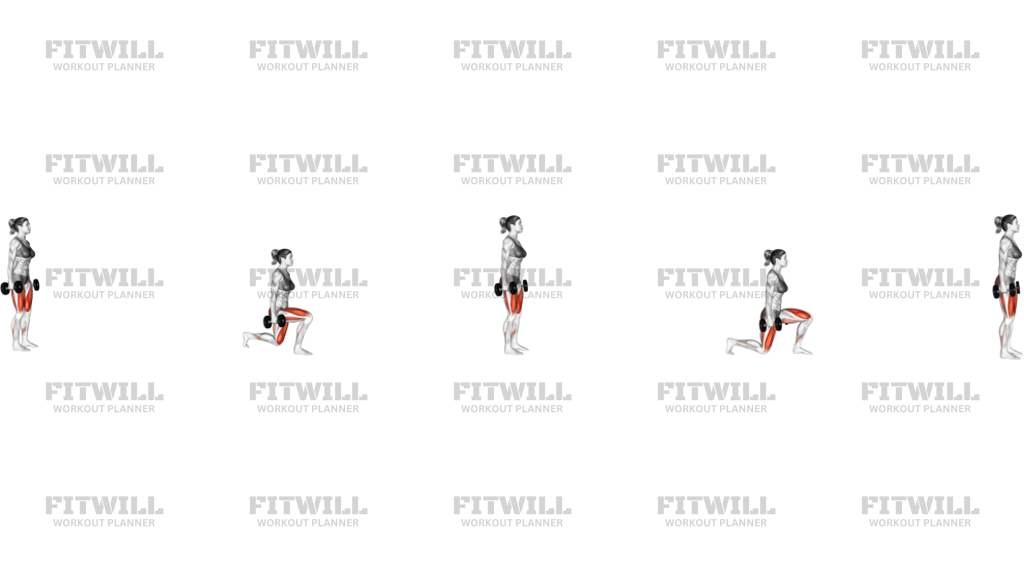
The image shows the dumbbells fixed at shoulder height while the body stays upright and the rear knee travels toward the floor. That front-rack position changes the demand on the trunk and upper back: if the dumbbells drift forward or the ribs flare, the lunge becomes harder to control. Keeping the weights close to the shoulders helps you stay stacked over the hips and makes each rep cleaner.
This exercise is most useful when you want a single-leg pattern that challenges balance, pelvic control, and leg drive at the same time. The front leg should absorb most of the load as you lower, then push the floor away to stand back up. The rear leg is there for balance and range, not for a hard bounce off the floor. A controlled bottom position matters more than trying to force a longer stride.
Use it for strength, hypertrophy, or accessory work when you want a lunge variation that is easy to load but still technical. Beginners can learn it with light dumbbells and a shorter range, then build depth only as control improves. Stop the set if the front heel lifts, the torso collapses forward, or the rear knee slams into the floor. Clean reps with steady balance will train the glutes and supporting muscles far better than rushing through the movement.
[ Workout Log & Planner ]
Put your next workout in Fitwill
Keep your plan and training log ready when you are.


Instructions
- Stand tall with a dumbbell in each hand and hold them at shoulder height, just in front of your chest.
- Set your feet hip-width apart, brace your midsection, and keep your chest stacked over your hips.
- Step one foot forward into a split stance, keeping your front foot flat and your back heel lifted.
- Lower straight down until the rear knee hovers just above the floor and the front thigh approaches parallel.
- Keep both knees tracking in line with the toes as you descend; do not let the front knee cave inward.
- Pause briefly at the bottom without relaxing the torso or dumping the dumbbells forward.
- Drive through the front heel and midfoot to stand back up to the starting position.
- Bring your feet back together only if needed for balance, then repeat on the same side or alternate legs as planned.
- Breathe in on the way down and exhale as you stand.
Tips & Tricks
- Keep the dumbbells parked close to your shoulders; letting them drift forward turns the rep into a reaching motion.
- Choose a stride long enough to keep the front heel down, but not so long that you lose pressure through the front foot.
- If your torso tips forward, lighten the load and shorten the step until you can stay tall through the trunk.
- Let the rear knee travel down under control instead of bouncing off the floor.
- Keep the front knee tracking over the second or third toe; collapsing inward usually means the load is too heavy or the stance is too narrow.
- Use a smooth tempo on the way down so the hips and glutes stay active instead of dropping into the bottom position.
- If balance is the limiter, keep both eyes fixed on one spot and pause briefly between reps.
- Stop the set when the front heel starts lifting or the dumbbells start swinging away from the body.
Frequently Asked Questions
What muscle does Dumbbell Lunge Version 2 target most?
The glutes are the primary focus, with the thighs, hamstrings, and core helping to stabilize the lunge.
Why are the dumbbells held at shoulder height?
Holding them in a front-rack position keeps the load close to the body and makes it easier to stay upright through the lunge.
How far should I step into the lunge?
Step far enough that the front heel stays down and the rear knee can lower without crowding the front hip.
Should the rear knee touch the floor?
It should come close to the floor with control, but you do not need to slam it down or rest on it.
Can I alternate legs or stay on one side?
Either works. Alternating legs is useful for general training, while staying on one side is helpful when you want to build balance and stability.
What should my front knee do during the descent?
It should track in line with the toes instead of collapsing inward or shooting far past a controlled position.
Is this a good beginner dumbbell lunge variation?
Yes, as long as you start light, keep the dumbbells close to the shoulders, and use a shorter range until balance improves.
What should I do if I feel the exercise in my lower back?
Reduce the load, keep the ribs down, and stay taller through the torso. If the back still takes over, shorten the range and reset your stance.