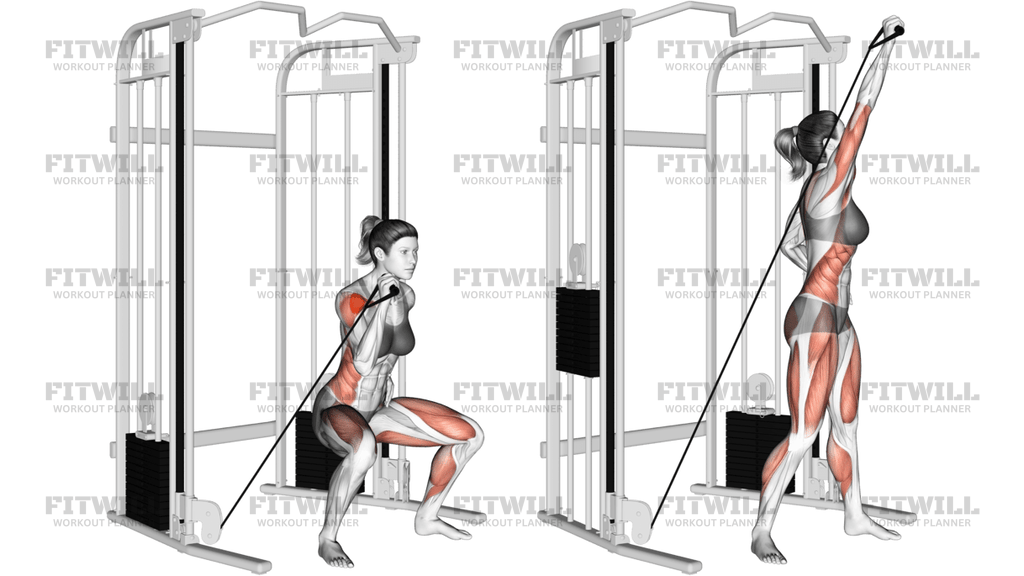
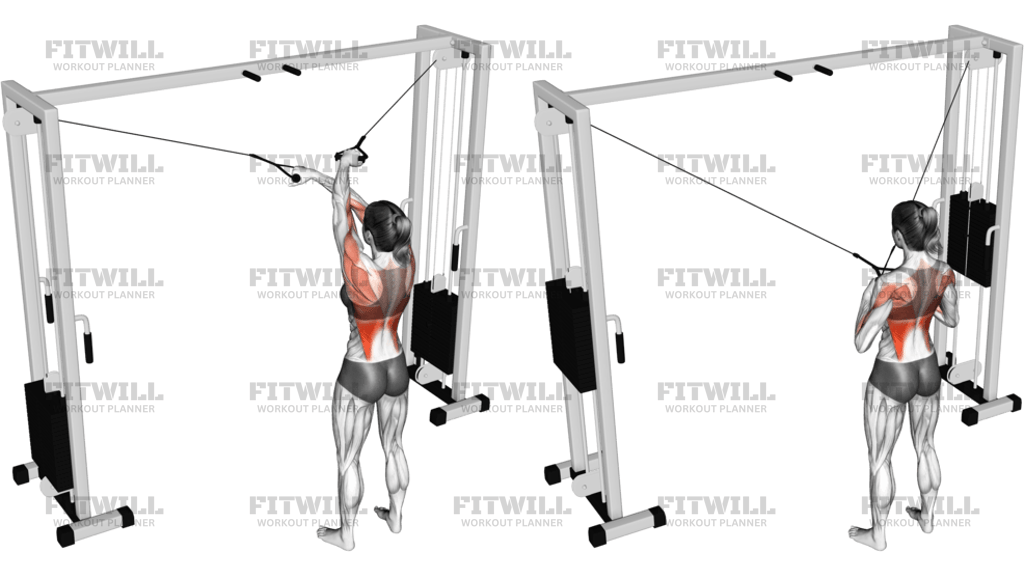
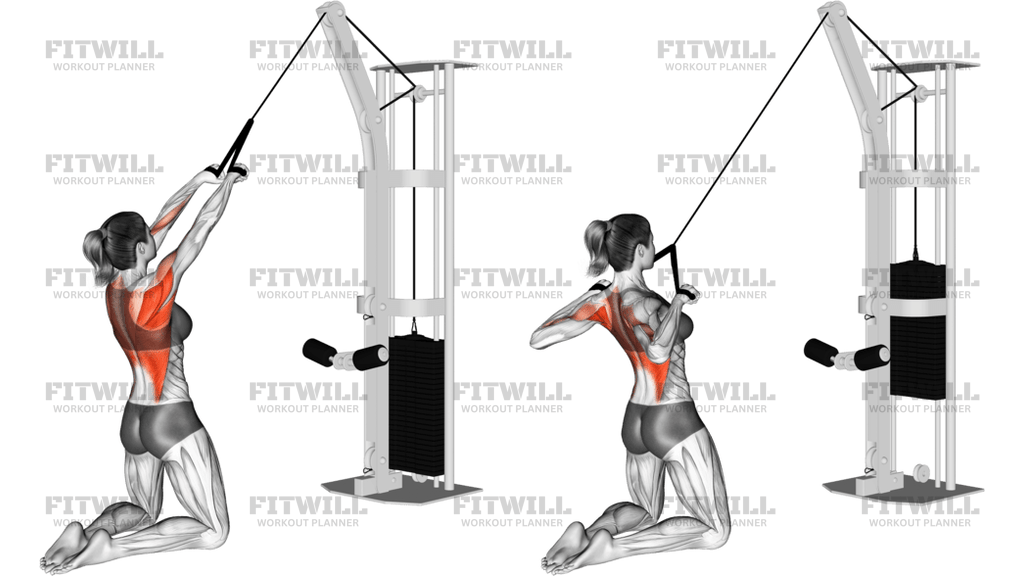
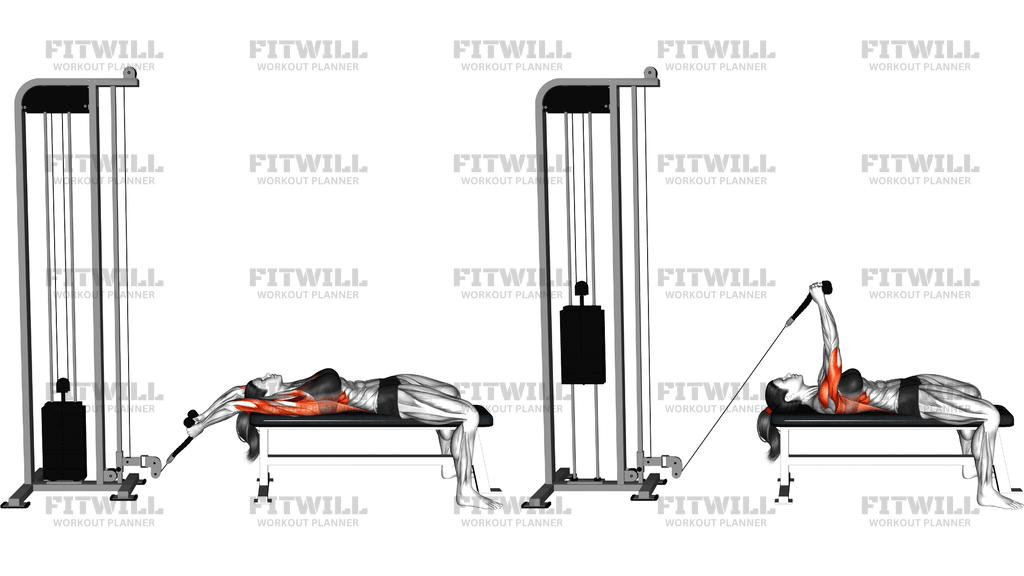
Cable Kneeling Shoulder 90 Degrees External Rotation Press
Cable Kneeling Shoulder 90 Degrees External Rotation Press is a unilateral cable pressing drill performed from a kneeling stance with the working arm starting in a 90/90 position. It sits somewhere between a shoulder-strength accessory and a rotator-cuff control exercise: the cable gives you constant tension, while the kneeling setup makes it harder to cheat with body swing. Done well, it teaches you to keep the ribs stacked, the torso quiet, and the shoulder organized as the arm moves overhead.
The exercise is especially useful when you want cleaner overhead mechanics without loading a heavy barbell. The cable line challenges the shoulder through the whole rep, so the deltoid, triceps, upper back, and smaller stabilizers all have to work together. Because the movement starts with the elbow bent and the upper arm lifted, the setup matters a lot; if the pulley is too low, too high, or too far away, the press turns into a twist through the torso instead of a controlled shoulder action.
Start in a half-kneeling position beside the stack, hold the handle in the hand closest to the machine, and bring the elbow to shoulder height with the forearm vertical. From there, press the handle upward and slightly forward until the arm is nearly straight overhead, then lower back to the same 90-degree external-rotation position under control. The key is to let the shoulder move smoothly without shrugging, leaning away from the stack, or letting the wrist fold back.
Use a light to moderate load and treat each repetition like a quality check for your overhead pattern. This movement works well in warm-ups, shoulder-health blocks, accessory work, or as a single-arm pressing variation when you want more control than a standard overhead press. If the front of the shoulder pinches, reduce the range, bring the pulley closer to shoulder height, or lighten the load until the rep stays smooth and pain-free.
[ Workout Log & Planner ]
Put your next workout in Fitwill
Keep your plan and training log ready when you are.


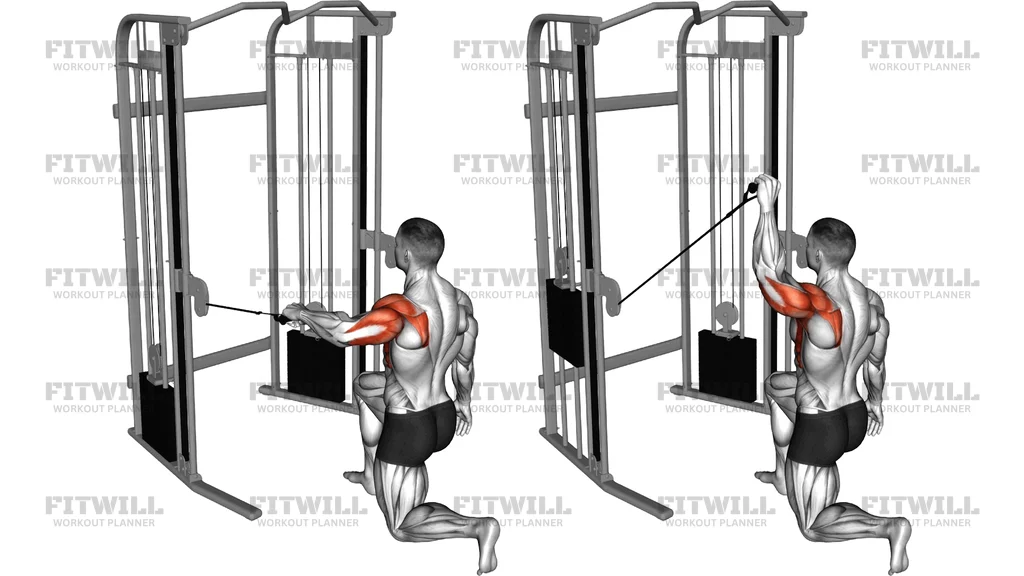
Instructions
- Set the cable pulley at about shoulder height and clip on a single handle.
- Kneel side-on to the stack with the working side closest to the cable, one knee down and the opposite foot planted for balance.
- Hold the handle in the hand nearest the machine and raise that elbow to shoulder height with the forearm vertical and the wrist straight.
- Stack your ribs over your pelvis, keep the torso tall, and lightly brace so the trunk does not twist toward the pulley.
- Take a breath, set the shoulder in a strong 90/90 position, and keep the upper arm level with the shoulder as you begin the press.
- Press the handle up and slightly forward until the arm is almost straight overhead, letting the shoulder blade rotate naturally without shrugging hard into the neck.
- Lower the handle back along the same path until the elbow returns to the 90-degree external-rotation position at shoulder height.
- Repeat for the planned reps, then lower the handle carefully and switch sides.
Tips & Tricks
- Keep the pulley near shoulder height; a low pulley often drags the arm into a twisting press.
- Choose a load that lets you keep the forearm vertical at the bottom instead of collapsing the wrist or elbow backward.
- Let the shoulder blade rotate upward as you press, but do not shrug the shoulder into your ear.
- If your lower back arches to finish the rep, shorten the range and keep the ribs stacked over the kneeling hip.
- The down-knee glute should stay lightly on; it helps stop the torso from drifting toward the stack.
- Use a slower lowering phase back into the 90/90 position than you use on the press.
- Stop the set if the elbow drops below shoulder height, because the rep stops training the same shoulder angle.
- A small pause overhead makes it easier to feel whether the handle path stayed smooth and controlled.
Frequently Asked Questions
What muscles does Cable Kneeling Shoulder 90 Degrees External Rotation Press work?
It mainly loads the shoulder complex, especially the deltoids and rotator cuff, with the triceps, upper back, and core stabilizers helping to keep the rep organized.
Is Cable Kneeling Shoulder 90 Degrees External Rotation Press a shoulder press or a rotator cuff drill?
It is both. The 90/90 start trains external-rotation control, and the overhead press portion trains pressing strength and scapular control.
Should my elbow stay at shoulder height during Cable Kneeling Shoulder 90 Degrees External Rotation Press?
Yes. The elbow should start and finish in the 90/90 position at shoulder height; letting it drop changes the exercise and reduces tension on the intended shoulder position.
Why is Cable Kneeling Shoulder 90 Degrees External Rotation Press done from a kneeling stance?
Half-kneeling cuts down on leg drive and makes torso rotation easier to spot. It also helps you keep the ribs stacked while the cable tries to pull you off line.
How heavy should I go on Cable Kneeling Shoulder 90 Degrees External Rotation Press?
Light enough to keep the forearm vertical, the wrist stacked, and the torso still. If you have to lean away from the stack or shrug to finish reps, the load is too heavy.
What if I feel the front of my shoulder during Cable Kneeling Shoulder 90 Degrees External Rotation Press?
Reduce the load, bring the pulley to shoulder height, and shorten the overhead range until the rep feels smooth. Pain is a sign to back off, not push through.
Can beginners do Cable Kneeling Shoulder 90 Degrees External Rotation Press?
Yes, if they start very light and focus on the kneeling setup and 90/90 shape. It is a good intro to overhead control before heavier pressing.
What can I use instead of Cable Kneeling Shoulder 90 Degrees External Rotation Press if I do not have a cable machine?
A single-arm dumbbell half-kneeling press or a light resistance-band 90/90 press can work as a substitute. Keep the same elbow height and torso control so the exercise stays comparable.