Barbell Walking Lunge
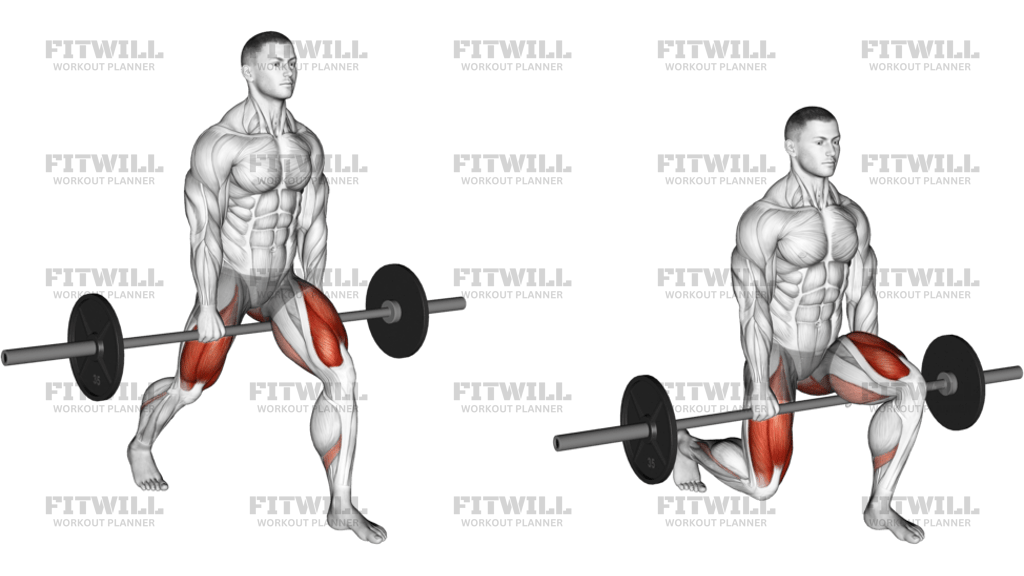
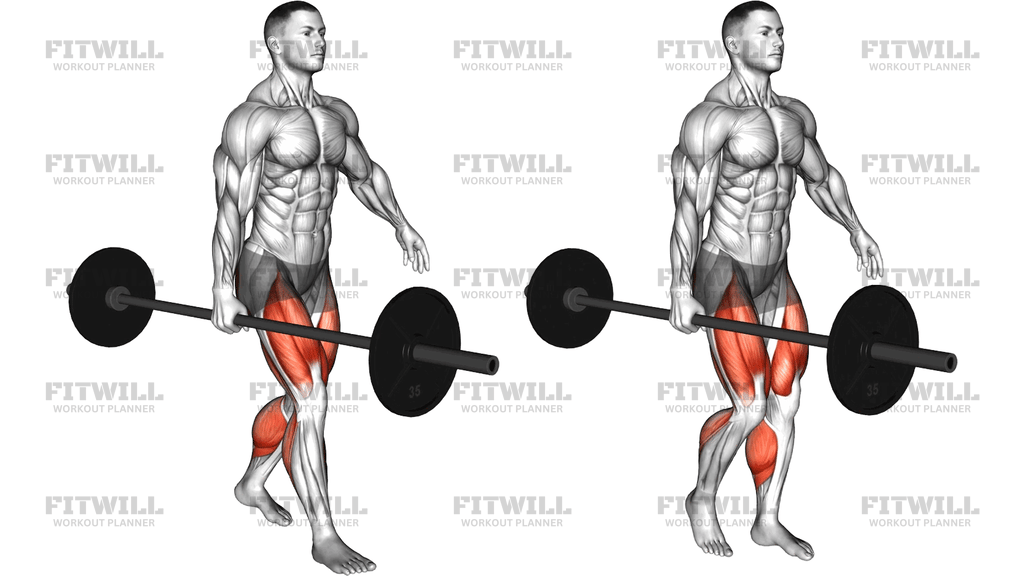
Barbell Walking Lunge is a loaded lower-body exercise performed with the barbell resting across the upper back while you step forward into alternating lunges. It trains the thighs through a long, controlled stride and forces each leg to work independently, which makes it useful for building leg strength, hip stability, and coordination at the same time. The walking version also asks you to regain balance between every rep, so the quality of the setup matters as much as the depth of the lunge.
The bar should sit securely on the upper traps or rear delts, with the chest tall and the ribs controlled so the load does not pull you into a rounded position. Because the movement changes support from one step to the next, the torso has to stay quiet while the legs do the work. A good rep feels smooth: step, lower under control, rise through the front leg, and move directly into the next stride without wobbling or bouncing off the back knee.
This exercise is usually used for hypertrophy, strength, or athletic accessory work when you want a leg pattern that loads one side at a time. It can challenge the quadriceps strongly, but the glutes and hamstrings help control the descent and drive you back up, while the hips and trunk keep the bar path steady. The longer you keep the stride and the cleaner the knee tracking, the more useful the rep becomes for leg development.
The main technical challenge is managing balance and step length. A stride that is too short tends to shove the front knee too far forward and make the movement feel cramped, while an overly long stride can turn the rep into a hinge and reduce quad involvement. Aim for a step that lets the front foot stay flat, the front shin travel forward naturally, and the back knee drop close to the floor without collapsing inward.
Use a load that lets you alternate legs with the same pace and posture from start to finish. If the bar starts shifting, your torso starts leaning, or your steps become noisy and uneven, the set is too heavy or too fatigued. For beginners, the same pattern can be learned with bodyweight or lighter dumbbells before progressing to the barbell version. Keep the movement crisp, repeatable, and balanced.
[ Workout Log & Planner ]
Put your next workout in Fitwill
Keep your plan and training log ready when you are.


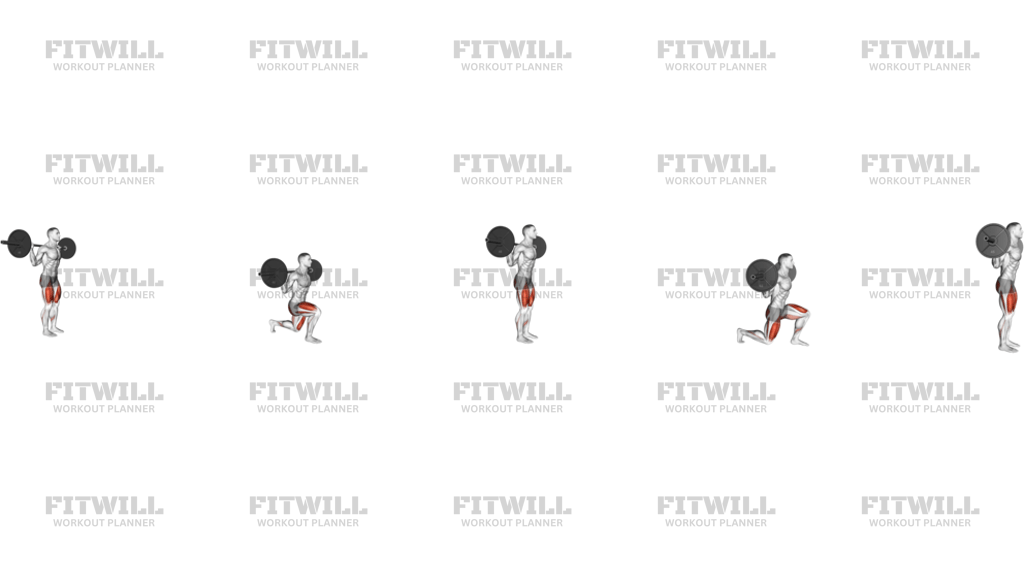
Instructions
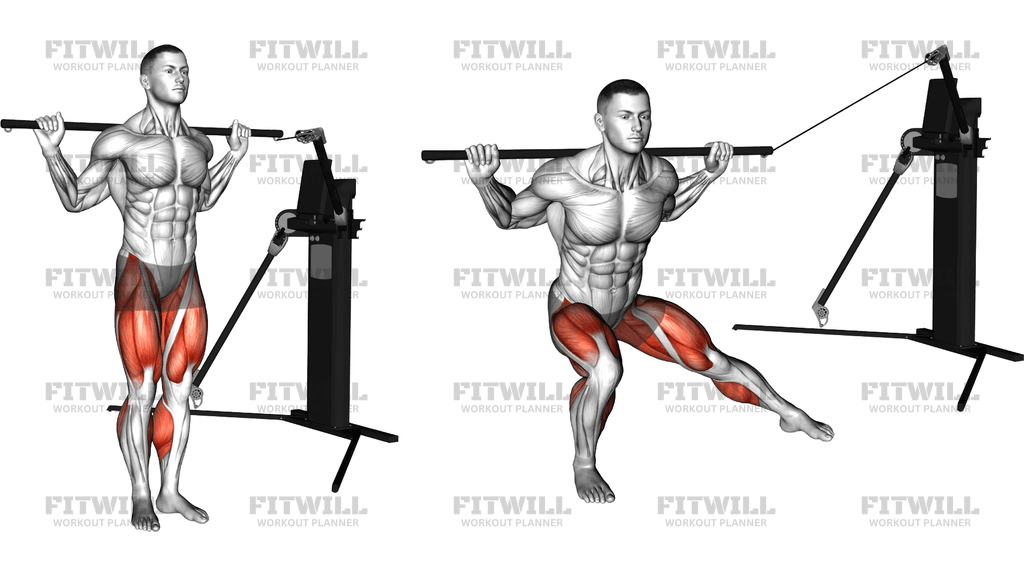
- Set the barbell across your upper back or rear delts, stand tall with your feet hip-width apart, and brace before you take the first step.
- Take a controlled step forward with one leg so both feet are on two separate tracks, not a tight line.
- Lower straight down until the front thigh is near parallel and the back knee hovers just above the floor.
- Keep your front heel planted, your front knee tracking over the toes, and your torso upright as you descend.
- Drive through the front heel and midfoot to stand back up without pushing off the back leg.
- Bring the back foot forward into the next stride and keep walking into the following lunge.
- Alternate legs for each rep or follow your chosen side pattern, keeping the bar stable on your shoulders.
- Inhale as you step and lower, then exhale as you rise and transition into the next step.
Tips & Tricks
- Keep the bar packed on the upper back and avoid letting it roll up onto the neck.
- Use a stride long enough to drop the back knee cleanly, but not so long that the torso has to tip forward.
- Let the front knee travel forward naturally while keeping it aligned with the second or third toe.
- Keep most of the pressure on the front foot; the back leg is there to balance and assist, not to push the rep up.
- Stay tall through the chest, but do not overarch the lower back to compensate for the bar position.
- If your steps get noisy or uneven, lighten the load and slow the transition between legs.
- A slight pause in the bottom position can help you own the balance before standing and stepping again.
- Stop the set when the bar drifts, your knees cave inward, or you can no longer keep the same step length on both sides.
Frequently Asked Questions
What does Barbell Walking Lunge train most?
It mainly trains the thighs, especially the quads, while also working the glutes, hamstrings, and core to keep each step stable.
Where should the bar sit during the lunge?
The bar should rest across the upper back or rear delts, not on the neck. Keep the elbows slightly back and the chest stacked under the load.
How far forward should I step?
Step far enough that the front foot stays flat and the back knee can drop close to the floor without the torso collapsing forward.
Should my front knee go past my toes?
A small amount of forward travel is normal, as long as the knee tracks in line with the toes and the heel stays down.
Is this different from a stationary barbell lunge?
Yes. In the walking version, you step into the next rep instead of returning to the same stance, so balance and rhythm matter more.
What usually causes balance to fail first?
Most often the step is too narrow, the torso leans too far forward, or the bar is too heavy for clean transitions between reps.
Can beginners do this exercise?
Yes, but it is usually better to learn the pattern with bodyweight or light dumbbells first before loading a barbell.
What is a good cue for the working leg?
Think about driving the floor away through the front heel and midfoot while keeping the front knee stacked over the foot.