Weighted Chain Sumo Deadlift
Weighted Chain Sumo Deadlift is a wide-stance hip hinge that loads the hips, glutes, adductors, and trunk while keeping the pull centered between the legs. The sumo stance shortens the distance to lockout and encourages an upright torso, but the movement still depends on a disciplined hinge, a neutral spine, and strong leg drive. With the chain hanging low, the goal is to keep the load close to the midline so every rep rises straight up instead of swinging forward.
The setup matters more here than in many other pulls. Stand with your feet wider than shoulder width, turn the toes out, and let the arms hang inside the knees so the chain can stay vertical. From that position, the hips should sit low enough to grab the load without rounding, while the chest stays proud and the shoulders stay packed. If the stance is too narrow, the knees block the path; if it is too wide, you lose pressure through the feet and the hips drift back before the pull starts.
Each repetition should feel like a controlled wedge into the floor. Take the slack out of the chain, brace the trunk, and drive the floor apart as the hips and knees extend together. At the top, stand tall with the glutes finished and the ribs stacked over the pelvis, but do not lean back or turn the lockout into a lower-back extension. On the way down, hinge first, then let the knees bend so the chain tracks back between the thighs and returns to the start without swinging.
This exercise is useful when you want a deadlift pattern that emphasizes the hips and glutes while still demanding torso stability and leg positioning. It works well as a main strength lift, a posterior-chain accessory, or a technique-focused variation for lifters who feel more stable in a wide stance. Keep the movement strict, especially if the chain is changing tension or hanging from a centered grip, because any drift in the load path usually shows up first in the hips, knees, or low back.
Fitwill
Log Workouts, Track Progress & Build Strength.
Achieve more with Fitwill: explore over 9600 exercises with images and videos, access built-in and custom workouts, perfect for both gym and home sessions, and see real results.
Start your journey. Download today!




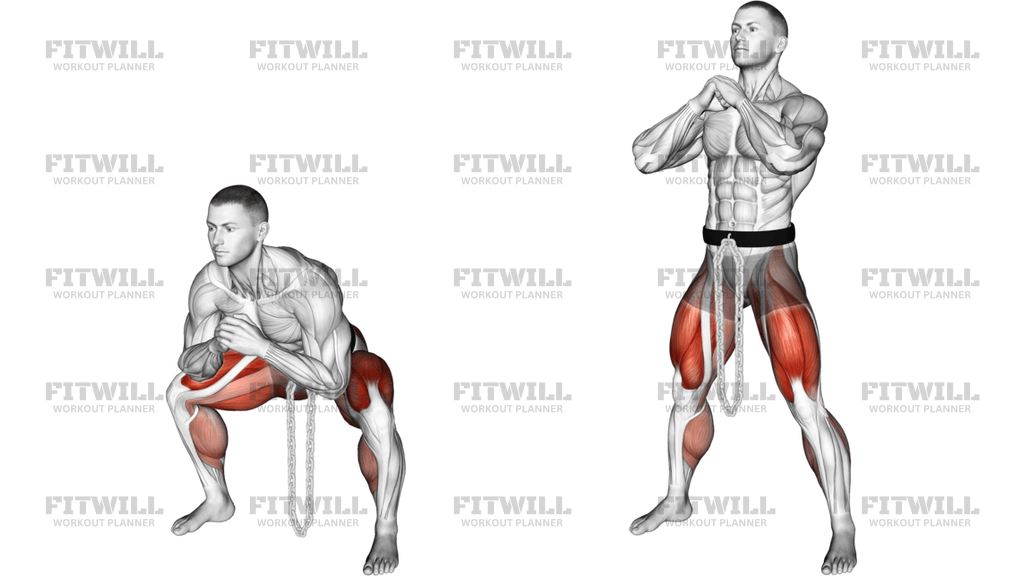
Instructions
- Stand with your feet wider than shoulder width, turn your toes out, and center the chain between your feet.
- Hinge down and bend your knees until you can grip the chain with straight arms inside your knees.
- Set your chest up, keep your back neutral, and let your shoulders stay packed down away from your ears.
- Brace your trunk before the pull so the chain stays still and centered.
- Drive the floor apart and stand up by extending your hips and knees together.
- Finish tall with your glutes tight and the chain close to your body, without leaning back.
- Lower the chain by hinging your hips back first, then bending your knees as it travels straight down between your thighs.
- Reset your stance and brace at the bottom before each new rep.
Tips & Tricks
- Keep the chain or load centered so it rises straight up instead of drifting in front of your toes.
- If your knees cave inward, widen the stance slightly and think about pressing them out over the toes.
- Take the slack out before every rep; a loose start makes the first pull jerky and shifts stress into the back.
- Keep your arms long and relaxed so the hands do not turn this into a partial curl or shrug.
- Do not let the hips shoot up first; the hips and knees should break the floor together.
- Finish the lockout by squeezing the glutes, not by leaning back and arching the lower spine.
- Lower under control so the chain does not swing or bounce you out of position.
- Use a stable shoe or platform that lets you keep pressure through the whole foot in a wide stance.
Frequently Asked Questions
What muscles does Weighted Chain Sumo Deadlift target most?
It emphasizes the glutes, hips, adductors, and posterior chain, with the core working hard to keep the torso braced.
Is the wide sumo stance necessary?
Yes. The wide stance is what lets the chain travel between the legs and gives you room to keep a more upright torso.
Where should the chain be during the lift?
It should stay centered and close to the body, moving almost straight up and down instead of swinging forward.
What is the most common mistake in this exercise?
Letting the hips rise faster than the chest or letting the knees cave in, which usually makes the pull feel awkward and unstable.
Can beginners do this variation safely?
Yes, as long as they start light, keep the spine neutral, and can maintain the wide stance without twisting or rounding.
Should I feel it in my lower back?
Some trunk work is normal, but the main effort should come from the hips and glutes rather than lumbar extension.
How do I know if my stance is too wide?
If you cannot keep pressure through the feet or your knees lose a clean path over the toes, the stance is probably too wide.
What can I substitute if the chain setup feels awkward?
A dumbbell, kettlebell, or barbell sumo deadlift is a simpler substitute while you learn the same hinge pattern.