Bottle Weighted Swing
Bottle Weighted Swing is a two-hand hip hinge swing performed with a weighted bottle held out in front of the body. It is designed to build power and control through the hips while teaching the trunk to stay organized under a fast, ballistic load. The bottle should travel because the hips snap open, not because the arms lift it.
The main work comes from the glutes, hamstrings, and core, with the shoulders, upper back, and grip helping to steady the implement. That makes the setup important: if the stance is too narrow, the back rounds, or the bottle starts too far away from the body, the swing turns sloppy fast. A clean hinge gives the hips room to load and unload without turning the rep into a squat or a front raise.
At the bottom of the swing, the bottle should hang close to the body between the thighs while the torso stays braced and the spine remains neutral. As you drive the hips forward, let the bottle rise from that hip action and keep the arms long so the shoulders do not dominate the movement. At the top, stand tall with the ribs stacked over the pelvis and the glutes finishing the rep instead of leaning back to chase extra height.
On the return, let the bottle fall back under control and hinge again as it passes between the legs. The backswing is where the posterior chain loads, so the rep should feel smooth and rhythmic rather than jerky or forced. If the bottle drifts away from the body, the lower back usually takes over, so keeping it close is a major safety cue.
Bottle Weighted Swing fits well in conditioning work, warmups, and accessory sessions when you want an athletic hinge pattern without a machine or barbell. It can be a beginner-friendly swing variation if the load is light and the range stays crisp, but it still demands attention to breathing, posture, and timing. When the rep quality drops, stop the set and reset instead of chasing speed or volume.
[ Workout Log & Planner ]
Put your next workout in Fitwill
Keep your plan and training log ready when you are.


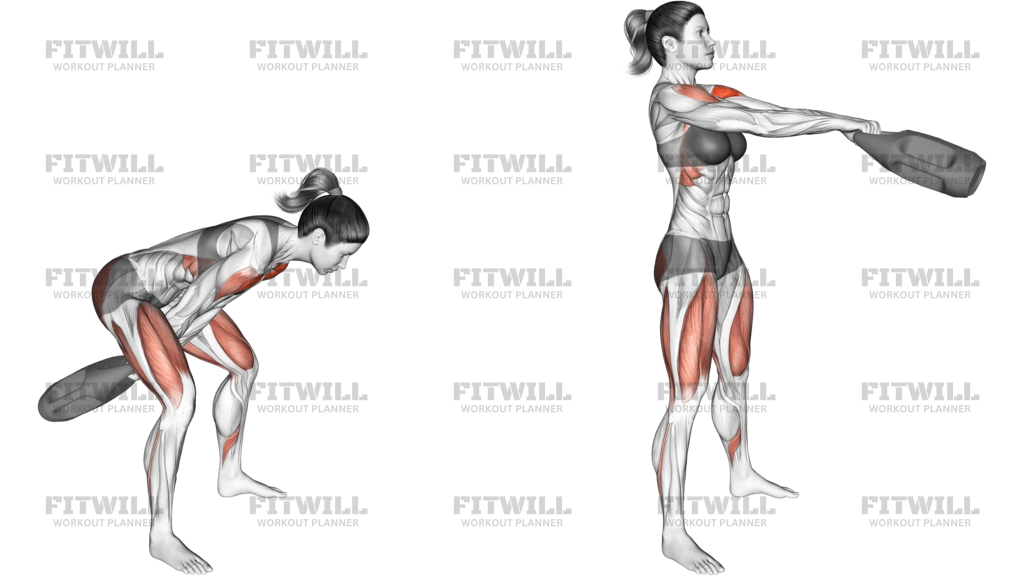
Instructions
- Stand with your feet about hip width apart and hold the weighted bottle with both hands in front of your thighs, arms straight and shoulders relaxed.
- Hinge at the hips, soften the knees, and send your hips back until the bottle hangs between your thighs.
- Keep your chest proud, ribs down, and spine neutral as you load the backswing.
- Brace your midsection, then snap the hips forward to drive the bottle upward without bending the arms.
- Finish tall with the glutes squeezed and the bottle floating to about chest height.
- Let the bottle arc back down as you hinge again, keeping it close to your body on the way through.
- Breathe out on the hip drive and inhale as the bottle swings back between your legs.
- After the last rep, guide the bottle down with control and reset your stance before standing up.
Tips & Tricks
- Think hip hinge, not squat; your hips should travel back more than your knees travel forward.
- If the front of the shoulders are doing most of the work, the bottle is being lifted instead of swung.
- Keep the implement close on the backswing so it does not pull your lower back into the rep.
- The top position should feel like a hard glute squeeze, not a lean back through the ribs and lower back.
- A slight bend in the elbows is fine, but do not row or curl the bottle upward.
- Stop the swing around chest height; going higher usually adds back extension instead of power.
- Use a load and set length that let every rep look the same from the first swing to the last.
- If your grip starts to slip, end the set before the hinge pattern gets messy.
Frequently Asked Questions
What muscles does Bottle Weighted Swing train most?
It mainly trains the glutes, hamstrings, and core, with the shoulders and grip helping stabilize the bottle.
Should I use my arms to raise the bottle?
No. The arms should stay mostly straight while the hips create the swing and the bottle floats up from the hip drive.
How high should the bottle swing?
Chest height is usually enough. If the bottle is traveling higher, you are probably leaning back or overusing the shoulders.
Is Bottle Weighted Swing more like a squat or a hinge?
It is a hinge. Your hips move back, your shins stay fairly vertical, and the torso loads over the back of the legs.
Can beginners do this exercise?
Yes, if they start with a light bottle and learn the hinge pattern first. Clean reps matter more than speed.
What if the bottle feels awkward in my hands?
Use a secure grip and shorten the swing until the object tracks smoothly. If the load is unstable, a different implement may be safer.
Where should I feel the backswing?
You should feel tension in the hamstrings and glutes as the hips fold back, not strain in the lower back.
How do I know when to stop the set?
Stop when the swing slows, the bottle gets pulled by the shoulders, or your back starts rounding on the downswing.