Weighted Svend Press
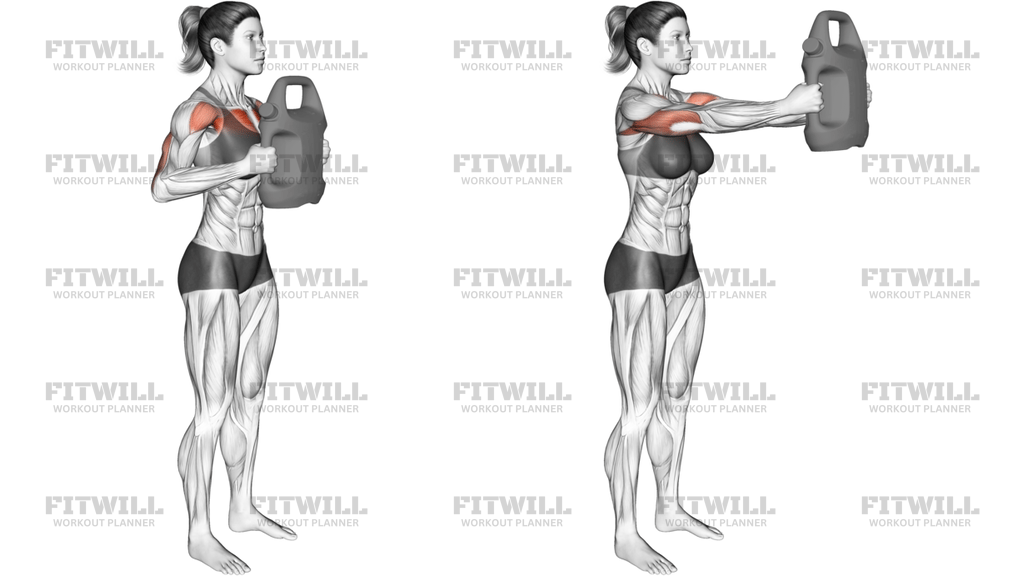
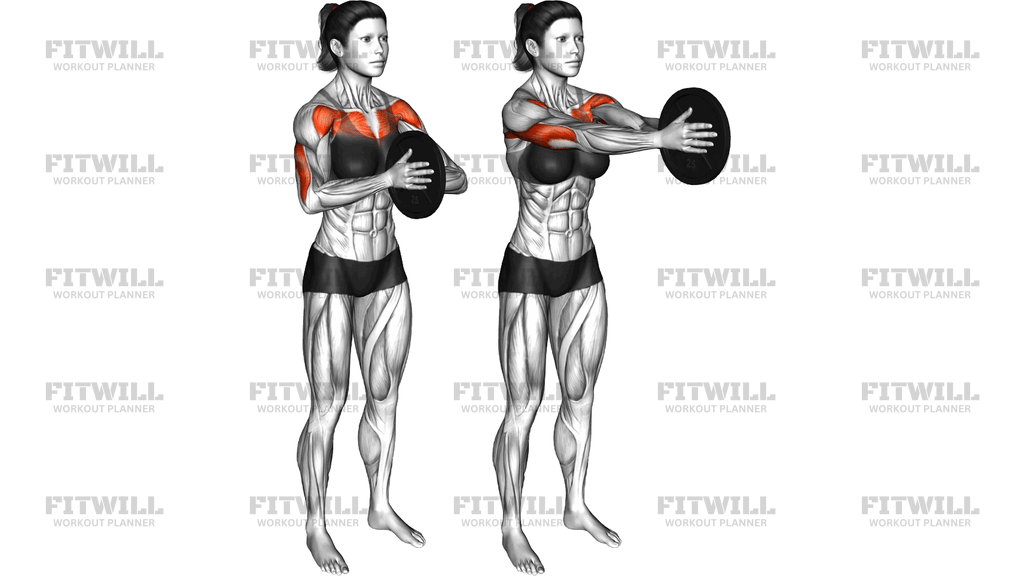
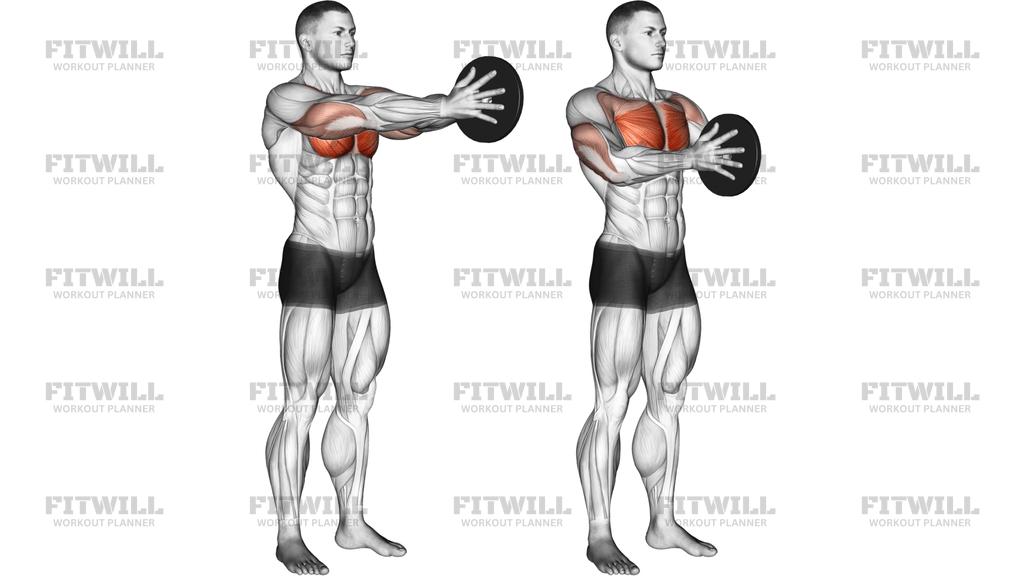
Weighted Svend Press is a standing plate squeeze press that keeps constant tension on the chest while the shoulders and triceps help guide the press. The image shows the exercise performed with a weight plate held flat between both hands at chest height, then pressed straight out from the sternum while the hands keep squeezing inward on the plate. That squeeze is the defining feature of the movement and is what makes it different from a standard front press.
The exercise is mainly used to train the pecs in a very deliberate, low-momentum way. Because the plate stays centered in front of the torso, the chest has to keep adducting the arms while the front delts and triceps stabilize the press. In anatomy terms, the main work centers on the Pectoralis major, with help from Anterior deltoid, triceps brachii, and Rectus abdominis. It is a useful option when you want chest tension without a barbell, bench, or heavy setup.
Good execution starts with the stance. Stand tall with feet about hip width apart, ribs stacked over the pelvis, and shoulders down rather than shrugged. Bring the plate to the middle of the chest, bend the elbows slightly, and press the plate outward in a straight line while actively squeezing it. The goal is not to lock the elbows hard or fling the weight away; the goal is to keep the chest engaged from the first inch of the press through the return.
At the end of each rep, control the plate back to the chest instead of letting it drift or drop. Keep the wrists neutral, the neck long, and the torso still so the squeeze stays on the pecs instead of turning into a shoulder and momentum drill. A shorter, cleaner range is better than chasing distance if the shoulders roll forward or the lower back arches to finish the rep.
Weighted Svend Press fits well as chest accessory work, a warm-up for pressing, or a higher-rep finisher when you want a joint-friendly pump and better chest awareness. It can also be a practical choice for beginners because the load is easy to manage and the motion is easy to learn, provided the plate is light enough to hold without wrist strain. If the plate is too heavy or too thick to squeeze comfortably, the exercise stops being a chest squeeze press and becomes a shoulder compensation drill.
Fitwill
Log Workouts, Track Progress & Build Strength.
Achieve more with Fitwill: explore over 9600 exercises with images and videos, access built-in and custom workouts, perfect for both gym and home sessions, and see real results.
Start your journey. Download today!




Instructions
- Stand tall with your feet about hip-width apart and hold a weight plate flat between both palms at the center of your chest.
- Keep your elbows slightly bent, ribs stacked over your pelvis, and shoulders down instead of shrugged up.
- Brace your torso and squeeze the plate inward before you start the press.
- Press the plate straight forward from the sternum until your arms are almost fully extended.
- Keep the hands actively pressing into the plate the whole time so the chest stays engaged.
- Pause briefly at the end of the press without locking out hard or leaning back.
- Bring the plate back to the chest under control while keeping the squeeze on it.
- Exhale as you press and inhale as the plate returns.
- Repeat for the planned number of reps, then lower the plate safely to finish.
Tips & Tricks
- Choose a plate you can squeeze firmly without opening the wrists or losing forearm tension.
- Think about pressing the plate away from your chest, not upward, so the front delts do not take over.
- Keep the elbows softly bent throughout; a hard lockout usually shifts tension away from the pecs.
- If your shoulders roll forward at the finish, shorten the press slightly and keep the chest proud.
- Maintain pressure between the palms the whole rep so the exercise stays a squeeze press instead of a front raise.
- Use a slow return if you want more chest time under tension and less momentum.
- Avoid flaring the ribs or arching the lower back to make the press look bigger.
- Stop the set when the plate starts drifting, the squeeze fades, or the neck starts to tense up.
Frequently Asked Questions
What muscle does Weighted Svend Press target most?
The pecs are the main target, with the front shoulders and triceps helping guide the press.
Can beginners perform this exercise?
Yes. Beginners usually do well with a light plate and a shorter, controlled press path.
How should I hold the plate during the press?
Hold the plate flat between both palms and keep squeezing inward so it does not drift or wobble.
Should my elbows lock out at the end?
No. Keep a soft bend so the chest stays loaded and the movement does not turn into a hard joint lockout.
Why does the plate need to stay pressed together?
The inward squeeze is what keeps tension on the chest and makes the Svend press different from a regular forward press.
What are the most common form mistakes?
Letting the shoulders shrug, leaning back, and losing pressure between the palms are the biggest issues.
Where does this exercise fit in a workout?
It works well as chest accessory work, a warm-up before pressing, or a higher-rep finisher.
How do I know the weight is too heavy?
If you cannot keep the plate squeezed, your wrists bend back, or your torso starts compensating, the load is too much.