Bicycle Crunch
Bicycle Crunch is a body-weight floor exercise that trains the front of the trunk and the side waist by combining a crunch with a rotating pedal motion. The alternating elbow-to-opposite-knee pattern makes it useful for building abdominal endurance, trunk coordination, and the ability to keep the pelvis steady while the legs and torso move at the same time. Because the movement is self-limiting, the quality of each rep matters more than the speed or the number of reps.
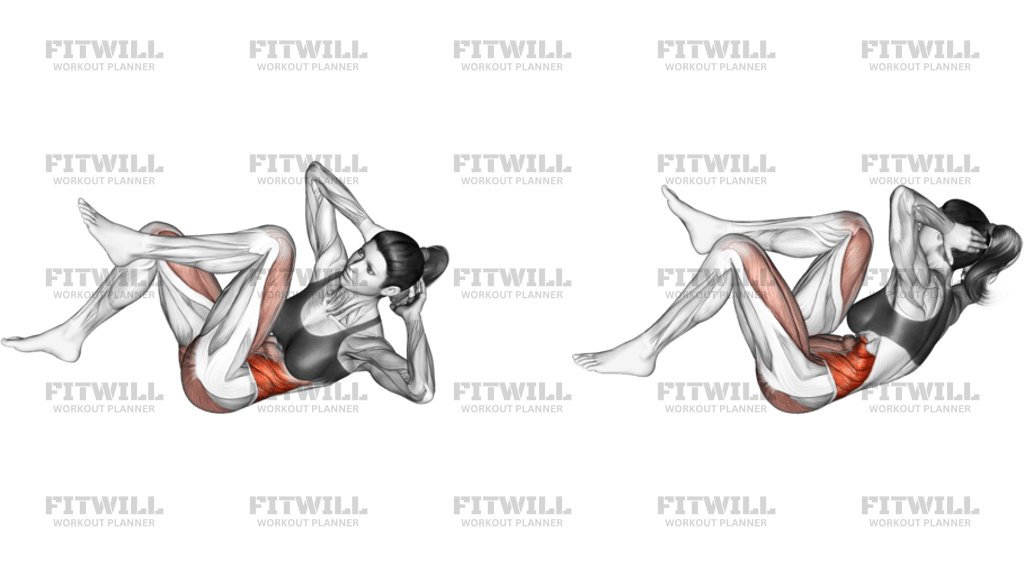
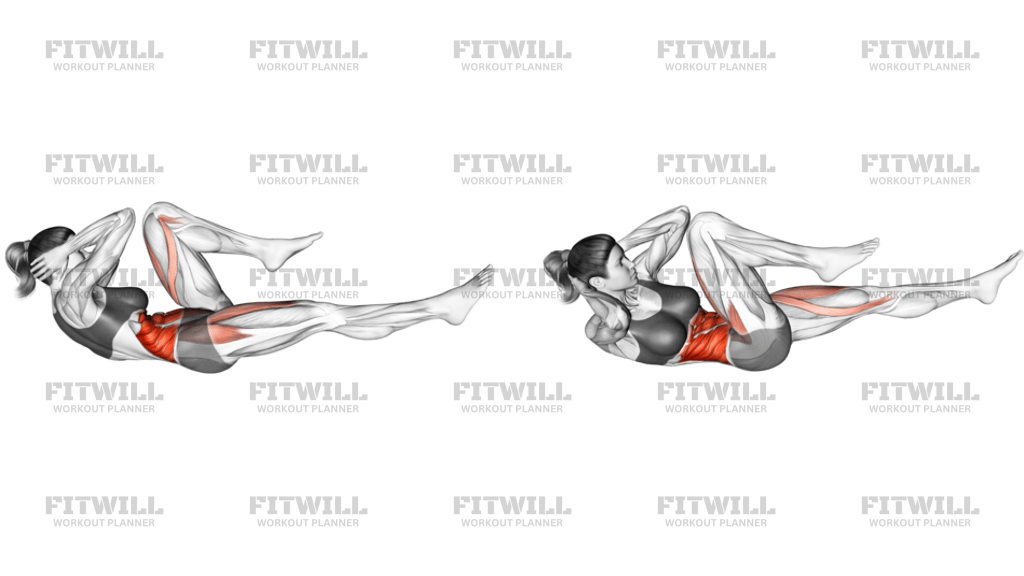
The exercise works best when the setup is exact. Lie on your back on a mat, lift the shoulders slightly, and keep the hands lightly behind the head without pulling on the neck. One knee stays bent as the opposite leg reaches long, which creates the bicycle position you see in the image. From there, the torso should curl and rotate just enough to bring the shoulder toward the opposite knee while the lower back stays controlled and the neck remains relaxed.
Bicycle Crunch is popular in core circuits, conditioning sessions, warmups, and body-weight finishers because it needs no equipment and can be scaled easily by changing tempo, range, or lever length. It is also useful when the goal is to teach the trunk to resist sloppy rotation and excessive hip swinging. A clean rep should feel like a deliberate abdominal contraction, not a fast pedaling motion with the elbows simply reaching around the head.
Use controlled breathing and a smooth rhythm so the working side of the abdomen can stay active through the whole set. If the elbows are yanked forward, the chin tucks hard into the chest, or the low back arches off the floor, the rep usually becomes easier to cheat and harder to target the abs. Keep the movement crisp, alternate sides evenly, and stop the set when you can no longer rotate and extend with the same control on both sides.
Fitwill
Log Workouts, Track Progress & Build Strength.
Achieve more with Fitwill: explore over 9600 exercises with images and videos, access built-in and custom workouts, perfect for both gym and home sessions, and see real results.
Start your journey. Download today!




Instructions
- Lie on a mat with your lower back down, hands lightly behind your head, elbows open, and one knee bent while the opposite leg reaches out long.
- Lift your shoulders off the floor just enough to keep the abdominals engaged and keep your ribs pulled down instead of flaring.
- Rotate your torso so the right elbow moves toward the left knee as that knee comes in toward your chest.
- Straighten the opposite leg fully as you rotate, but keep it hovering instead of letting the heel rest on the floor.
- Switch sides by extending the bent leg and bringing the other knee in while the opposite elbow travels across your body.
- Keep the movement smooth and controlled so each rep comes from the trunk, not from swinging the elbows or pulling the neck.
- Exhale on each crunch and rotate, then inhale as you pass through the extended part of the pedal motion.
- Continue alternating sides for the planned reps, then lower your shoulders and legs to the floor under control.
Tips & Tricks
- Keep your fingers light behind your head so your hands support the head without driving the crunch.
- Think about bringing the shoulder toward the opposite knee, not just the elbow across the body.
- Keep the extended leg low only as long as your lower back stays pressed down and controlled.
- A slower pedal makes the obliques work harder than a fast, bicycle-like blur.
- If your neck gets tired, shorten the range slightly and keep the chin gently off the chest instead of forcing a deeper curl.
- Do not let both knees drift high at the same time; one leg should stay extended to preserve the alternating lever.
- Use a smaller twist if your hips start rocking from side to side instead of the torso rotating.
- Stop the set when the elbow-to-knee pattern becomes uneven or your lower back starts arching.
Frequently Asked Questions
What does Bicycle Crunch train most?
It mainly trains the rectus abdominis and the obliques, with the hip flexors helping during the leg drive.
Do I need to touch my elbow to my knee?
No. The goal is a controlled cross-body crunch, not forcing contact if that makes you twist or pull on the neck.
Why are my hip flexors taking over?
If the legs move too fast or stay too low, the hip flexors can dominate. Slow the pedal and keep the crunch initiated by the ribs and trunk.
Should my lower back stay on the floor?
Yes, the low back should stay controlled against the mat. If it arches, shorten the leg extension and reduce the range.
Is this exercise good for beginners?
Yes, but beginners should move slowly and keep the range smaller until they can alternate sides without neck strain or hip swinging.
What is the most common mistake with the hands?
People often pull on the head. Keep the hands light behind the skull and let the abdominals lift the shoulders.
How can I make Bicycle Crunch easier?
Keep one foot closer to the floor, shorten the twist, and slow the tempo until the trunk stays organized.
How can I make it harder without equipment?
Slow the alternation, hold the extended leg lower with control, and keep each rotation crisp without rushing the reps.