Handstand Hold On Wall
Handstand Hold On Wall is a wall-supported inversion that builds shoulder strength, upper-back positioning, arm stability, and the trunk tension needed to stay stacked upside down. The wall removes some balance demands so you can focus on the quality of the hold: straight elbows, active shoulders, a braced midsection, and controlled breathing while your body stays vertical.
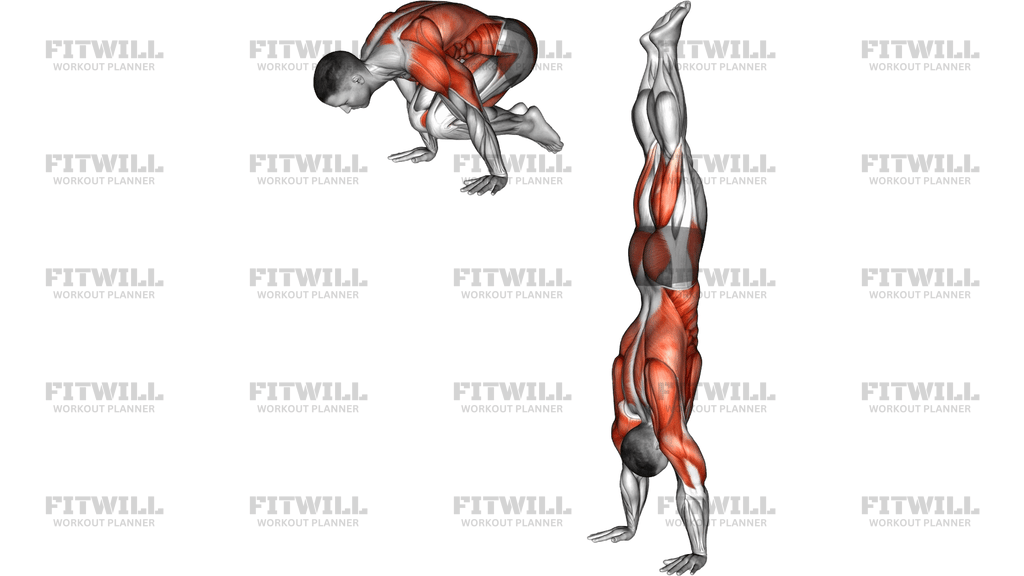
The image shows a classic handstand setup with the hands planted on the floor and the feet lightly supported by the wall. That support matters because the hold only trains the right muscles when the shoulders are pushing tall and the ribs stay under control. If the lower back arches or the head collapses, the hold turns into a loose balance drill instead of a true overhead strength position.
For most lifters, this exercise is useful as skill work, overhead stability training, or a controlled accessory after the main strength lift. It can also be used in warmups or gymnastics-focused sessions to teach stacked alignment before progressing to freestanding handstands, wall walks, or shoulder taps. Because the wall gives you a fixed reference point, the rep quality is easy to judge: the line should feel long, tight, and deliberate.
A good repetition is not about kicking harder or hanging on longer with a collapsed shape. It is about pressing the floor away, keeping pressure through the whole hand, and maintaining a steady line from wrists to ankles. Use the wall as a guide, not a crutch, and stop the set when the shoulders sink, the ribs flare, or the hands start creeping away from the position you can control.
[ Workout Log & Planner ]
Put your next workout in Fitwill
Keep your plan and training log ready when you are.


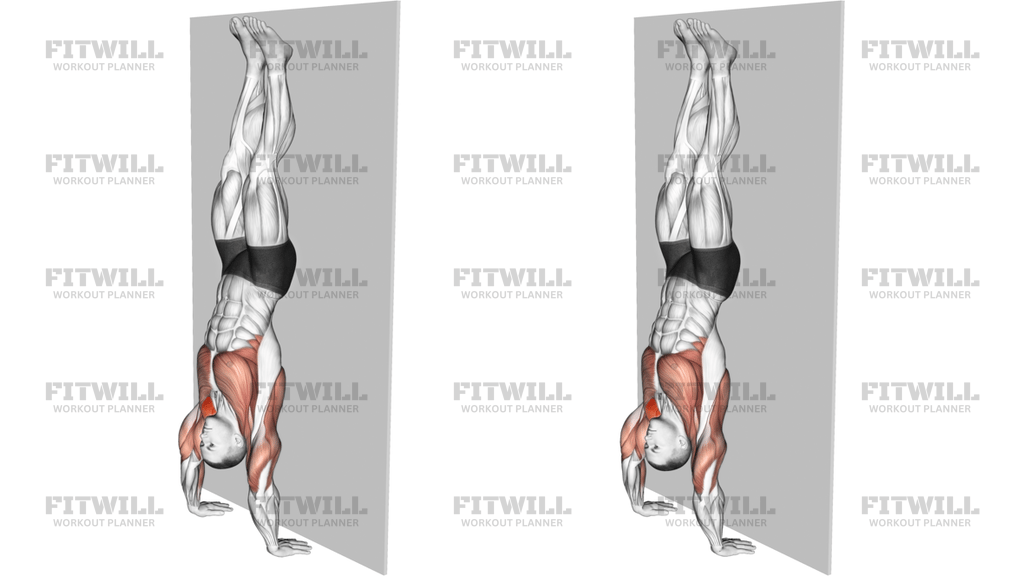
Instructions
- Place your hands on the floor slightly wider than shoulder width, fingers spread, with your arms straight and your body facing the wall or set just off the wall as the setup allows.
- Kick up or walk your feet until your heels touch the wall and your body is stacked in one long line from wrists through shoulders, hips, knees, and ankles.
- Press tall through the shoulders, lock the elbows, and spread the shoulder blades so you are pushing the floor away instead of sinking into it.
- Squeeze the glutes and quads, tuck the ribs down, and keep the pelvis from drifting into a low-back arch.
- Keep your head neutral with your eyes between your hands and your neck long instead of craning to look forward.
- Hold the position for the planned time while breathing quietly through the nose or controlled mouth breaths.
- Use the wall only for light balance support; do not drive hard through the feet or bounce off the wall.
- When the hold is complete, lower one foot at a time and return to the floor with control.
Tips & Tricks
- If your lower back arches, exhale harder and think about sliding the front ribs toward the pelvis before the next hold.
- Keep weight spread across the fingertips and the heel of the palm so the wrists do not take all the pressure at once.
- A small bend in the elbows turns the hold into a shoulder-endurance fight; keep the elbows locked unless you are intentionally doing a variation.
- The wall should feel like a guide, not a prop. If your feet are crushing the wall, you are usually leaning too far away from the stacked line.
- Push the shoulders upward the entire time. Losing that active reach is one of the quickest ways to make the hold collapse.
- If the neck feels compressed, reset with a longer line and look between the hands rather than trying to stare forward.
- Use short holds with perfect shape before chasing long time-under-tension sets.
- Wrist discomfort usually improves with a short warmup, but sharp pain is a reason to stop and change the setup.
Frequently Asked Questions
What does Handstand Hold On Wall train most?
It mainly trains the shoulders, upper back, triceps, and the core’s ability to hold a stacked overhead position.
Can a beginner use the wall version first?
Yes. The wall makes the position easier to learn because it gives you a fixed line and reduces the balance demand.
How far should my hands be from the wall?
Close enough that you can stay stacked without a huge back arch, but not so close that your shoulders are jammed or your heels have nowhere to settle.
Why do my ribs flare when I hold the handstand?
That usually means your core and glutes are not keeping the pelvis and rib cage stacked. Reset, exhale, and make the body line longer before you try again.
Should my heels press hard into the wall?
No. Light contact is enough. Hard pressure usually means you are leaning away from the line instead of balancing the hold with your shoulders and core.
What if I cannot hold my elbows straight?
Shorten the hold and reduce fatigue. Bent elbows usually mean the shoulders are tiring or the setup is too aggressive for your current strength.
Is this more of a strength drill or a balance drill?
Both, but the wall version is mostly a shoulder-and-core strength drill with balance as a secondary skill.
How do I progress the wall handstand hold?
First increase hold quality and time, then reduce how much you rely on the wall, and finally move toward freestanding handstand variations.