Bodyweight Supported Squat
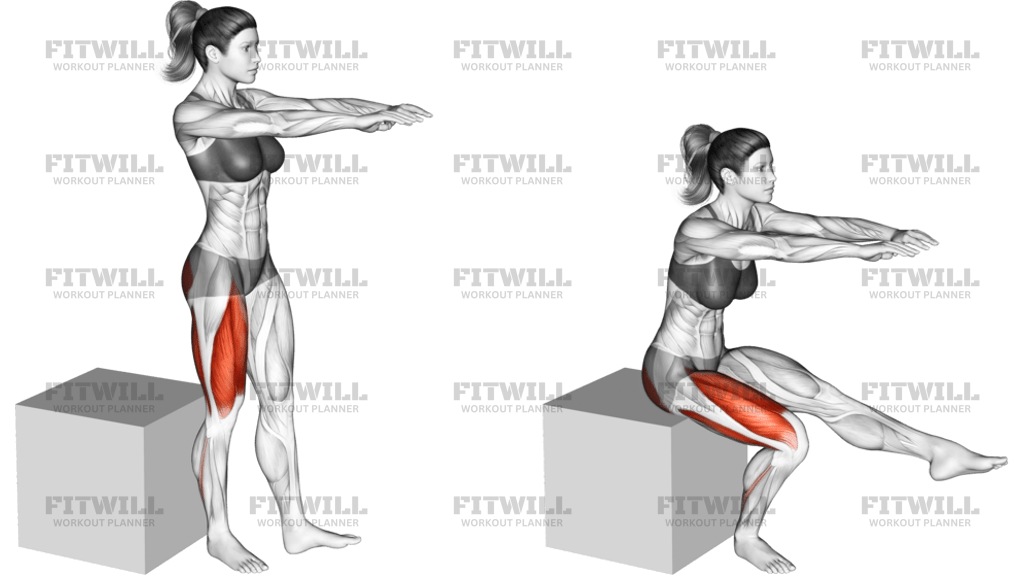
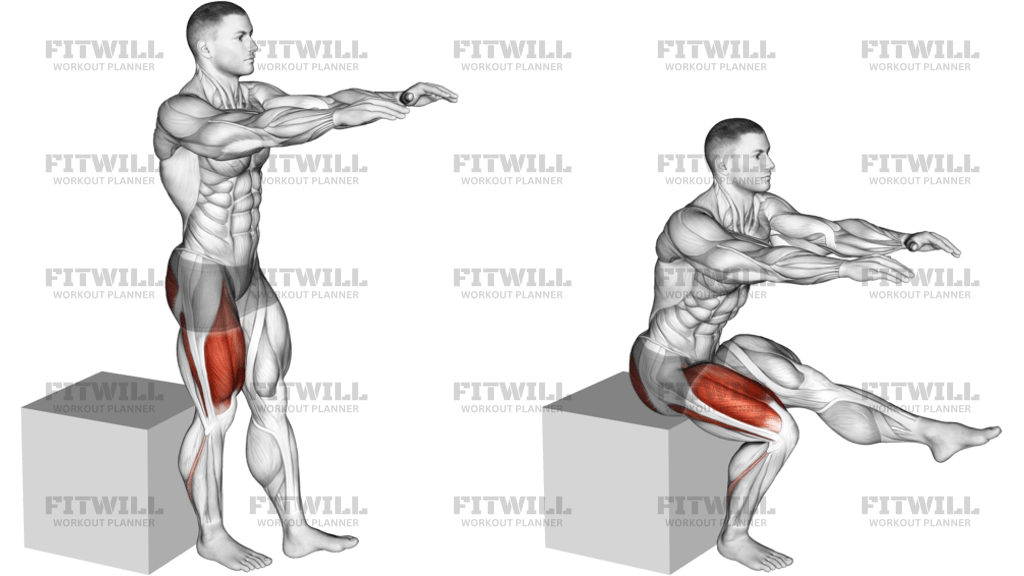
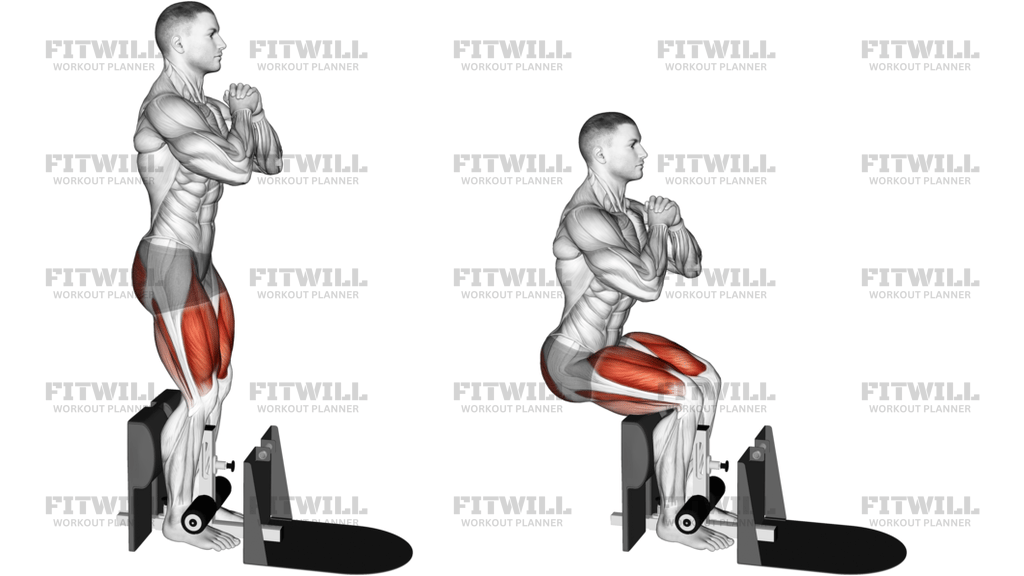
Bodyweight Supported Squat is a guided bodyweight squat that lets you practice the squat pattern with extra balance help. The support setup keeps the movement organized so you can focus on sitting down between your feet, keeping your torso tall, and standing back up with clean alignment instead of fighting for balance.
The exercise places most of its demand on the thighs, especially the quadriceps, while the glutes, adductors, calves, and core help control the descent and drive the ascent. Because the support reduces instability, it is useful for learning squat mechanics, building controlled leg strength, and getting quality reps without needing a heavy external load.
The setup matters a lot. Stand so your feet are planted securely on the platform, your chest stays lifted, and your hands can stay in front of your body or lightly on the support if needed. A stable stance and a braced midsection give you enough structure to descend smoothly without letting the knees collapse inward or the lower back round at the bottom.
On each rep, lower under control by letting the knees bend and travel in line with the toes while the hips sit down between the heels. Keep the heels down, use the support only as much as necessary, and pause briefly at the bottom without relaxing onto the machine. Stand by driving through the whole foot and extending the knees and hips together.
This variation is especially useful as a teaching squat, a warm-up drill, or accessory work when you want upright posture and repeatable depth. It is also a good option for beginners who need help with balance or confidence in the squat pattern. The goal is not to force extra depth or speed, but to make each repetition look and feel the same from start to finish.
[ Workout Log & Planner ]
Put your next workout in Fitwill
Keep your plan and training log ready when you are.


Instructions
- Stand on the platform with your feet about shoulder-width apart, toes slightly turned out, and your lower legs lightly against the support.
- Bring your hands together at chest height, lift your chest, and keep your eyes forward.
- Brace your midsection before you begin the descent.
- Sit your hips down between your heels while bending the knees and keeping them in line with your toes.
- Lower until your thighs are near parallel or as deep as you can go without your heels lifting or your torso folding.
- Pause briefly at the bottom without relaxing onto the support.
- Drive through the whole foot to stand back up, squeezing your thighs and glutes as you rise.
- Reset your stance and exhale after the hardest part of the rep before starting the next one.
Tips & Tricks
- Keep the support light; it should help balance, not carry the rep.
- Let your knees travel forward naturally, but do not let them cave inward.
- Keep your heels planted and spread the floor with your feet to stay stable.
- If your torso starts tipping forward, shorten the range or widen your stance a little.
- Move down slowly so you do not bounce off the bottom.
- Stop the descent before your pelvis tucks under and your lower back rounds.
- Use the support setup to practice an upright squat, not to lean your body weight into the machine.
- A controlled pause at the bottom makes the rep harder and cleaner than rushing through.
Frequently Asked Questions
What muscles does Bodyweight Supported Squat work?
Mainly the quadriceps, with help from the glutes, adductors, calves, and core.
Is this easier than a free squat?
Yes. The support reduces the balance challenge and helps you stay upright while you train the squat pattern.
Should I hold the support tightly?
No. Use it lightly if needed for balance, but do not pull yourself up with your arms.
How deep should I go?
Go as deep as you can while keeping your heels down, knees tracking over your toes, and your lower back neutral.
Can beginners use this exercise?
Yes. It is a good way to learn squat mechanics before moving to a less supported variation.
What if my knees move inward?
Reduce the depth, slow the lowering phase, and think about pushing your knees in the same direction as your toes.
Can I use this as a warmup?
Yes. It works well as a squat-pattern drill before heavier leg work or as controlled accessory volume.
How do I make it harder?
Add a pause at the bottom, slow the descent, or progress to a less supported squat once your position is solid.